

The Cuban Ambassador to Nigeria, Miriam Morales Palmero, has commended Nigeria and the African Union for their consistent opposition to the decades-long United States economic blockade against Cuba, describing the sanctions regime as an “unjust system of coercion” that has inflicted prolonged hardship on the Cuban people.
Speaking at the Conference of the Solidarity Movement with Cuba in Nigeria, Palmero expressed gratitude for Nigeria’s repeated votes at the United Nations General Assembly in favour of resolutions calling for an end to the US embargo.
“Nigeria is one of the countries which has voted at the United Nations General Assembly in favour of the resolution against the economic, commercial and financial blockade,” she said. “We highly value Nigeria’s support.”
She also acknowledged what she described as the historic stance of the African Union, particularly its recent resolution condemning the US blockade policy and Cuba’s inclusion on the list of state sponsors of terrorism.
The ambassador characterised the US embargo as more than a bilateral dispute, calling it “a deliberate policy of asphyxiation” designed to force political surrender through economic deprivation.
“For more than six decades, Cuba has faced one of the most prolonged and unjust systems of economic, commercial and financial coercion in contemporary history,” she said.
Palmero criticised a recent executive order signed by US President Donald Trump which, she said, threatens sanctions against countries that supply fuel to Cuba. She described the move as extraterritorial and a violation of international law.
According to her, the measures are intended to worsen shortages in energy, nutrition, healthcare, education and transportation, while exerting pressure on other nations to limit cooperation with Cuba.
“We do not accept threats. We do not accept blackmail. We do not accept interference,” she declared.
Despite economic difficulties, the ambassador maintained that Cuba has consistently extended assistance to other nations, particularly in healthcare and education.
She highlighted Cuba’s long-standing medical diplomacy, noting that Cuban doctors, teachers and technical experts have served in dozens of countries, including Nigeria.
“Cuba represents no threat whatsoever to any country,” Palmero said. “Our foreign policy is one of solidarity, peace, friendship and cooperation, fully committed to international law and the United Nations Charter.”
She described it as “inconceivable” that the world’s largest economic and military power would consider Cuba a threat.
Beyond condemning the blockade, the ambassador used the conference to call for a stronger and more structured Solidarity Movement with Cuba in Nigeria.
She urged trade unions, academic institutions, youth groups, community organisations and media platforms to amplify advocacy efforts in support of Cuba, especially as sanctions intensify.
“This meeting is not only an expression of political and moral support,” she said. “It is a strategic moment to strengthen the structure of the Solidarity Movement with Cuba in Nigeria.”
Palmero encouraged participants to develop a coordinated action plan that would increase mobilisation, communication and public engagement throughout the year.
The ambassador reaffirmed Cuba’s commitment to sovereignty and its chosen social model, insisting that the country would not bow to external pressure.
“We know that the Cuban people are not alone,” she said. “Cuba will never renounce its independence.”
She declared that: “Because justice cannot be blockaded. Because dignity cannot be sentenced. Because solidarity is stronger than any coercive measure.”
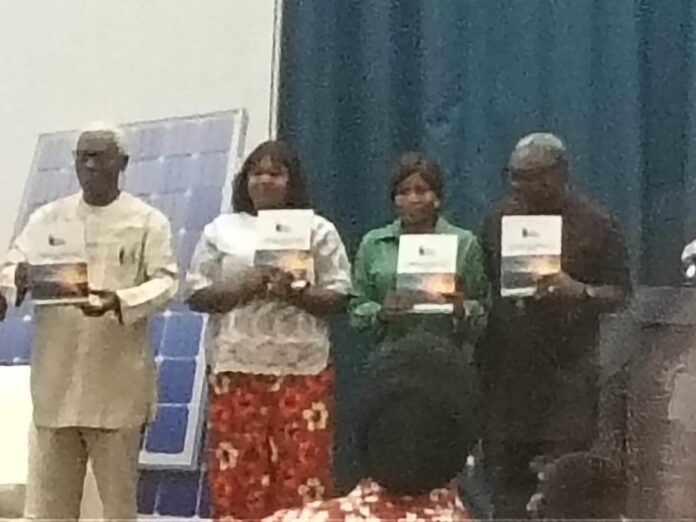
The conference brought together members of Nigeria’s solidarity movement, trade union representatives, Cuban-trained graduates and supporters of Cuba–Nigeria relations, underscoring the longstanding diplomatic ties between both nations.
