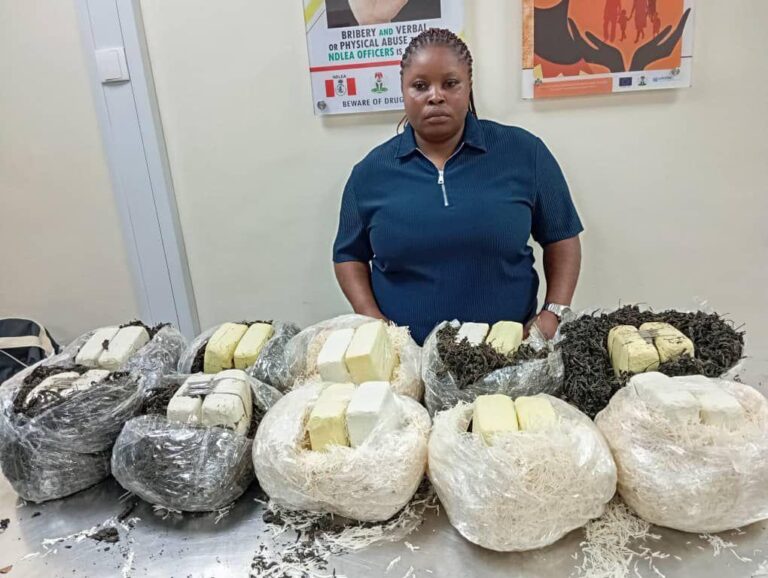
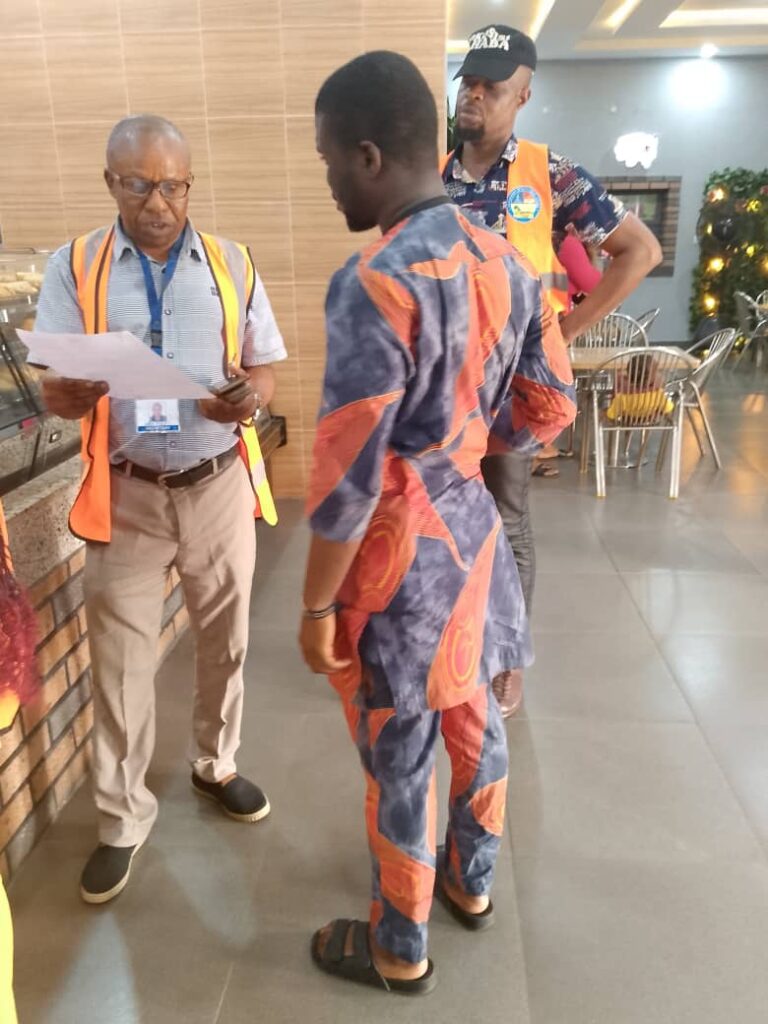
Operatives of the National Drug Law Enforcement Agency (NDLEA) have detained a 35-year-old lady, Chidinma Agbazue after she was caught attempting to export 20 parcels of cannabis sativa weighing 10.7 kilogrammes concealed in African salad popularly called Abacha and dried vegetables to Doha, Qatar through the Murtala Muhammed International Airport, Lagos
A statement by the spokesman of the anti-narcotics agency, Femi Babafemi on Sunday said NDLEA officers at the Lagos airport working in partnership with men of the Department of State Security (DSS) last Thursday intercepted Chidinma, an outbound passenger from Lagos to Doha, on Qatar Airways during clearance of passengers at the screening point of terminal 11 of the MMIA.
He said preliminary investigation revealed that Chidinma was based in Qatar but returned to Nigeria last December for Christmas celebration. She said preparatory to her return to Doha, she lodged at Club Dice Hotel in Ikotun area of Lagos where the consignment was handed over to her for trafficking to the Arab country.
Babafemi also said two suspects: Monday Okeke and Chigozie Emeka were last Tuesday arrested by NDLEA operatives in Oniwaya, Yaba and Agege area of Lagos, where they recovered from them 842,560 pills of opioids especially tramadol in addition to 15 litres of codeine syrup and 596 grammes of Molly.
He said attempt by Okeke to bribe the NDLEA officers with N5 million cash was rebuffed while the money was documented as part of exhibits to prosecute the suspects in court.
In Bayelsa State, the bid by three suspects: Ebuka Eze, 31; Ugochukwu Okoro, 44; and Kingsley Uzim, 27, to smuggle opioids including codeine, molly, tramadol and diazepam weighing a total of 73.425 kilogrammes to the creeks in Southern Ijaw area of the state was thwarted last Wednesday by NDLEA operatives at Swali jetty, Yenagoa where Ebuka and Ugochukwu were arrested while Uzim was nabbed at Amasoma in a follow up operation.
He revealed that the drugs were concealed in jumbo sacks and conveyed to the jetty in a tricycle.
Also arrested with 137 blocks of cannabis weighing 71 kilogrammes during a raid at Orile Imo, Ogun state last Friday were two suspects: Eniola Muyideen and Bankole Shuaib.
NDLEA operatives in Taraba State recovered 39,980 pills of tramadol from a suspect, Abubakar Mohammed, 33, in Lankaviri village, and another suspect, Apaji Vincent, 29, arrested in Wukari last Thursday l with 131 kilogrammes cannabis sativa.
In Abia state, Nwachukwu Chinedu, 28, was arrested last at Akara Ahuba, Isikwuato local government area by NDLEA officers. Recovered from him include 46.65 kilogrammes cannabis and different quantities of tramadol, methamphetamine and rohypnol as well as N71,500 monetary exhibit.
In Ondo State, at least, 127.5 kilogrammes cannabis loaded in a Volkswagen Vento saloon car marked NTT 215 AA was recovered along Isua/Kabba road, Idoani area of Ose local government area, while a 30-year-old female suspect, Chinasa Christopher was arrested with 400 bottles of codeine syrup in Sabon Gari area of Kano. The owner of a consignment of illicit drugs intercepted along Zaria-Kano road, Bakura Goni was arrested at Mile 2 market in Lagos last Tuesday in a follow up operation and flown to Kano to face charges. The consignment consisting of cannabis and tramadol weighing 73.8 kilogrammes was earlier seized in a truck conveying it from Lagos to Kano.
In Edo State, 278 kilogrammes of cannabis going to Idoani in Ondo state was recovered during a raid at Oloma-Okpe forest, Akoko-Edo local government area, not less than 3,065.255 kilogrammes of the same psychoactive substance was razed on two farms at Amahor waterside forest in Igueben area of the state where three suspects: James Thankgod; Wisdom James and Akpa Festus were arrested last Thursday.
Babafemi revealed that NDLEA commands across the country intensified their War Against Drug Abuse (WADA) advocacy lectures in the past week.
Meanwhile, while commending the officers and men of the MMIA, Lagos, Edo, Ogun, Kano, Abia, Bayelsa, Ondo, and Taraba commands of the agency for their balanced efforts in the past week, Chairman/Chief Executive Officer of NDLEA, Brig. Gen. Buba Marwa (Retd) equally applauded their counterparts across the country for intensifying their WADA advocacy lectures.
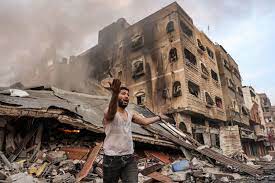
The Palestinian Ambassador to Nigeria, Abdullah Shawesh has described as biased the failed United States resolution on Gaza.
Shawesh, who spoke to journalists at the weekend during his weekly briefing on the ongoing Israeli attacks on Gaza, also alleged that Israel has violated Ramadan ceasefire agreement,
He said U.S was biased in its resolution as it failed to call for immediate ceasefire.
Shawesh said, “On Friday, March 22, the USA presented a resolution before the Security Council, which did not pass due to a veto. In this regard, and despite many other criticisms, I would like to highlight the following points:
“So all what you hear on the media about the ceasefire resolution is spout empty words. The US resolution fail to call for an immediate ceasefire that the secretary of state Blinken theorize for it on the media day before tabling it on the security council as the magic stack to put an end to the human suffering in Gaza.
“The US resolution fell short of condemning the ongoing Israeli massacre against the Palestinian people. Instead, it gave Israel the green light to continue its textbook genocide.
“The US resolution emprise and incubated all the Israeli claims about Oct 7 even before any independent fact finding mission or inquiry mission established by independent intergovernmental body to come with final report on what happened on that day.
“The US resolution mentioned the 132 Israeli hostages in Gaza but did not say a word about the more than 7,000 abducted and hostage Palestinians in Israeli concentration camps and prisons, all of whom are subjected to torture, degradation, and ill-treatment, resulting in the deaths of 12 of them so far.
“This is a clear form of racism and white supremacy, prioritizing the lives of Israelis over the lives of Palestinians.
“The US resolution deliberately did not mention any single words on the UN body, UNRWA, which is the most expert and capable body to tackle the humanitarian crises in Gaza, in clear complicity to support the Israeli occupation request to dismantle it. When it came to the humanitarian assistance to the Palestinian no one can deny the crucial role that the UNRWA played since Al-Nakba 1948.
“It is important to note that the US Congress voted not to resume funding for UNRWA until at least 2025, a move welcomed by Israel, which declared that the UN agency will not be part of Gaza’s future.
The US did not mention Israel as the occupation power except one time in the context of the two state solution.”
He also accused the Israeli authorities of not respecting UN resolution which called for ceasefire during the ongoing Ramadan.
He said, “On Monday, March 25, the Security Council adopted the Resolution 2728 calling for an immediate ceasefire during the month of Ramadan. While the ink on the resolution is not yet dry, Israeli cannon barrels are still firing and claiming more innocent Palestinian lives.
“On a practical level, this means Israel has turned its back on the Security Council. Israeli pushback on the UN ceasefire resolution, and the war minister Yoav Gallant said Israel has no moral right to stop the war in Gaza.
“The Israeli occupation authorities have continued their aggression, restrictions, and repressive measures in the occupied West Bank since the beginning of the holy month of Ramadan.
“They have deployed more than 24 military battalions there, imposed a comprehensive siege, cut off ties with partial sieges on all regions and towns, deployed over 750 checkpoints, installed more iron gates, and forced citizens to travel on bumpy roads that consume their time and money.”
He condemned the continue sales of weapons to Isreal, he said according Mary Lawlor – UN special rapporteur on human rights defenders: “There is no moral argument that justifies the continued sales of weapons to Israel. Over the past six months, Israel has unequivocally proven that it uses Western and foreign weapons indiscriminately against the Palestinian people. Why does the West continue to supply them?”
He also asked the everyone to pay attention to the UN Secretary General, António Guterres words that: “Palestinians in Gaza — children, women, men – remain stuck in a non-stop nightmare. Communities obliterated. Homes demolished. Entire families and generations wiped out. With hunger and starvation stalking the population. It is monstrous that after so much suffering over so many months, Palestinians in Gaza are marking Ramadan with Israeli bombs still falling, bullets still flying, artillery still pounding, and humanitarian assistance still facing obstacle upon obstacle.”
Shawesh said: “According to the Palestinian Ministry of Health as of Sunday, March 24, approximately 32,200 Palestinians have been killed by the Israeli occupation forces. Among the victims, 72% were women (around 8,800) and children (approximately 13,750). Additionally, around 74,500 Palestinians have been injured, with a majority being women and children. It is estimated that more than 8,100 people are missing under the rubble.
Scientific solutions are to be evolve to solve challenges of insecurity, food shortage and other development issues currently affecting the West Africa.
This was the resolution at the the three- day Constitutive General Assembly of the West African Network of the National Academies of Sciences (WANNAS) in Abuja, where a Nigerian scientist, Professor Oyewale Tomori was elected as the Bureau chairman.
In an interview with journalists after his election, Tomori said the group’s main objective is to begin to bring scientific solutions to challenges of insecurity, food shortage and other development issues currently affecting the region.
While explaining the rational for priorities given to the sectors, Tomori said agriculture and security will help to improve the lives of the citizens and make them even more productive.
He said: “I think the areas of concern for us in Africa and West Africa in particular, the health area, the issue of food, agriculture, and even security and safety, those are the areas that science can come in.”
“That is why I am really glad that together, instead of doing it individually as an academy in our different countries we are working together, because our problems are common, our problems are the same, and therefore when we bring all talents in the region we will look at these problems and solve them.
“We will be working together as a region, learning from each other, some countries have solved their problems, others have not, we are going to work together as a region.”
Tomori had served as the regional Virologist for the World Health Organisation Africa Region from 1994 to 2004 before he was appointed as the pioneer Vice Chancellor of Redeemers University in Ogun State, South West Nigeria, a tenure that ended in 2011.
Others elected as officials of the WANNAS Bureau were Senegal’s Professor Moctar Touré, as 1st Vice Chairman; while Ghana’s Professor Benjamin Ahunu, was elected 2nd Vice Chairman.
Professor Makalé Traoré of Guinea was elected 3rd Vice Chairman, Professor Crépin Bipene of Ivory Coast emerged as Bureau Secretary-General, Burkina Faso’s Prof. Pare Afsita, was elected as Treasurer.
The General Assembly also elected Professor Holo Théodore of Benin and Prof. Gumedzoé Mawuena of Togo as co-authors.
The General Assembly also established the headquarters of WANNAS in Yamoussoukro, Ivory Coast.
According to the adopted report of the WANNAS General Assembly at the end of its meeting, the West African scientists made various recommendations for ECOWAS.
These included the recommendation that ECOWAS should encourage collaboration among the National Academies of Sciences in ECOWAS member countries and facilitate the Roadmap’s implementation by mobilising funding for WANNAS success.
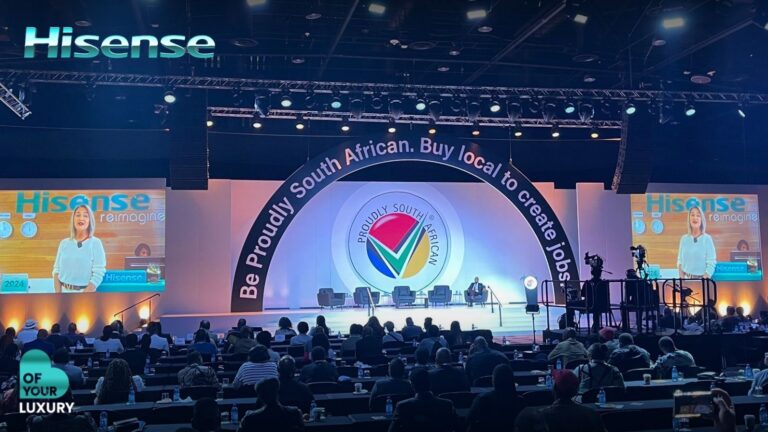
Hisense, a global leader in consumer electronics and home appliances, is proud to announce its participation in the 2024 Proudly South African Buy Local Summit. The event, which took place at the Sandton Convention Centre, brought together industry leaders, entrepreneurs, and consumers to celebrate and support local businesses.
At the heart of Hisense’s participation is its commitment to technological excellence and supporting local businesses. The company was showcasing its Smart Fridges and Hero Mini-LED Pro model TVs, which recently won the prestigious 2024 TV Brand of the Year Award from Mybroadband and the No.2 Global TV Shipment spot from Omdia.
Luna Nortje, Deputy General Manager for Hisense South Africa, emphasized the company’s commitment to local economic growth, stating, “We actively encourage and support local businesses and entrepreneurs to participate in manufacturing locally. By fostering innovation and collaboration within our community, we aim to build a sustainable ecosystem that benefits both Hisense and our local partners, while building a better future for South Africa, one job at a time.” Hisense, with its infrastructure in South Africa including warehouses, a factory, and other facilities, has been instrumental in creating over 5000 jobs directly and indirectly in South Africa. This commitment to job creation and economic development is a cornerstone of Hisense’s operations.
At Hisense, we believe that supporting local communities goes hand in hand with our commitment to manufacturing and trading locally. It’s not just about producing and selling products; it’s about uplifting the people and places that make our operations possible. We donated over R100,000 to selected charities associated with the event, pledging R5 for every cyclist who crossed the finish line of the Cape Town Cycle Tour. Despite another donation of a Side by Side Fridge to the Fountain of Hope Foundation, we’ve gone further by inviting their children to tour our Atlantis Factory. This initiative aims to broaden their horizons and open their minds to endless possibilities, contributing to a brighter future for our communities. These initiatives are just a glimpse of our ongoing efforts to create a lasting impact and uplift our communities.
The 2024 Proudly South African Buy Local Summit is a vibrant platform for businesses to connect, learn, and collaborate towards a stronger local economy. Hisense’s participation underscores its dedication to innovation, job creation, and economic growth in South Africa.
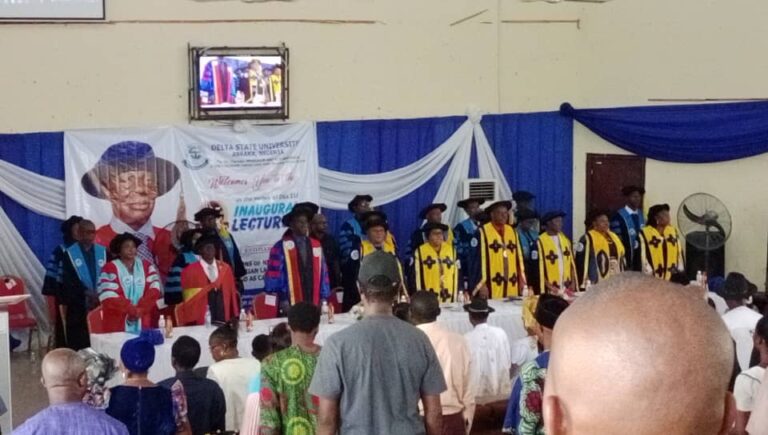
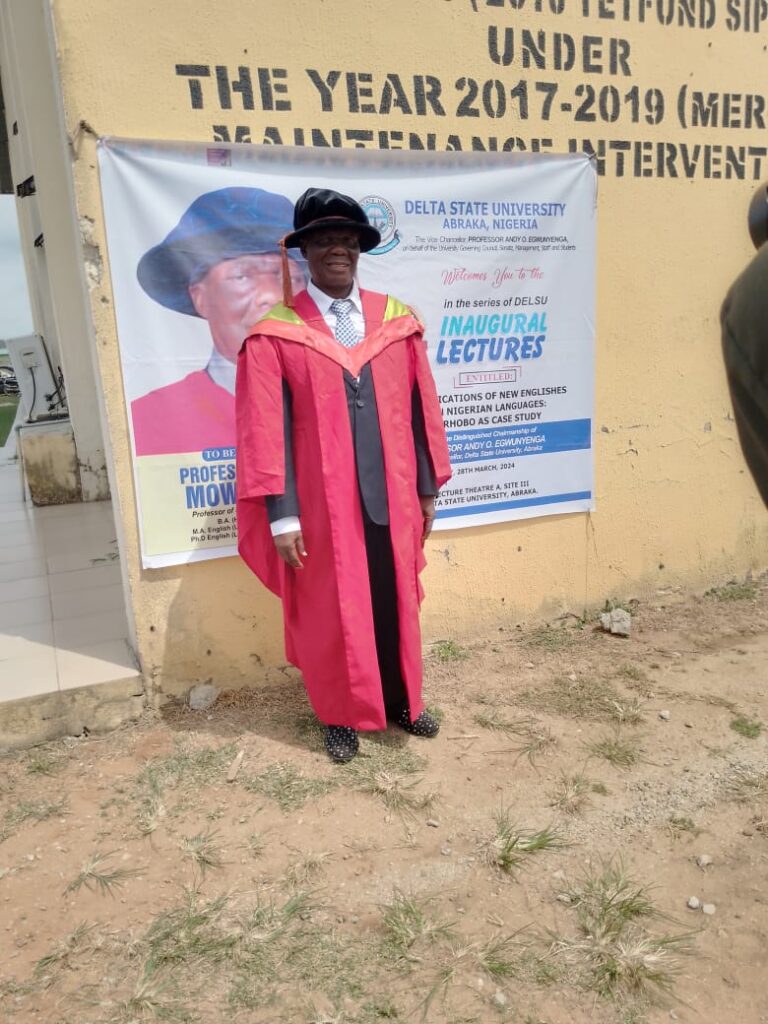
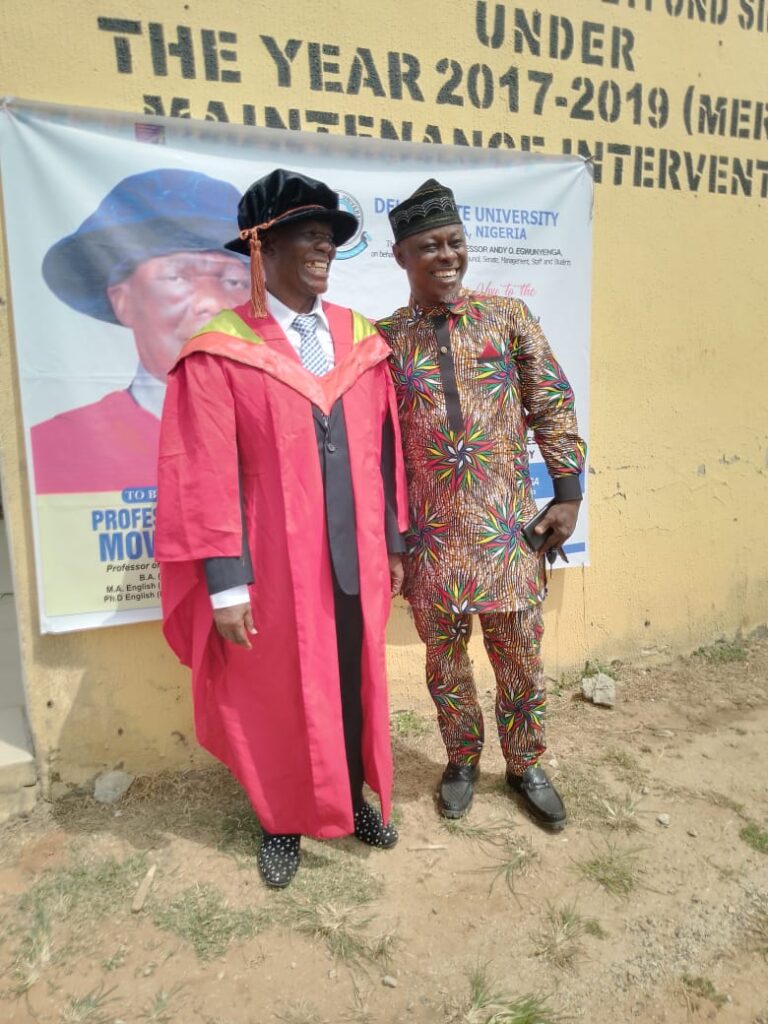
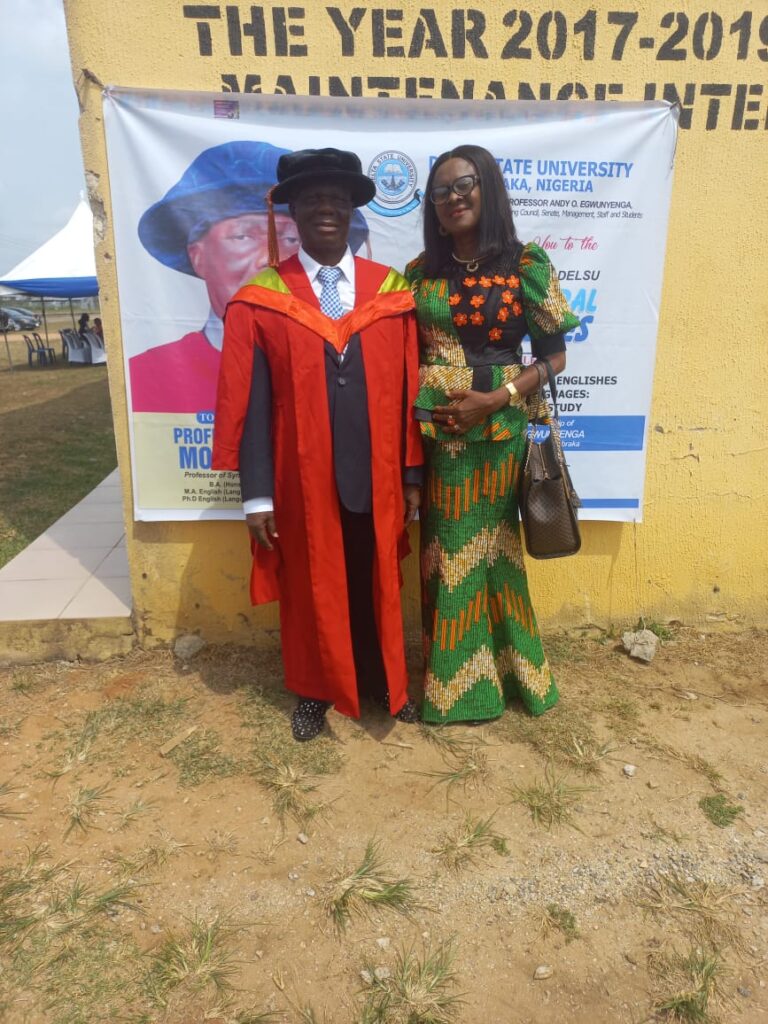
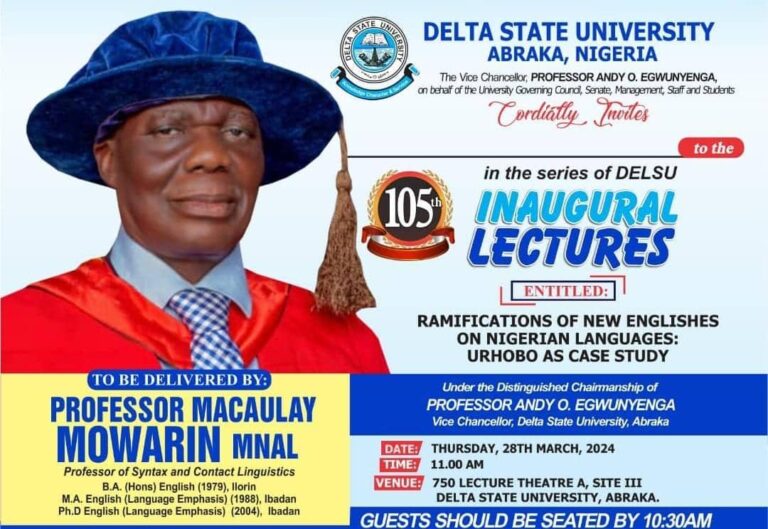
I thank the Almighty God for making it possible to deliver the fourth inaugural lecture from the Department of English and Literary Studies. The Department is bifurcated into (Literature) and (Language) units; this is the second from the Language unit. The first inaugural lecture from the language unit titled: ‘Tending, Bending and Breaking Vagabond English for Global Needs’ was delivered by Prof. Mabel Osakwe on Thursday, 21st July 2011. Thirteen years later, I am privileged to deliver the 105th in the series of Inaugural Lectures of the Delta State University, Abraka. Nigeria, titled:
Ramifications of New Englishes on Nigerian Languages: Urhobo as Case Study.
INTRODUCTION
One unifying factor of humans is the use of language for communication between the about six thousand languages that are spoken by about 8.1billion speakers (https//www.worldmeters.info). The use of human language is a universal integrating factor among humans. Chomsky (1973: 123) states: ‘ Language is the human essence, the quintessence of man, the distinctive qualities of mind that are unique to man. ‘
The tree metaphor is apt for describing language since it is a living organism that is born, matures, and dies (Crystal 2000). Language contact is a feature that pervades human languages, and the most pervasive source of language contact is the Europeans’ exploration of the world between the fourteenth and twentieth centuries. The European explorers include the British, French, Portuguese, and Spanish.
Great Britain is at the nodal head of these European explorers and colonialists. When the former colonies of Great Britain gained their independence in the twentieth century, the countries did not reject the use of English in Africa and Asia. (Schneider 2011).
The nativized variety of English, English-based Pidgins and Creoles and code switched English – Pidgin/Creole structures spoken in ex-colonies of Great Britain in Africa and Asia is known as New Englishes. Crystal (1977:20) opines that the new variety of English spoken in Anglophone African and Asian countries ‘may be likened to a transplanted tree.’
English was hybridized and nativized in Nigeria, now known as Nigerian English. The contact between English merchants and traders in the coastal part of the country evolved into a contact language known as Nigerian Pidgin (henceforth referred to as N.P.) (Elugbe & Omamor, 1991). While English is the superstrate language of NP, Niigerian languages in the coastal part of the country constitute the substrate languages. In addition, code-switched forms of English and Nigerian Pidgin also became a part of the speech repertoire of Nigerians. So, the new Englishes in Nigeria include: (i) Nigerian English, (ii) N.P., (iii) Nigerian English – N.P. code-switched structures, and (iv) Social media-mediated platforms English like Facebook, WhatsApp, Instagram, and TikTok. This lecture is a discourse on the salubrious and deleterious relationships between New Englishes and the plethora of about five hundred indigenous languages spoken in Nigeria’s complex multilingual and multicultural speech community, with Urhobo as a case study.
World Languages
The number of languages in the world ranges between six and seven thousand. Austin and Sallabank (2012:1) assert that ‘there are about seven thousand languages worldwide.’ Austin and Sallabank (2012:4) state that Ethnologue, however, opines that it is impossible to state the exact number of languages in the world: ‘Because languages are dynamic and variable and undergo constant change, the total number of languages in the world cannot be properly known.’ The number of speakers of the languages is also unevenly distributed across the globe. Haugen (1972) undertook an ecolinguistic analysis of the world’s languages, and he asserts that about five percent, or two hundred and fifty of the world’s languages have over one million speakers. This represents about ninety-four per cent of the world’s population. So, about ninety-five per cent of the world’s languages are spoken by about six percent of the world’s population. The eight major languages spoken by about half of the world’s population or four billion speakers are English, Mandarin Chinese, Spanish, Bengali, Hindi, Portuguese, Russian, and French. (Ethnologue: https/www.kjtranslations.com.blog). These eight languages are known as global languages. Most of the eight global languages endanger indigenous languages in complex multilingual and multicultural speech communities worldwide.
World languages are not evenly distributed across the continents of the world. Nettle and Romaine (2000:32) assert that ‘there are two great belts of high density; one running from the West Africa coast through the Congo basin and to East Africa and another rising from South India and Peninsula South East Asia into the Islands of Indonesia, New Guinea, and the Pacific.’
Below is a table of eight countries that are complexly multilingual and multicultural.
Table 1 Some Multilingual and Multicultural Countries of the World
Name of Country
Number of Languages
Papua New Guinea
840
Indonesia
711
Nigeria
517
India
456
USA
300
Mexico
297
China
295
Cameroon
279
(source: https//www.star-ts.com language)
So, Nigeria is the world’s third most complexly multilingual and multicultural country, based on the table above.
The number of languages spoken in the world’s five continents is unevenly distributed. Asia is the most complexly multilingual continent, while Europe is the least multilingual. Below is a chart of the percentage of world languages spoken in each of the five continents.
Figure 1. The proportion of languages in each continent of the world. (Source: Austin, P.K. and Sallabank, J. (2012:5)
The chart above illustrates the number of languages spoken on the world’s five continents. So, Asia is the most multilingual continent in the world, with 33% of the world’s languages, while Europe is the least since it accounts for just 3% of the world’s languages.
World Englishes
The mustard seed metaphor can aptly be used to describe the rise of the English language as a vernacular language from a small Island to become the world’s most formidable language. (Robert King 2009:1)
English evolved as a member of the Anglo-Saxon group of the West Germanic family of languages. It was a vernacular language between the 4th and 14th century A.D. During this period, Latin was the preeminent language of scholarship. Today, Latin is extinct, while English is now the world’s most important language. Latin is now used mainly as the language of liturgy in Catholic churches worldwide.
English is a member of the Anglo-Saxon group of the West Germanic family of languages and is now a world property. Formerly, English used to be the second language with the most speakers; however, it has now surpassed Mandarin Chinese as the language with the highest number of speakers, as shown in the table below.
Table 2: Top five languages By Number of Speakers.
Language
Total Number of Speakers
English
1.462 billion total speakers
Mandarin Chinese
1.119 billion total speakers
Hindi
602 billion total speakers
Spanish
559 million total speakers
Standard Arabic
274 million total speakers
(Source: https//www.babbel.com magazine)
English now has the most extensive distribution of speakers worldwide since the language is spoken across the five continents. In terms of varieties, English cannot be regarded as a monolithic entity. Kachru et al. (2009: XXVII) asserts that: ‘World Englishes ‘is now an umbrella term referring to a wide range of differing approaches to the description of English(es) worldwide.’
The appellation ‘World Englishes’ was first used in 1978 at a conference called the InternationalAssociation of World Englishes at the University of Illinois; Urbana Champaign and Kachru and Smith organized it. When Kachru and Smith took over the editorship of the Journal titled World Language English in 1985, they retitled it World Englishes. Kachru and Smith (1985:210) opine that World Englishes symbolizes a new idea, a new credo for which the plural ‘Englishes was significant. They added that ‘Englishes’ is the international acculturation of English in West Africa, Southern Africa, and South Asia, where English is a localized form. World Englishes also includes the Caribbean and the countries where English is a mother tongue or a first language, like the USA, U.K., Australia, Canada, and New Zealand. World Englishes is now also known as International Englishes or Global Englishes.
Schneider (2011:32) stated that Braj Kachru developed his ‘Three Circles’ of World Englishes in several of his articles published in the 1980s and in Kachru’s edited volume, The Other Tongue.
So, English as a Native language ENL appears as the ‘Inner Circle.’ ESN English as a Second Language ESN represents the outer Circle’ while English as a Foreign Language EFL represents the expanding Circle.
Below is a graphic representation of the Three Circles of World Englishes
Figure 2: Graphic representation of Kachru’s ‘Three Circles’ of World Englishes model from Schneider (2011:32)
However, it is pertinent to note that the speakers of the three circles of world Englishes are not mutually exclusive in their respective speech communities because of constant interlocution between them. A Nigerian who speaks outer English and listens to CNN or BBC News is interacting with an inner-circle English speaker. The interrelationship between the three circles is graphically shown below.
Fig. 3
Source: Bhatia, Tej K and Ritchie, W.C (2014:565)
The Inner Circle English speakers are native speakers, and they are found in countries like the U.K., USA, Canada, and New Zealand. Outer circle speakers are found in ex-colonies of Great Britain, now known as Anglophone African and Asian countries. They include Nigeria, Ghana, Uganda, and South Africa in Africa; India, Hong Kong, Singapore, and Papua New Guinea in Asia. World Englishes have undergone indigenization and hybridization in countries where outer circle Englishes are spoken. Expanding circle Englishes are spoken in countries where neither inner nor outer circle Englishes are spoken. These countries have no historical affiliation with Great Britain. Such countries include Togo, Angola, Japan, China, Bolivia, Brazil, Spain, and France.
Butler (1997:107) observes that centrifugal and centripetal forces buffet World Englishes. American English constitutes the centripetal force since it is equated with world Englishes because American culture and American English are pervasive worldwide. The centripetal forces constitute the new Englishes spoken in Asia, Africa, and the Caribbean, where the use of local lexical items has found its way into the English vocabulary.
The centripetal forces constitute what Kachru and Smith (1985:210) call the localized or indigenized form of English. These localized forms are found in oral speech and creative works of writers from countries where New Englishes are spoken. Bolton (2009:242) states that the ‘new varieties of English may be likened to a transplanted tree.’ He adds that if the transplanted tree is adequately nurtured, it will grow into a healthy and vigorous plant and contribute ‘ to the beauty of the international landscape not only by its lush verdant branches and leaves but more importantly by its fruits – the literary masterpieces of novels, short stories, poems and songs of its speakers and writers.’
New Englishes
When the British Empire collapsed in the 20th century and many countries gained their independence in Africa and Asia, the leaders of the newly independent countries retained English as their respective country’s official language. The Englishes spoken in these countries now constitute the New Englishes. New Englishes encompasses the disparate or divergent approaches that have now been adopted to describe and analyze Englishes worldwide. New Englishes focuses on inclusivity and pluricentrality, regional and national varieties. (Schneider, 2011; Kachru, Kachru and Nelson 2009)
In this lecture, New Englishes are spoken in former colonies of Great Britain, which Kachru (1986) categorized as outer Circle Englishes. New Englishes are spoken mainly in Asia and African. Englishes spoken in the Caribbean are also categorized as New Englishes due to the predominance of Caribbean Creole that predominate the Island. Mufwene (2001) describes the Creoles spoken in the Caribbean as English-based Creoles or English Creoles. Caribbean Creoles are regarded as dialects of English.
India, Pakistan, Bangladesh, Nepal and Sri Lanka are the East Asian countries where new Englishes are spoken. There is appropriation and nativization of languages in East Asia. The countries where new Englishes are spoken in South East Asia are Singapore, Malaysia, and Philipines. The new Englishes spoken in these countries are the products of their colonial histories. The Englishes are also known as Imperial Englishes (Bautista & Gonzalez, 2009, p. 130)
Mixed languages have evolved in some countries where New Englishes spoken in Asia. Two examples of mixed languages are Hinglish (Hindi and English) in India and Singlish (Singaporean language(s) and English in Singapore. (Schneider, 2011).
East Africa and West Africa are the two main regions where new Englishes are spoken in Africa, known as East African Englishes and West African Englishes. Kenya, Uganda, and Tanzania are the countries where East African Englishes is spoken. Outer circle Englishes is spoken in these three countries. There is an asymmetrical relationship between English and the indigenous languages spoken in the three countries.
In Anglophone West African countries, English is the language of administration, education, examination, job interviews, civil service promotion tests, aptitude tests e, and Liberia. Pidgins and creoles are spoken in these four countries. These four, and judiciary. Omoniyi, T. (2009:181)notes that Nollywood and ‘the growth of digital media technology’ in Nigeria have added to the complexity of New Englishes in Nigeria. The countries where New Englishes are spoken in West Africa include Nigeria, Ghana, Sierra Lione. These countries are complexly multilingual. Ideally, there is supposed to be symmetrical multilingualism in these countries. Assymetrical multilingualism is obtained since the languages are not of equal status. Asymmetrical multilingualism is a feature that permeates all countries where outer Englishes or New Englishes are spoken in Asia and Africa. Due to the high status of English in these countries, there is a relationship in which one at least of the languages, in this case, English, has a superior status.’ (Kamwangamalu, N.K (2009:159)
Language Contact: New Englishes In Nigerian Linguistic Ecology
Contact linguistics is a branch of Linguistics that discusses and evaluates the outcome of contact between languages. It is the bedrock of bilingual and multilingual studies. Winford (2003:36) states that ‘contact linguistics is par excellence a cross-disciplinary field that shows the integration of social and the linguistics in a unified framework.’
With a population of about two hundred and twenty-seven million people, Nigeria is a complexly multilingual and multicultural spehech community (https://www.worldometers.info). The number of indigenous languages spoken in the country varies between four hundred and five hundred. (https: translators without borders .com; Hansford et al. (1976:84). While Yoruba, Igbo, and Hausa are the majority languages, others are categorized as minority ones. Nigerian English is the country’s official language. At the same time, N.P. is the language for wider communication between the different ethnic groups, especially in the Niger Delta region of Nigeria. Arabic is the language of the Islamic religion, mainly in the northern part of the country. Social media-mediated language is used in social media platforms like Facebook, WhatsApp, Instagram, and Tik Tok. There is language contact between the various languages spoken in the country. The four subcomponents of New Englishes in Nigeria constitute a continuum.
Table 3: New Englishes in Nigeria
Nigerian English Nigerian Pidgin Nigerian English/ Social Media Platforms English
Nigerian Pidgin Facebook, WhatsApp,
code switching Instagram, TikTok
Nigerian English is the nation’s official language. It is the language of administration, education, interviews, and examinations. Nigerian English is the language of upward socio-economic and political mobility in Nigeria. However, some words from Nigerian languages have entered the Nigerian English lexicon. Butler (1977:30) states that New Englishes is ‘the level of world Englishes is the purely local culture and sense of identity.’
Bamgbose (1995) calls this the indigenization or nativization of Nigerian English. In Nigeria, for example, some words from indigenous languages Nigerian English lexicon include: Akara (bean cake), suya (roasted beef), danfo (commercial bus), molue (big commercial bus) moi moi (cooked ground beans), nyash (buttocks mainly of women), gele (women’s head tie). There are also some words in Nigerian English lexicon that have undergone semantic extension, A few examples include: pure water, disvirgin, tokunbo, 419 and Belgium, These nativized and semantically extended words are contextualized in the sentences below.
1.
a) I ate akara and akamu for breakfast.
b) My wife prefers moin moin and akamu for breakfast.
c) This suya is too peppery.
d) My daughter prefers to tie gele rather than wear a hat.
e) My mother will travel from Yaba to Lagos Island by molue this morning; she doesn’t have money for Uber.
f) That lady with big ikebe/nyash is my friend.
g) My teacher bought one pure water (one sachet water)
h) Your boyfriend is a 419 (a fraudster).
i) That lady’s dress, wig, bag and shoes are Belgium (second hand).
j) He disvirgined his girlfriend last week.(deflowered).
k) My sister bought a tokunbo Toyota car yesterday, (second hand)
Another feature of the nativization of Nigerian English is the influence of the tonal structure of Nigerian languages. So, Nigerian English can be called a tone language, while British and American English can be called stress-timed languages. So, Nigerian English speakers speak with an accent.
Nigerian Pidgin
Holm (1988:409) states that Nigerian Pidgin is a member of West African Pidgins. West African Pidgin is a member of English-based Atlantic pidgins and creoles. He adds that West African Pidgin is divided into three parts: Sierra Leonean Krio, Liberian Kru, and West African Pidgin English (WAPE).
West African Pidgin English is further subdivided into three, and they are Ghanian Pidgin, Nigerian Pidgin, and Cameroonian Pidgin. The three members of WAPE are mutually intelligible. Holm (1988:423) calls West African Pidgins ‘restricted English in West Africa.’ Holm (1988:426) states that:
‘West African Pidgins includes many varieties which range from rudimentary pidgins and highly expanded creole-like varieties that serve as primary language for millions of West Africans.’
N.P. evolved as a contact between the people of the Niger Delta and British traders to transact business. (Elugbe and Omamor 1991). N.P. is ethnically neutral (Egbokhare, 2021:114). BBC now has a Pidgin service. There is also the predorminantly N.P. Nigerian broadcast service is known as WAZOBIA FM. In terms of widespread users, N.P. is to Nigeria what world Englishes is to the world. The speakers are projected to treble to 300 million in 2050 (Faraclas, 2021:15). N.P. is now a symbol of shared identity to Nigerians, and that was why Naija was coined for the language in 2009 at the IFRA conference due to its characteristics as the authentic Nigerian lingua franca. It is the language of standup comedy and advertising in Nigeria.
NP evolved as a contact language from the interaction between the British traders to transact business and Indigenous languages of the present-day Niger Delta region of Nigeria (Elugbe & Omamor, 1991). NP is ethnically neutral (Mowarin, 2021).The lexicon of NP. is mostly from English, while the syntax is from Nigerian Languages. Proof of this is the derivation of the Yes/No question in Nigerian Pidgin.
2.
a) You are eating to derive: Are you eating? (English)
b) Yu dey eat Yu sey eat? (N.P.)
c) Wo ri-emu: Wo ri-emu re? (Urhobo)
EnglishNigerian Pidgin
Urhobo
Fig. 4
Structurally, statements and Yes/No questions in N.P. and Urhobo are identical. This highlights the fact that the two languages are syntactically identical. The tree diagrams above are based on Chomsky’s Principles and Parameters theory of Transformational Generative Grammar. (1982)
N.P. is now the language of undergraduates, graduates, and lecturers in tertiary institutions. (Akande and Salami: 2021).
N.P. has no ethnic affiliation, identifiable geographical territory, and, therefore, no political constituency. N.P. is not perceived as competing with indigenous languages.
N.P. has evolved a national consensus called Naija consciousness (also written as 9ja). It captures the aspiration for a shared identity (Egbokhare, 2021). ‘Naija may be seen as a statement by the youths, a popular movement, a culture, a mindset, a Nigerianess.’ Egbokhare (2021:111).It is the Diaspora language of Nigerians in the USA, Canada, the U.K., and Germany (Adegoke 2019; Mair 2021). Below are examples of advertisements and invitations in NP..
PIDGIN Billboard Adverts
Fig. 5 Adverts in N.P. (Source: Egbokhare 2021: 90 )
Fig. 6. Wedding Invitation card in N.P. (Source: Egbokhare 2021:91)
Recently, N.P. has now used for invitation cards like the wedding invitation card above. Wedding invitation cards are usually written in English. This is one of the instances of N.P. playing a marked role since it is unusual to see wedding invitation cards in N.P. (Myers Scotton 1993). The wedding invitation in N.P. is an instance of N.P. playing a marked function.
There are now poetry collections in N.P. by renowned Nigerian poets. Nigerian Hip Hop musicians also use N.P. These musicians mainly engage in N.P. – non-indigenous languages in their music. It is used in the Nigerian film industry, known as Nollywood. One reason for the preference of N.P. for English is because English is too formalized and has ‘too much grammar,’ according to critics.
Stand-up comedy is a multi-billion Naira entertainment industry, and Nigerian Pidgin is the primary language stand-up comedians use in their comedic acts. In addition, standup comedians also engage in N.P.–English code-switching in their comedies. N.P. is usually the superstrate language, while English is the substrate language when there are cases of code-switching in standup comedies. It is pertinent to state here that most pioneers and stars of standup comedy in Nigeria are products of Delta State University. So, a historical overview of the development of Standup comedy in Nigeria will not be complete without mentioning the invaluable role of Delta State University in educating these pioneer standup comedians who also function as Master of Ceremony at parties and other social events.
Lecturers and students in the Department of English and Literary studies have done extensive researches on Nigerian standup comedy. Mowarin, M and Emama, E (2020), (2024) are two publications by lecturers in the Department. Undergraduate and postgraduate students of the Department of English and Literary Studies have written projects and dissertations on the language of standup comedy. A PhD student in the Department is writing his thesis on the multimodality of Nigerian standup comedy.
Before 2019, when the idea of publishing a new book on N.P. was muted, only two N.P. textbooks were available: Nigerian Pidgin (1991) by Elugbe and Omamor and Nigerian Pidgin (1996) by Faraclas. In 2021, a new textbook on N.P. titled Current Trends in Nigerian Pidgin English: A Sociological Perspective was published by D. Gruyter Mouton Boston/Berlin. The three hundred and twenty-one pages textbook contains twelve chapters and was edited by Akinmade T. Akande, and Oladipo Salami . Delta State University Abraka was the only state university in Nigeria with a contributor. Only two universities in the south-south, Delta State University, Abraka and the University of Calabar, contributed chapters to the book. My paper titled ‘Topicalisation, Focus Construction and Emphatic Marker in Nigerian Pidgin’ is the textbook’s only contribution to the Syntax of Nigerian Pidgin in the recently published textbook.
Omoniyi (2009:181) notes, ‘ The growing use of digital media technology has added a new layer to the New Englishes spoken in Nigeria.’ The Englishes spoken or written in social medium platforms which include Facebook, WhatsApp, TikTok, and Instagram are novel. Apart from increasing the vocabulary of Nigerian English, they also have unique syntactic structures. Some new vocabularies include ‘voice note,’ ‘shadow ban, and data saver (Omoniyi 2009). There are many initialisms and abbreviations; an attempt is made to evolve a one-to-one correspondence between spoken and orthographic English on social media platforms.
Below is a table of some habitual use of SMS abbreviations and their morphological processes.
Table 4: SMS Abbreviations by Nigerian Social Media Platform Users.d
English language teachers believe social media English spellings now constitute a barrier to competence in English among secondary school students since their compositions are suffused by the non standard social media Englishes. The main reason for SMS abbreviations among Nigerians is to conserve time and space.
Code Mixing and Code Switching
Code mixing and code-switching involve the alternation between grammatical constituents of two languages. Nigeria has Nigerian Pidgin – English code-switching and English – Indigenous languages code switching. Muysken (2005:304) distinguishes between code mixing and code switching thus:
‘Some authors have used the term code–switching when describing alternation between larger units like clauses and code-mixing which discusses alternation internal to the utterance or clause.’
Mowarin (2014:14) focuses on using bilingual verbs in Nigerian Pidgin – English Code Mixing. Code-switching has become pervasive in Nigerian hip-hop music. In addition, it has become a part of the repertoire of Nigerian utterances. In Nigeria’s Niger Delta region, Nigerian Pidgin – English code-switching and indigenous languages – Nigerian Pidgin code-switching has become pervasive.
So, New Englishes in Nigeria is a continuum that includes Nigerian English; Nigerian Pidgin; Code Switching between Nigerian English and Nigerian Pidgin on the one hand and Nigerian English/Nigerian Pidgin and indigenous languages on the other hand; and social media platform English.
The Salubrious Effect of Complex Triglossia between New Englishes and Urhobo In Urhoboland Linguistic Ecology.
Urhobo language is spoken mainly in Delta State and part of Bayelsa state. Aziza and Mowarin (2005/2006:56) state that: ‘Urhobo is a Southwestern Edoid language, itself a member of the Benue-Congo group of the Niger-Congo phylum (Williamson & Blench, 2000).’ It is generally estimated to have about two million speakers. (Aweto). Urhobo is a minority language in Nigeria. Urhobo is a tone language that has a register tone system with two-level tones, Low (L0W and HIGH (h), and a lexical downstep (Aziza (2003)
‘Urhobo is an SVO language. Tone and intonation interact very closely; as in most tone languages, tone is used to manifest intonation. Based on intonation, the tones of the question are perceived to be higher than those of the statement, and the downdrift noticeable in statements is absent in questions.’ (Aziza & Mowarin (2005/2006:57)
Table 5: South Western Edoid languages.
In Urhoboland, there is language contact between Urhobo and New Englishes. While Nigerian English and Urhobo are natural languages, Nigerian Pidgin is a contact language that evolved from contact between British merchants and Nigerians from the country’s coastal regions. English is N.P.’s superstrate language, while the indigenous languages constitute the substrate languages.
The variety of N.P. spoken in Urhoboland is known as pidgincreole and not a pidgin, a class between Pidgin and Creole. Bakker, P (2008:139) states that:
‘A PidginCreole is a restructured language that is the primary language of a speech community or which has become the native language for some of the speakers. In practice, it is often hard to draw a line between pidgins and pidgincreoles or between pidgincreoles and creoles. Pidgincreoles may have a few native speakers, for example, the children of parents who shared no language but the Pidgin.’
In Urhoboland, the Pidgin spoken in parts of Effurun like Alaka and Alegbo and parts ofSapele like Urban area and Oguaja are the creolized form. Expanded Pidgin is spoken in other parts of Uhoboland. Restricted English in West Africa is also known as pidgin creole. Pidgincreoles are spoken in the Pacific, and they have vernacular names like Tok Pisin (Papua New Guinea), Pijin, Solomon Islands Pidgincreoles, and Bislama (Vanuatu) (Bakker, 2008:140)
The languages spoken in Urhobo land can be grouped into four and they are Nigerian English, Nigerian PidginCreole, social media-mediated Englishon platforms like Facebook, WhatsApp, Instagram, and TikTok, and New English/Urhobo code switch forms, and Urhobo.A complex triglossic situation is suppose to exist between the languages spoken in Urhobo land. Each of the three languages has different codes; (Myers Scotton 1993). while Nigerian English is the high code, Nigerian Pidgin and its code-switched structures constitute the mid code, while Urhobo is the low code (Myers Scotton, 1993)
Nigerian English is the language used for education and formal communication in Urhoboland. Nigerian Pidgin and its code-switched structures are ideally used for informal communication between Urhobo people and members of other ethnic groups that are sandwiched between Urhobo. Finally, Urhobo is the language of intra-ethnic communication among Urhobo people. In addition, Urhobo is supposed to be the language of intergenerational transmission between parents and children at home in Urhoboland.There is, therefore, an asymmetrical multilingualism among the languages spoken in Urhonoland because of the power relations between these languages since the languages are of unequal status.
Nigerian English is the official language of Nigeria in general and Urhoboland in particular, and it is the language of socio-economic and political upward mobility. (Mowarin 2005) Urhobo persons who are the political elites, academicians, and top civil servants in Delta state, Nigeria, and the Diaspora are competent speakers of English. In addition, they are highly educated with certificates and degrees from tertiary institutions in Nigeria and overseas universities. University lecturers, teachers, and top businessmen also fall into this group. In addition, creative artists include creative writers, fine artists, stand-up comedians, and some musicians who engage in English–Urhobo code-switching and are competent users of Nigerian English. English is used as a medium of instruction in schools in Urhoboland. Due to the premium that parents place on competence in English, they have a positive attitude towards their children acquiring English and a negative attitude towards their children acquiring Urhobo. Parents know the importance and high-value currency of Nigerian English in Nigerian linguistic ecology.
Based on the sociolinguistic variable on the most preferable language by Urhobo speakers, as shown below.
The most preferred language is English. In addition, the best spoken language is English, while the least spoken language is Urhobo. Even the language spoken to children, English has a higher percentage than Urhobo. This shows that English is the most preferable concerning intergenerational transmission of language from parents to children.
Due to the positive attitude of Urhobo speakers to Nigerian English, Urhobo people regard English as their most preferred language.
The researcher surveyed the sociolinguistic function of Nigerian English, N.P., and code-switched structures when they come in contact with Urhobo and other Southwestern Edoid languages in multilingual Effurun/Sapele/Abraka/Ughelli Urhobo speech communities in Delta State. Participants were asked what language they use in various social contexts. In the survey below, children and adults were asked to indicate their attitude toward language usage.
The research question is:
What is the attitude of adults toward the usage of language (English, Nigerian Pidgin, mother tongue, and other languages)?
Table 6 presents the distribution of adults based on their attitude toward the usage of language.
URHOBO
ENGLISH
NP
OTHERS
TOTAL
F
%
F
%
F
%
F
%
F
%
Most preferred lang.
108
7.9
256
18.7
23
1.7
27
2
415
30
Best spoken lang.
141
10.3
218
15.9
23
1.7
37
2.7
420
31
Least spoken lang.
167
12.2
131
9.5
10
0.7
52
3.8
359
26
Lang spoke to children
53
3.9
78
5.7
14
1
30
2.2
175
13
TOTAL
470
34.3
684
49.8
70
5.1
147
10.7
1371
100
N = 1371
Table 5 shows that the most preferred language by adults was English (18.7%), the second most preferred language was Urhobo (7.9%), the third most preferred language was other languages (2%), and the least preferred language was Nigerian Pidgin (1.7%). The best-spoken language by adults was the English language (15.9%), the second best-spoken language was Urhobo (10.3%), the third best-spoken language was other languages (2.7%), and other languages (1.7%). The least spoken language by adults was Urhobo (12.2%), the second least spoken language was the English language (9.5%), the third least spoken language was other languages (3.8%), then Nigerian Pidgin (0.7%). The majority of the adults agree that English language was the language spoken to children (5.7%), some speak Urhobo to children (3.9%), few speak other languages (2.2%), and very few speak Nigerian Pidgin (1%). The distribution is presented in figure 6
Figure 7 shows the distribution of adult’s attitudes toward language use. The figure shows that English was the most preferred, best-spoken, and mostly spoken to children. This could be because it is language assumed to be spoken and understood by all and hence preferred. It is also spoken to children to encourage them to speak English.Urhobo was the least spoken language, which could be accounted for by the respondents sampled.
Below is children’s distribution based on their Attitude to language usage based on the research question below.
What is children’s attitude toward the usage of language (English, Nigerian Pidgin, mother tongue, and other languages)?
Table 8: presents the distribution of children based on their attitude toward language usage.
URHOBO
ENGLISH
NP
OTHERS
TOTAL
F
%
F
%
F
%
F
%
F
%
Most Preferred Lang.
69
5.6
341
27.8
10
0.8
26
2.1
445
36.0
Best Spoken Lang.
84
6.8
327
26.6
21
1.7
21
1.7
452
37.0
Literacy in M.T
289
23.5
28
2.3
15
1.2
0
0
332
27.0
TOTAL
441
35.9
697
56.7
45
3.7
47
3.8
1229
100.0
N = 1229
Table 6 shows that the most preferred language by children was English language (27.8%), the second most preferred language was Urhobo (5.6%), and the third most preferred language wasother languages (2.1%). The least preferred language was Nigerian Pidgin (0.8%). The best-spoken language by children, as expected, was the English language (26.6%), the second best-spoken language was Urhobo (6.8%), and Nigerian Pidgin and other languages were the least spoken languages (1.7%). Most literacy in M.T. was in Urhobo (23.5%), the second most in M.T. was in English, and the least in M.T. was in Nigerian Pidgin (1.2%) with no literacy in M.T. for other languages. The distribution is presented in figure 7
Figure 8 shows the distribution of children’s attitudes to language use. The figure shows that English is the children’s most preferred and best-spoken language.
The most preferred language is English. In addition, the best-spoken language is English, while the least-spoken language is Urhobo. Even the language spoken to children, English has a higher percentage than Urhobo. This shows that English is the most preferable concerning intergenerational transmission of language from parents to children. Due to the positive attitude of Urhobo speakers to Nigerian English, Urhobo people regard English as their most preferred language. The fact that English is the most preferred and best-spoken language from the graph above would have some deleterious effects on the Urhobo.Respondents did not distinguish between English and N.P. in their questionnaire. The respondents in the questionnaires did not distinguish between Nigerian English and N.P.since they regard the two subcomponents of Nigerian Englishes as a continuum.
Nigerian Pidgin Creole, the variety of Nigerian Pidgin spoken in Urhobo, has also played positive roles in Urhoboland. Urhoboland as a speech community has language exogamy since members of other ethnic groups helm in the three languages that constitute Urhobo ethnic nationality. The polyglossic situation in Urhobo land made it imperative for Urhobo people to develop an ethnically neutral language that can be used for inter-ethnic communication. Urhobo people are hedged in by the Bini in the North, the Itsekiri and Ijaw in the South, and Isoko and Ukwani in the East. Language and cultural contact between Urhobo people and member of these other ethnic groups is facilitated by the use of Nigerian Pidgin. In addition, the coexistence between the three languages that constitute Urhobo ethnic nationality is also facilitated by the use of Nigerian Pidgin in Urhoboland.
The contentious issue of the ideal variety of English to be used by creative artists has occupied the front burner of creative discourse for the past half-century. Soyinka and Achebe advocated using the hybridized and nativized variety of English to properly carry African socio-cultural settings and milieu. Achebe (1975:4) succinctly describes the ideal new Englishess for African writers thus:
The African writer should aim to use English in a way that brings out his message best without altering the language to the extent that its value as a medium of International exchange will not be lost. He should aim at fashioning out an English that is at once universal and able to carry his peculiar experience.
Two such creative uses of language include N.P. and code-switched structures. Creative writers of Urhobo extraction have also utilized N.P. in their creative writings. Two such creative writers are Tanure Ojaide and Hope Eghagha. Both of them have written poems in N.P. Some of the poems include Ojaide (2015): ‘Mek we dey chop akara dey go’ Eghagha, ‘Salute to the Generals’ (2002), and ‘Na the same contri we dey? (2006) are Eghagha’s Pidgin poems. Below is Ojaide’s poem titled: ‘Mek We dey chop Akara dey Go’
3. Mek we dey chop akara dey go
We dey chop akara dey go
If moin moin no dey.
We ask for resource control
Gove’ment give us NDDC.
We seek development for the community
They build service roads to flow stations
We dey chop akara dey go.
If moin moin no dey.
They hanged our standard bearer
And made 2 i/c of a nincompoop
Code Switching
Among youths, especially undergraduates, N.P.- Urhobo code-switching is common. Below is data from utterances between undergraduates of Delta State University who are Urhobo youths and undergraduates. There is a dramatic increase in the number of code-switching, and the increase highlights the fact that the languages in Urhoboland are endangered. When Urhobo speakers communicate in N.P. under an informal setting, they code mix Urhobo words, as shown in the utterances by Urhobo students of Delta State University.
4a. My gelfrend na gedu. She no sabi do the do. I don taya for am.
My girlfriend is a log of wood. She is not good in bed. I’m fed up with her.
4b. My babe dey catch fire well well. She sabi do the thing die.
My girlfriend really catches fire. She is very good in bed.
For (4a), Gedu is an Urhobo word that means timber. It is used metaphorically to denote a lady who is not adept at sex.
5a. How your abaka? You dey see am for bed sef?
How is your butterfly? Do you use to see her in bed?
5b. Abeg, leave my legelege lekpa alone. A no dey like orobo.
Please, leave my slim, elegant lady alone. I don’t like fat girls.
Abaka is an Urhobo word that means grasshopper, while legelege lekpa means a slim girl. Orobo means a fat lady. These Urhobo words have now been code mixed by the Urhobo speakers in their conversations. It is pertinent to state here that a non-Urhobo speaker at Delta State University will know the meaning of their Urhobo words because the words have now entered the Nigerian Pidgin lexicon.
6a. My gelfrend urukpe don quench.
My girlfriend’s light has gone off.
6b. My girlfriend head light dey shine waa.
Urukpe is an Urhobo word that means light. It is used metaphorically by speakers in (6a & b) to mean a lady’s breast. So, a drooping breast means a car’s headlight has quenched, while a firm breast means the headlight is shining.
The fact that these speakers can utter some words in Urhobo shows their partial competence in Urhobo.
Code-switching and cushioning are two linguistic devices Urhobo creative writers employ to situate themselves as Urhobo writers socio-culturally. Tanure Ojaide and Hope Eghagha are two poets who have employed these two linguistic devices in their poetry. Jackson (1990:8) calls these devices ‘Linguistic deviation in African literature.’ Cushioning is another device used by the two poets. Mowarin (2009:91) states that cushioning is a linguistic device that directly transfers words from indigenous languages, in this case, Urhobo, into the text and the accompaniment of such words with their English gloss.
Code-switching is also prominently utilized by Ojaide and Eghagha in their creative works, mostly poems. The two poets engage mainly in English – Urhobo code-switching. The poets also engage in cushioning.
Below are a few examples of code-switching and cushioning from their respective collection of poetry.
7.
Tanure Ojaide’s Songs of Myself
Quartet
Gently
Dede-e dede-e
Gently and steadily, the old man pulls the thread of the loom.
Dede-e dede-e: Onomatopoeia expression of ‘gently’ in the Urhobo language.
8. Questing
I come to you, Erwerhe-Ame, the far-sighted deity.
You who lead the quester to find what he seeks.
Evwerhe Amre: deity for seeking and finding: also by implication of success and greatness.
Effurun Market.
On this day, we are devotees of Egba who must be cheered by the crowd assembled in his shadow to entertain him.
Egba: God of war of the Uvwie people of Effurun in Delta State, Nigeria.
Hope Eghagha’s Poetry
9. Rhythms of the Last Testament.
The cannons give way to songs.
No one dares naked mothers.
Eweya!
Naked mothers
Leave their pots behind
Skeletons behind
e-e-e-e!
e – ye! P.52
10. The call of Akpobrisi
Do you hear?
Do you hear Akpobrisi’s call?
Do not answer
Do not answer
Do not step into the abyss while
Your sun glows.
So, eweya, Evwerhe Amre and Egba are cushioned loan words used by the poets in their poetry to project Urhobo language and culture to their readers worldwide.
Standup comedy is a multi-billion Naira industry, and some of the country’s prominent stand-up comedians are of Urhobo extraction. Some of them include Ali baba (Atunyota Alleluya Akpobome). He is the pioneer of Standup comedy in Nigeria. He is popularly known as ‘The King of Comedy’. .Ali baba and other standup comedians of Urhobo extraction have become wealthy by using N.P. in their creative craft. He has inspired many young Urhobo people who have ventured into standup comedy as a profession. Ali baba’s January 1st concert by Ali Baba remains at the nodal point of stand comedic events in Nigeria.
N.P. has also become a language of commercial value to Urhobo in the entertainment industry. Subcomponents of the entertainment industry include music, the Nigerian film industry known as Nollywood, and standup comedy. Nigerian standup comedy is a multibillion Naira entertainment industry. Urhobo artists participate actively in the entertainment industry.
Urhobo – New Englishes code-switching is a new speech repertoire that is evolving in Urhoboland. This new speech code is prominent among the youth. Below are some examples of these code-switched structures by Delta State University Abraka students who are of Urhobo extraction. It is believed that code mixing and code switching will help to revitalize the Urhobo language, which is now endangered.
Deleterious Effect of New Englishes on Urhobo: Language Endangerment
Despite the numerous salubrious effects of the contact of New Englishes with Urhobo, this contact also has its antipodal effects.
The first converse effect of the contact between the new Englishes and Urhobo in Urhoboland is that any Urhobo person not adept in Nigerian English is socio-economically and politically disadvantaged. The person cannot seek higher political office or aspire to become a top civil servant, a lecturer in any of the tertiary institutions, or even a primary or secondary school teacher. In addition, any Urhobo person experiencing a language deficit in N.P. will also find it challenging to engage in interlocution with Urhbobo neighboring communities who speak different languages. So, while knowledge of English is socio-politically beneficial, knowledge of N.P. is socially necessary to the Urhobo people. So, language deficit in New Englishes by an Urhobo person will definitely constitute a socio-economic barrier. Egbokhare (2004:8) aptly defines language deficit-induced barrier thus:
‘Language may be a barrier in several ways. To the extent that it can confer social, political, educational, and cultural privileges, it becomes a barrier to those who do not and cannot enjoy such privileges. In this way, language may become a barrier to exclusion.’
In order to overcome this language deficit and break the barrier of exclusion, Urhobo speakers should be balanced multilingual in Nigerian English, N.P., and Urhobo.
The second and more critical converse effect of the contact between new Englishes and Urhobo is the language shift from Urhobo to new Englishes. This has resulted in the endangerment of the three languages spoken in Urhoboland. Uvwie is the most endangered because the language has the least number of speakers; what is more, Uvwie is spoken mainly in a cosmopolitan area. This language shift has resulted in a decrease in the number of Urhobo speakers. Ideally, in a complex triglossic situation in Urhoboland, the three languages are supposed to play mutually exclusive roles. Unfortunately, there is now an encroachment on the roles that Urhobo is supposed to play. This language shift is not peculiar to Urhobo. Language shift is a problem other Nigerian languages and other African languages in countries where new Englishes are spoken. This situation also happens in Asia and the Pacific. A country in the Pacific where Papua New Guinea English and Tok Pisin play identical roles with Nigerian English and Nigerian Pidgincreole in Urhoboland is Papua New Guinea.
Language endangerment and linguicide now occupy the front burner of research in contact linguistics. Crystal (2000:68) observes that languages have always died. He adds that as cultures have risen and fallen, so their language has emerged and disappeared. He identified seventy-five extinct languages that have been spoken in Europe and Asia Minor. Crystal (2000:24) adds that there are several parts of the world where there are no indigenous languages left. He states‘that all the Arwaken and Caribbean languages originally spoken on the Island of the Caribbean are now extinct.’
Bradley & Bradley (2002:xi) give an insight into the state of endangered languages in the nearest future when they observe: ‘Various scholars have estimated that up to 90 percent of the world’s languages will disappear during the 21st century unless- and maybe perhaps even if- we do something new.’
Egbokhare (2004:13) observes this premonition by Bradley and Bradley when he cast a bleak picture of the future of African languages thus:
There is a grim prediction that in the next 50 – 100 years, 90 percent of the languages of Africa will be extinct. This, if allowed to happen, will be a tragedy given the vast information base and folk wisdom that will perish. It touches on our identity and our continued existence as a people.
The kernel of Egbokhare’s discourse on the endangerment of African languages is the negative attitude that speakers of African languages have towards their indigenous languages where new Englishes are spoken.
Egbokghare (2004) observes that African languages are marginalized because Africans believe that their languages are not socially and economically valuable to them. What is more, in the modern age of technological advancement and information technology, African languages are increasingly becoming a handicap, if not a liability.
Spencer (1971:211) observes the negative attitude of West Africans in Anglophone countries about half a century ago:
In the Westernized sectors of West African life, English was, of course, held at a high premium. For an African who has access to education, the English language was a means of advancement. It was a gateway to a government or commercial office job.
Ngugi Wa Thiongo (1993;35) corroborates Spencer’s assertion that Anglophone Africans place a high premium on English when he describes English as ‘a language that flourished on the graveyard of other people’s languages.’
Vivande de Klerk (1996:17) remarks that ‘even the strongest opponents of English see to it that their own loved ones master the language.’
In a triglossic situation where three languages exist side by side in a speech community, there are differences in codes based on the prestige of each of the three languages. English is High, Nigerian Pidgin is Mid, and Urhobo is low. Since Urhobo is the least on the ladder, there is bound to be a language shift by Urhobo speakers from their language to the other two languages.
English and its Pidgin are the most preferred languages in Urhhoboland. In the questionnaire administered to respondents, even in markets in Effurun, Sapele, Abraka, and Ughelli, respondents did not distinguish between English and N.P.
In an Ideal triglossic situation in Urhoboland, Urhobo is supposed to be the languageof intra-ethnic communication. It should be the language used in the family. New Englishes have encroached into the homes of Urhobo families. New Englishes are now spoken among family members, as shown in the table and the chart below.
Attitude of Students’ Usage of Language
Public and Private school distribution based on their Attitude to the usage of language
Table 8 presents the distribution of the attitude of public and private school students’ to usage of language.
URHOBO
ENGLISH
NP
OTHERS
TOTAL
F
%
F
%
F
%
F
%
F
%
PUBLIC
Most Preferred Language Usage
78
8.2
356
37.3
17
1.8
24
2.5
476
49.8
Best Spoken Language
69
7.2
383
40.1
24
2.5
4
0.4
479
50.2
Least Spoken Language
0
0
0
0
0
0
0
0
0
0.0
Literacy in MT
0
0
0
0
0
0
0
0
0
0.0
TOTAL
147
15.4
739
77.4
41
4.3
28
2.9
955
100.0
PRIVATE
Most Preferred Language Usage
15
3.9
139
36.4
7
1.9
10
2.6
171
44.9
Best Spoken Language
12
3.2
166
43.5
7
1.9
7
1.9
193
50.6
Least Spoken Language
15
3.9
0
0
2
0.6
0
0
17
4.5
Literacy in MT
0
0
0
0
0
0
0
0
0
0.0
TOTAL
42
11
305
79.9
17
4.4
17
4.5
381
100.0
N for Public =955
N for Private =382
Table 13 shows that for public school students, the most preferred language was English language (37.3%), the second most preferred language was Urhobo (8.2%), the third most preferred language was other languages (2.5%), and the least preferred language was Nigerian Pidgin (1.8%). The best spoken language, as expected, was the English language (40.1%), the second best spoken language was Urhobo (7.2%), Nigerian Pidgin (2.5%) were the third, and other languages were the least spoken languages (0.4%).
For the private school students, table 13 shows the most preferred language was English language (36.4%), the second most preferred language was Urhobo (3.9%), the third most preferred language and other languages (2.6%), and the least preferred language was Nigerian Pidgin (1.9%). The best-spoken language, as expected, was the English language (43.5%), the second best-spoken language was Urhobo (3.2%), and Nigerian Pidgin and other languages (1.9%) were the third. Urhobo is the least spoken language (3.9%) then the Nigerian Pidgin (0.6%). The distribution is presented in Figures 16 and 17
Figure 9. Distribution of the attitude of public school students’ to usage of language.
Figure 16 shows that the English language is the most preferred and best spoken language than Urhobo.
Figure 10.Distribution of the attitude of private school students’ to usage of language.
Figure 10 shows that the English language is the most preferred and best spoken language than Urhobo. Urhobo is the least spoken language by private school students.
The use of new Englishes in homes of Urhobo family members has reduced intergenerational transmission of Urhobo from parents to children. So, Nigeria and Urhoboland is culturally and linguistically a colonized speech community (2005:527). This is why there is an asymmetrical relationship between the languages in Urhoboland.
Bamgbose (1995:210 was accurate in his observation that ‘English language has undergone modification in Nigeria environment. It has been indigenized, nativized, acculturated, and twisted to express accustomed concepts and modes of communication.Ideally, new Englishes are supposed to exist in harmony with Urhobo but new Englishes create tension due to their economic and social power. As Webb & Kembo (2001:41) aptly put it, ‘People tend to learn the language that is socially and economically useful to them. This is the linguistic definition of the law of maximum return.’
In Urhoboland, monolingualism in Nigerian English, as well as its Pidgin, is fast becoming a norm among Urhobo children. Monolingualism is detrimental to the mental development of Urhobo children. Kluger (2013) calls monolingualism ‘the illiteracy of the 21st century.’ He identifies the power of the bilingual/multilingual brain when he states that multilingual people are better at reasoning, multitasking, at grasping and reconciling conflicting ideas. He concludes that bilinguals are faster and make fewer mistakes than monolinguals. The bilingual children in Urhoboland have been described as reversed asymmetrical bilinguals because they acquire new Englishes first before they learn Urhobo (Osakwe, 2011). So, monolingualism is a mental impediment to the Urhobo child. Urhobo speakers are engaging in a language shift towards monolingualism because Urhoboland is presently a linguistically and culturally colonized speech community.
N.P. is supposed to be a language of inter-ethnic communication between members of ethnic communities that surround Urhoboland. The Urhobo people are surrounded by the Binis in the North, the Itsekiris and Ijaws in the south, and the Isokos and Ukwanis in the east. Urhobo people communicate informally with members of these ethnic groups in N.P. is the language that is ideally used for inter-ethnic communication. Unfortunately, N.P. has now penetrated the homes of the Urhobo people, and it is now used for intra-ethnic communication among the Urhobo people. In addition, language and cultural contact between the Urhobo and other neighbouring ethnic groups are having a retrogressive assimilatory effect on Urhobo, thereby endangering Urhobo. So, Nigerian English, as well as its Pidgin, is now a marked form when it is used in homes by Urhobo people since it is a language of intergenerational transmission from parents to children. This fact is buttressed by the sociolinguistic variable of language use in homes by families of Urhobo. It is noticed that more children use new Englishes at home than Urhobo.
Inter-tribal marriages are also a factor that resulted in the endangerment of Urhobo language. N.P. being supposed to be the language of inter-ethnic communication, but it is now used for inter-ethnic communication in urban centers like Effurun, Sapele, Warri, Ughelli, Agbarho, Abraka, and Okpara in the shrinkage of Urhobo. Indeed, couples of these intertribal marriages speak Englishes, and when they deliver, they transmit New Englishes as the language of intergenerational transmission from parents to children. If the couple is educated, it is Nigerian English that will be transmitted to the children, and if the couple is uneducated, Nigerian Pidgin will be transmitted to the children as the language of intergenerational transmission.
Revitalization of Urhobo Language
Presently, monolingualism in new Englishes is becoming a norm in Urhoboland because Urhoboland is presently a linguistically and culturally colonized speech community. There is a need for Urhobo people to reverse this negative trend because the Urhobo language is the key to the heart of Urhobo people. As the three languages of Urhobo culture are tottering inanely into their linguistic graves, Urhobo culture is also dying; so, it is imperative for speakers to revive their language(s) in order to preserve their cultural heritage. Only Urhobo people can revive their language by changing from their present negative attitude towards their language to a positive one. Bamgbose (1992:29) buttresses the importance of attitudinal change by speakers of endangered languages when he states:
‘When all is said and done, the fate of an endangered language may well be in the hands of owners of the language themselves and in their will to make it survive.’Once there is a change from the present negative attitude to a positive one towards the languages of Urhobo culture, the languages may well survive.
It is possible to project that by 2050, Urhobo would not have experienced linguicide. The probable survival of Urhobo beyond 2050 is due to two factors and they are: first, Urhobo elites are making concerted efforts to project Urhobo language and culture. Urhobo language is taught in Primary secondary and tertiary institutions in Urhoboland, In addition, Urhobo elites award scholarships to Urhobo students studying Urhobo language in tertiary institutions, This positive attitudinal change has resulted in floating Urhobo school online where Urhobo language is taught. Two examples are the floating of Urhobo school online by Urhobo Progress Union, U.K., and Urhobo Progress Union America.
ICT has opened a world of possibilities for internet-savvy Urhobo children and youths to learn Urhobo online. Presently, there are about forty online Urhobo language teaching platforms on the internet. These new online teaching technologies for the learning of Urhobo are revitalizing the Urhobo language.
The presence of alphabetical Urhobo dictionaries and Urhobo-English bilingual dictionaries are playing invaluable roles in revitalizing the Urhobo language; Literacy in Urhobo will enhance the status of Urhobo. A deficit noticed with these online Urhobo learning platforms is that they focused mostly on learning and teaching Urhobo. There is the need to create and upload Okpe and Uvwie languages learning platforms.
Among Urhobo youths, two varieties of Urhobo are evolving. There is the variety of Urhobo spoken by children and youths in the rural area which is mostly untainted by new Englishes..Secondly, there is the variety of Urhobo spoken in urban centres like Uvwie, Warri, Ughelli, Sapele and Abraka which is code switched with new Englishes. A new mixed language would likely evolve from the avalanche of Urhobo and new Englishes spoken by Urhobo youths in urban centres by 2050. The mixed language can be called UrhoEnglishes. UrhoEnglishes will be a prototype of some mixed languages spoken in sub Saharan Africa, They include Sheng which is spoken by youths in the urban centres of Kenya, Tsotsitaal is a mixed language spoken by youths in South Africa.(Hurst-Harosh & Erastus 2018; Lumisa, 2021) The Syntax of the mixed language will be that of Urhobo while the lexicon will include Urhobo and new Englishes. The mixed language will replace the present code-switched structures that have now become an integral part of the language repertoire in Urhoboland.
Concluding Remarks
Mr. Vice Chancellor, sir, I have tried in this lecture to provide insight into how contact between New Englishes and Urhobo had salubrious and deleterious effects on the Urhobo speech community. I have illustrated the fact that Nigerian English, Nigerian Pidgin, Nigerian Engilish- Nigerian Pidgin code mixed structures and social media platforms English form a continuum known as new Englishes in Nigeria. Nigerian Pidgin is not a monolithic speech form in Nigeria and it is the pidgin creole form that is spoken in Urhobo land. New Englishes is like a double edged sword in Urhoboland since it has its positive and negative effects on Urhobo speakers. The contact between Nigerian English and Urhobo has raised the socio-economic and political profile of the Urhobo people. This contact has also resulted in the evolution of renowned creative artists in Urhoboland.
On the other hand, this contact has led to the endangerment of the Urhobo language. Although I had categorized Urhobo youths as ‘the miguo (traditional greeting form) generation of Urhobo speakers (Mowarin, 2005), I am confident that with the avalanche of code switching between Urhobo and new Englishes, in addition to the numerousness of websites where Urhobo can be learnt online, Urhobo will not experience linguicide in 2050 as renowned linguists have pessimistically presaged.. However, a mixed language known as UrhoEnglishes would most probably evolve among youths in the urban centres,. So, there will be four speech forms in Urhobo land, and they are Nigerian English and Urhobo, which are two natural languages, and Nigerian Pidgin and UrhoEnglishes, which are two contact languages.
Recommendations
Urhobo speakers have to develop a positive attitude toward their language and culture in order to revitalize Urhobo language and culture.
Symmetrical multilingualism should be embraced by Urhobo speakers, whereby English is used for formal communication while N.P. is used for informal communication for members of different ethnic groups. Urhobo language(s) should be used for intra-ethnic communication at home in order to foster intergenerational transmission of Urhobo languages(s) from parents to children.
At the state and national levels, efforts should be made to maintain Nigerian languages.
African elites and internet-savvy youths should establish online schools for their respective endangered languages so that children and youths can learn these endangered languages online. This measure will revive and revitalize endangered African languages and revise the premonition that ninety percent of African languages will go into extinction within the 21st century.
Nigerian linguists should focus more attention on the study of N.P. due to the numerous advantages of this contact language in Nigeria’s linguistic ecology.
Contributions to National Development
Mr. Vice Chancellor, sir, I have served as an external examiner to some universities in Nigeria and overseas for Masters’ and Ph.D. candidates in English language and Linguistics. The universities are the University of Ibadan, Obafemi Awolowo University, Ile Ife, Oyo State, Ambrose Alli University, Ekpoma,Edo State, Rivers State University, Port Harcourt, Rivers State and Universite Paris Nanterre (University of Paris, France.
I have also served as External Assessor for the promotion of lecturers to the ranks of Associate Professor and Professor at the University of Port Harcourt, Port Harcourt; Niger Delta University, Wilberforce Island, Bayelsa State; Ambrose Alli University, Ekpoma Edo State, and Obafemi Awolowo University, Ile Ife Osun state. o
Presently, I am the Managing Editor of Abraka Humanities Review, A Journal in the Faculty of Arts and Ethiope Journal of English, literary and Cultural Studies, a journal in the Department of English and Literary Studies, Delta State University Abraka. The research and publications committee that I chair in the Faculty of Arts has published books for faculty-based courses that had no textbooks. They include: Faculty of Arts Research Methodology course, textbook, Basic French for Arts course textbook, and Introduction to Computer course textbook.
Mr. Vice Chancellor, sir, I have successfully supervised thirty Master’s students and four Ph.D students. Two of my Ph.D. students are senior academics in tertiary institutions in Nigeria.
At Delta State University, I have served as Acting Head of the Department of English and Literary Studies. I have also served as a member of the Business Committee of the Senate and as the Vice Chancellor’s representative for the promotion of Junior lecturers in the faculty of the Social Sciences.
Acknowledgments
I am gratefulto God Almightyfor giving me the opportunity to stand before this congregation to deliver the 105th in the series of inaugural lectures of Delta State University, Abraka. I have looked forward to this auspicious occasion, and I am grateful to God that it has come to pass.
I thank my parents, Late Pa Enakerakpo Mowarin, and my aged mother, Mama Ejekpo Mowarin, for nurturing me and training me through Primary and Secondary school. I cannot forget the love both of you showered on all your children. My late uncle and his late wife, late Professor and late Deaconess J. U. Akpokodje, played a pivotal role in my academic pursuit in life. I remain indebted to them for my ability to rise to the apogee of my academic career as a Professor.
I also thank my elder sister, Ojiyovwi, and my younger brothers, Ochuko and Okiemute, for their love and encouragement. I also acknowledge my cousins Mr Martins Mowarin, Engnr Victor Mowarin and chief Bright Mowarin. My close friends: Akpos Okoro, Belief Orotoma, Felix Ikikiru, Isaac and Akpobo Ikurusu are highly appreciated.
I also acknowledge my maternal uncles, Mr. Emmanuel Akpokodje, Prof. Godwin Enuvie Akpokodje, and Captain Edward Akpokodje, and my big aunty, Mrs. Elizabeth Olori for the invaluable roles they have played in my life. I also appreciate my cousin, Mr. Ese Joseph Akpokodje.
I wish to thank my lecturers during my undergraduate and postgraduate programmes. I hereby applaud my Master’s dissertation supervisor, Prof. Lekan Oyeleye, and my Ph.D. supervisor, Prof. Ayo Banjo, former Vice-chancellor of the University of Ibadan, for their invaluable roles in my career growth as an academic.
I highly appreciate Prof. Francis Egbokhare of the Department of Linguistics, University of Ibadan, for the collaborative research we have been undertaking in their area of Contact Linguistics with a focus on Nigerian Pidgin. We are presently writing a textbook on Nigerian Pidgin Syntax and I hope that we will complete the writing of the textbook this year.
The Vice Chancellor of Delta State University, Prof. Andy Ogochukwu Egunyenga, is applauded for giving me the opportunity to deliver this inaugural lecture. Your sterling leadership qualifies have positively impacted on students and staff of this great university. Your pursuit for infrastructural development has made it possible for the Faculty of Arts complex to be completed and for the faculty staff members to move to the newly completed faculty complex. The newly completed Faculty of Arts complex is the largest faculty complex in Delta State University. It has also been asserted that Delta State University Faculty of Arts complex is regarded as the largest sub Saharan Africa. Your pursuit of academic excellence at Delta State University has resulted in the visibility of the university with regards to research and publications in high-impact journals.
My special thanks go to Prof. Eric Arubayi, who approved the TETFUND research grant that made it possible to engage in extensive research and fieldwork on language contact among southwest Edoid languages. I also got a conference grant that made it possible for me to present my paper at the University of Cambridge, Great Britain conference on language endangerment. I also appreciate Prof. (Mrs) Mabel Osakwe for her mentoring and pieces of advice when I was a young academic.
I applaud all staff members of faculty of Arts. I also appreciate the former deans of Faculty of Arts, from the tenure of Prof. Osa Egonwa for appointing me as chairman of the faculty’s Research, Seminar and Publications committee. My present Dean, the Faculty of Arts, is also appreciated for retaining me as the chairman of the publication committee in the faculty. He instructed my committee to float a new interdisciplinary journal of Arts, Law, and Social Sciences and the first edition will soon be published. Abraka Humanities Review was the first journal indexed by AJOL at Delta State University when Prof Sunny Awhefeada was the Dean of the faculty. With iconoclastic Prof Edewor’s indomitable spirit, perseverance and administrative sagacity, I am convinced that Abraka Humanities Review will be the first Scopus index journal in Delta State University, Abraka.
My special thanks go to the staff of the Department of English and Literary. We have always been members of one big, cohesive family. I thank my Acting HOD, Dr Richard Maledo, for his astute administrative acumen in seamlessly piloting the affairs of the Department. Prof Sunny Awhefeada, Prof Mrs E. Ojaruega, the university orator, Dr. Emmanuel Emama and all other lecturers in the Department are highly appreciated for the invaluable role they played in ensuring the success of my inaugural lecture.
I also wish to thank my in-laws, the family of the late Mr. Daniel Akatugba, for their support, encouragement, and prayers. I appreciate Mr John Akatugba who is now the head of the family. More importantly, I am also grateful to the Akatugba family for giving me their daughter, Mrs. Margaret Mowarin, in marriage. She has positively impacted my life.
I wish to applaud my children: Engr Ejiro Collins Mowarin, Mrs Eguono Anita Areghan , Engnr Edesiri Michaella Mowarin, Efetobor Michael Mowarin, and our foster daughter Miss Victory Ejeme Iluobe. I also appreciate my grandchildren. Your prayers and encouragement have played an invaluable role in ensuring my rise to the apogee of my academic career.
Finally, I immensely appreciate my lovable, charming and enthralling wife, Mrs Margaret Etarobuko Mowarin. You are my quintessential symbol of symmetrical life partner and the beacon that radiates love, peace and progress to our family. You are the bedrock on which the camaraderie of our family hinged, hinges, and will continue to hinge. You have always kept the home front safe while I live my peripatetic life as an academic who is always away to attend conferences and engage in other academic pursuits.
REFERENCES
Achebe, C, (1975). The African Writer and the English Language. Morning yet on Creation Day. London. Heinemann. Pp 1-10
Akande, T Akinmade & Salami, Oladipo.(Eds.)(2021)Current Trends in Nigeria Pidgin English; A Sociolinguistic perspective De Gruyter. Mouton. Germanys
Austin, P.K and Sallabank, J (2012). Introduction TheCambridge Handbook of Endangered Languages. (Eds) Austin, P.K and Sallabank, J. Cambidge. Cambridge University Press. Pp 1-24.
Aziza, R.O. and Mowarin, M. (2005/2006) Phonology-Syntax Interface in the Derivation of Yes/No Questions and Sentential Negation in Urhobo. Journal of Linguistic Association of Nigeria (JOLAN) No. 9. Pp134-145
Aweto, B. (2002). An Outline Geography of Urhoboland http//www. waado.org/Urhobo Geography. Aweto HTTP
Bakker, D. (2008). Pidgins versus Creoles and PidginCreoles. The Handbook of Pidgin and Creole Studies. (Eds) Kouwenberg, S and Singler, J.U. pp. 130-157
Bamgbose, A. (1995). English in the Nigerian Environment. (Eds) Bamgbose et al. New Englishes: A WestAfrican Perspective. Ibadan. Monsuro Publishers.
________ (1992) Deprived, Endangered and Dying languages. Diogenes 14/41
Bautista, M.L and Gonzalez, A.B (2009) SouthEast Asian Englishes. TheHandbook of World Englishes (Eds) Kachru, B.B., Kachru, Y and Nelson, C.L. Oxford. Willy Blackwell Publishers. Pp. 130-142.
Bhatia, Tej. K. and Ritchie, W.C. (2014) Bilingualism and Multilingualism in the Global Media and Advertising.The Handbook of Bilingualism and Multilingualism (Eds) Bhatia, Tej K and Ritchie, W.C. Oxford. Willy Blackwell Publishers.
Bradley, D. & Bradley, M. (2002). Language Attitude: The Key Factor in Language Maintenance. Language Endangerment and Language Maintenance. (Eds) Bradley D. and Bradley M.N. London. Routledge.
Chomsky, N (1973). Conditions on Transformations. Anderson, S. and Kipasky, P. (Eds) A Festschrift forg New York. Holt Rinchad and Winston pp 232-286
Crystal, D. (Ed) (1977). The Cambridge Encyclopedia of Language. Cambridge. Cambridge University Press.
__________ Language Death(1990) Cambridge. Cambridge University Press.
Egbokhare, F.O. (2004). Breaking Barriers: ICT Language Policy and Language Development. Postgraduate School Interdisciplinary Research Discourse. Ibadan. Ibadan University Press.
________(2021) The Accidental Lingua Franca: The Paradox of the ascendancy of Nigerian Pidgin in Nigeria. (Eds.) Akande, T Akinmade & Salami, Oladipo. Current Trends in Nigeria Pidgin English; A Sociolinguistic perspective. De Gruyter Mouton (pp. 67-114) Germany
Eghagha, H (2002). Rhythms of the Last Testament. Lagos. Concept Publication.
………(2007). Mama Dances into the Night and Other Poems Lagos—concept publications.
Elugbe, B and Omamor, A (1991). Nigerian Pidgin Ibadan. Heinemann Educational Books.
Ethnologue: Languages of Africa and Europe, Twenty Firth Edition. SIL International https//www.sil.org’entry
Faraclas, N. G. (1996). Nigerian Pidgin. New York. Routledge.
_________ (2021) Naija: The language of the Future. (Eds.) Akande, T Akinmade & Salami, Oladipo.Current Trends in Nigeria Pidgin English; A Sociolinguistic perspective. De Gruyter Mouton (pp. 1-38) Germany
Hansford, V et al. (1976). Studies in Nigerian Languages. 5 Accra Summer Institute of Linguistics. (pp60-70)
Haugen, E (1972). The Ecology of Language in Dil, A. (Ed) The Sociology of Language: Essays by Einer Haugen. StanfordUniversity Press. Pp325-329
Holm, J (s1988)Pidgin and Creole Vol 1 (Theory and Structure). Cambridge. Cambridge University Pres.
Jackson, H (1990). Orality and Orator in Ngugi Wa Thiogo’s Bjornson Research in African Literature Vol. 21 No 2. Indiana. Indiana University Press.
Kachru, B.B, Kachru, Y and Nelson, C.L (Eds) (2009). The Handbook of World Englishes. Oxford. Blackwell Publishers.
Kachru, B.B. and Smith C. E.(1986) (Eds) Symposium on Linguistic ImperialismWorld Englishes 12(1) pp 200-250
Mowarin, M. (2004). Illiteracy and Semi-Literacy in English Barrier to National
Development in Nigeria Abraka Humanities Review, Abraka, Vol. 1 No. 1 (pp. 103 – 112).
Mowarin, M. (2005b). Language Endangerment in Urhobo Land. Ekeh, Peter (ed) Studies in Urhobo Culture; Buffalo, New York, USA Urhobo Historical Society, (pp. 523–533) U.S.A
Mowarin, M. (2007). Language Endangerment in Isoko Land Ozo-Mekuri, Ndimele (Ed) Convergence/English and Nigerian Languages” A Festschrift for Munzali A Jibril The Linguistics Association of Nigeria Port-Harcourt. Ombi Publishers (pp. 233 – 242) 2007, Nigeria.
Mowarin, M. (2008). Cushioned loan words, Proverbs and Nigerian Pidgin and Rhetorical devices in Achebe’s Fiction (ed), Uyo Journal of the Humanities, Uyo Vol. 13. (pp. 89 – 107) Nigeria.
Mowarin, M. (2009a). Aspects of Lexico-semantic Processes in Nigerian Pidgin. Journal of the Linguistics Association of Nigeria (JOLAN) No. 12 Port-Harcourt,(pp. 57–66). Nigeria.
Mowarin, M. . (2009b). Pidgin Rhetoric in Nigerian PoetryThe Journal of New Poetry. No. 6. International Research Confederacy of African Literature and Culture (IRCALC), Morrisville (pp 121 – 140) USA.
Mowarin, M and Maledo, R (2010a). Relativisation in English and Nigerian Pidgin – A
Mowarin, M and Tonukari, E. (2010b). Language deficit in English and lack of
creative education as impediments to Nigeria’s Breakthrough into the knowledge eraEducational Research and Reviews Nairobi Vol. 5(3) (online) Kenya.Pp 1-10
Mowarin, M. (2012). Question-Word Interrogatives in Nigerian Pidgin. Journal of Linguistic Association of Nigeria (JOLAN) 15(1&2): 95–109. Nigeria
Mowarin, M. (2013a). Lexical and morphology and Innovations in Eghagha’s Rhythms of the Last Testament – A Stylistic InquiryEnglish Linguistics Research 2(2), Toronto. Pp 66-78
(vii) Mowarin, M. (2014) “Bilingual verbs in Nigerian Pidgin – English Code Mixing” Study in English Language Teaching. London, 2(1).
Mowarin, M. and Tonukari, E (2013b). Pidgin as Lingua Franca for Anglophone West African CountriesNsukka Journal of the Humanities (No. 21) Nsukka,(pp. 142 – 150).
Mowarin, M. & Emama, E. (2020). Linguistic Devices and Rhetorical Strategies in Nigeria Stand-up comedy Abraka Humanities Review. Abraka 10 (1) 1-18.
Mowarin, M. (2021). Emphasis Focalization and Topicalization in Nigeria Pidgin(Eds.) Akande, T Akinmade & Salami, Oladipo. Current Trends in Nigeria Pidgin English; A Sociolinguistic perspective De Gruyter. Mouton. Germany (pp221-248)
Mufwene, S.S. (2021). The Ecology of Language Evolution. Cambridge. Cambridge University Press.
Muysken, P. (2005). Bilingual Speech: A Typology of Code Switching. Cambridge. Cambridge University Press.
Myers-Scotton, C. (199). Dwelling Languages: Grammatical Structure in Code Switching. Oxford. Oxford University Press.
Nettle, D. and Romaine, S. (2000). Vanishing Voices: The Extinction of the World’s Languages. Oxford. Oxford University Press.
Ngugi Wa Thiongo (1993). Moving the Centre: The Struggle for Cultural Freedoms. African Focus Vol 9 No 3. PP 245–247.
Ojaide, T. (2015). Songs of Myself: A Quartet Ibadan. Kraft books
Omoniyi, T. (2009). Wear African Englishes. The Handbook of World Englishes. Kachru, B.B, Kachru, Y and Nelson, C.L (Eds) Oxford. Blackwell Publishers.
Spencer, J. (1971). English Language in West Africa. London. Heinemann Educational Books.
Urhobo language Primer lesson 2. Facebook; https//m.facebook.com
Urhobo Progress Union UK.https//www Urhobo Progress Union U.K. Urhobo school Facebook https//m.facebook.com
Urhobo Progress Union America YouTube https//m.youtube.com
The newly formed Alliance of civil society groups who work to expose the truth behind the tactics of violent extremist groups such as Boko Haram and ISWAP, have spoken about the utter disregard for human life and respect for the Islamic faith both Boko Haram and ISWAP have in response to recent atrocities.
Intended as a wakeup call to all those engaged in the fight to defeat violent and extremist groups in Nigeria and beyond, the Truth Alliance are exposing the truth behind recent kidnappings describing them as “very destructive to the fabric of our once peaceful society” after describing violent extremist groups as “morally bankrupt” for lying to the people of Nigeria who continue to suffer every day from their acts of violence that leaves a trail of destruction and death.
Ahmad Mustapha, a member of the Truth Alliance said, “violent extremist groups always conveniently find ways to hide the truth about what they do. They are always out to harm innocent people, they lie, the cheat and they commit all sorts of crimes against every member of the society. They claim to represent Islam, but the truth is far from that.”
Commenting on the death of innocent Muslim worshippers after a recent suicide bombing in Northeast of Nigeria, some members of the Truth Alliance described the killings as having no part in Islam, revealing instead their “utter disregard for those who choose to worship during the Holiest month of the year.” About Truth Alliance:
The Truth Alliance is a fearless advocate for justice and transparency, committed to unmasking the truth behind extremist agendas and empowering communities to resist tyranny and violence. Through education, outreach, and collaboration, the Truth Alliance strives to build a safer, more resilient society for all.
In a campaign tagged ‘Time to Tell the Truth’, the Truth Alliance has come together to expose the truth behind how violent extremist groups draw young people into their ranks. Their message is simple: These groups manipulate, they deceive, they Control, they kill, they kidnap, they destroy, and their movement as well as ideology is inherently weak.
The Minister of Foreign Affairs, Yusuf Tuggar has said despite the recent condolence message to Russian on Moscow attack, the country’s criticism of Russian aggression on Ukraine still remains unchanged.
The minister made this clarification when he hosted members of the diplomatic correspondents in Abuja on Thursday.
He told journalists that Nigeria addresses issues on its merit and that the condolence message to the Russian government was not out of place and not in contradiction of any earlier held positions.
He said despite condoling with the Russian government over the attack that killed over 140 people, Nigeria still maintained her position of condemning the invasion of Ukraine by Russia.
He said: “Nigeria has been consistent in terms of even when we had a bipolar world, we were non-aligned, we were neither with the US nor the Soviet bloc at the time.
“We dealt with both sides. We are equal opportunity aligners, we are aligned with the interests of Nigeria and we will continue to do so.
“This is why we continue to emphasize today on strategic autonomy and that’s the new name for non-alignment since we no longer have those two blocs, you no longer have a bipolar world.
“With the structure that you have now, it is a multipolar world. We align with whatever benefits Nigeria.”
He said: “The tradition of condoling with countries when they have such unfortunate incidents continues. It’s not new. And Russia is not an enemy.”
The Minister maintained hat there has always been a relationship with Russia since the Soviet and Cold War eras, stressing that the Ajaokuta Steel Complex was built by the Soviet Union at the time.
He said: “Our position on violation of territorial integrity of countries remains the same, it remains consistent, we condemned the violation of Ukraine’s territorial space when it occurred but it does not mean that because of that, we will stop dealing with Russia.
“We will continue to deal with Ukraine, the same way we’re dealing with other countries and whenever something happens to them, whenever there is any misfortune, we will commiserate with them, the same way that they commiserate with us,” Tuggar added.
He insisted that: “The tradition of condoling with countries when they have such unfortunate incidents continues. It’s not new. And Russia is not an enemy.”
The youthful Governorship candidate of the New Nigeria People’s Party, NNPP, Dr Azemhe Azena has called on all Christians and residents in Edo state to pray for the betterment of the state in these trying times.
In his goodwill message for the Easter season made available to newsmen in Benin city, the Edo state capital, the ebullient Televangelist and politician tasked Christians to “take advantage of the season to reflect on the sufferings of Christ and his final resurrection which ushered in a new kind of freedom for mankind”
Dr Azemhe Azena added that in the same vein, prayers should be offered to God “for a better Edo state after many years of suffering and deprivation”.
The popular politician also called on all Christians to pray for a peaceful, free and fair election that will usher in the perfect will of God, as the state prepares for Gubernatorial elections in September this year even as he wish Christians all over the world a peaceful Easter celebration.
Comrade Onome Tanno, a staff of Delta Broadcasting Service Asaba has clinched the Media Merit Excellence Award for 2024 as the outstanding Compere (Master of Ceremonies) in Delta State. Presenting the award in a brief but impressive ceremony held at the premises of Delta Broadcasting Service Asaba, A1 Global Concept,publishers of the Nigerian Radar Magazine said the media merit excellence award was designed to recognize and celebrate Broadcasters and Journalist for their immense contributions to the development of the state and the nation at large. According to the Publisher, Mr. Tony Okwunebe, “Those in the Broadcast industry work tirelessly behind the scenes for the greater part of their career, celebrating others while not being celebrated.’ Thanking the organizers for the recognition, Comrade Onome Tanno dedicated the award to God Almighty and to his organization for giving him the window.
The Federal Government has declared Friday, 29th March and Monday, 1st April 2024 as public holidays to mark the 2024 Good Friday and Easter Monday respectively.
The Minister of Interior, Dr. Olubunmi Tunji-Ojo, who made the declaration on Wednesday on behalf of the Federal Government, urged Christians and all Nigerians in general to emulate the sacrifice and love displayed by Jesus Christ in dying for the redemption of man.
He said Easter, beyond religious significance, promotes values of love, forgiveness and compassion which are essential for social cohesion and harmony. He called on Christians to imbibe these virtues as they are capable of impacting positively on the socio-economic development in Nigeria by fostering unity, reducing conflicts and encouraging cooperation among Nigerians.
The Minster further urged Nigerians to show acts of charity and generosity to help alleviate the material conditions of the less privileged amongst them. This, he said, is in tandem with the Renewed Hope Agenda of Mr. President.
Tunji-Ojo while wishing Christians at home and abroad a happy and blissful Easter celebration, called on Nigerians to join hands with President Tinubu led Administration in its determination to bring sustainable development and usher in prosperity to all.
Africans Rising has called on Nigerian government to offer critical medical and psychosocial support to enable the nearly 300 girls released from captivity of kidnappers to deal with the trauma they must have gone through.
Africans Rising is a global Pan-African solidarity Movement with a membership exceeding 42,000 individuals and over 800 organisational members hailing from more than 150 countries worldwide.
The organisation in a statement on Wednesday, said “it notes the release of nearly 300 girls who were abducted earlier this month. We call on the Nigerian government to offer critical medical and psychosocial support to enable the girls to deal with the trauma they must have gone through.
“The kidnapping that took place on Thursday 7th March is one of the largest school mass abductions since 2021. A day after this raid, an armed gang abducted another 15 boarding school children in northwestern Sokoto in the wee hours on Saturday 9th March. This happened days after over 200 internally displaced persons (IDPs), mostly women and girls, were kidnapped in Ngala in northeastern Borno State. Since 2018, this town has suffered a series of terror attacks and mass abductions.
“We strongly condemn the recent surge in kidnappings and other acts of terror in Nigeria and call on the Federal Government of Nigeria and all the security agencies to hasten the search and safely rescue all the abductees.”
Africans Rising insisted that abductions constitute just one of the security concerns in Nigeria, noting that 16 soldiers were murdered on 14th March in Ughelli South in Delta State, adding that the army on their part went on rampage and razed the whole community. This extrajudicial action of the army must be condemned in no uncertain terms.
It said: “All perpetrators must be pursued, arrested and dealt with according to the law. We further demand justice and accountability for all the victims of kidnappings and ask the President to dismantle these criminal operations across the country and enforce stringent measures to ensure the safety of the students and all Nigerians.”
As the Russian Republic continues to mourn the killing of its citizens in an attack on Moscow concert hall, some prominent Nigerians including a former Aviation Minister, Femi Fani-Kayode and the immediate past Minister of Communications and Digital Economy, Isa Pantami paid a condolence visit on Russian Embassy in Nigeria with a message that the European country is not alone.
With Fani-Kayode and Pantami on the visit were a former Federal Commissioner, National Commission for Refugees, Migrants and Internally Displaced Persons, Senator Basheer Mohammed; Senator Mohammed Hassan who represented Yobe South Senatorial District, a former Member of the House of Representatives, Hon Farouk Aliyu, and the Campaign Spokesperson for President Bola Ahmed Tinubu in the Eastern part of the country during the 2023 presidential election, Joseph Onoh.
In his remarks, Fani-Kayode expressed condolences to the Russian Federation over the attack, assuring the Russian Federation envoy, Alexey Shebarshin, that Russian is not alone in its difficult moments.
Fani-Kayode said: “It saddens our hearts that such a terrible thing could have happened at this time in our history in your country.
“As you said earlier, we suffer from similar atrocities here in the recent past. And we join our faith with you and we also reach out to you with our hearts to commiserate with you and express our condolences on behalf of millions of Nigerian people and we stand with you from beginning to end; we acknowledge the critical role that you have played in the development of our country in terms of collaboration and we need to do far more.
“We want you to be rest assured that at this difficult time and indeed, over the months and years, Russia is not alone and has not been alone. You have many, many friends here in Nigeria. As you can see, people that came here today are not just ordinary people; these are people of high calibre and they represent millions of others and we thought it was appropriate to come and express our solidarity with you.
“We believe strongly that those that were behind this, those we know already that the Russian security services have so quickly brought to book and have caught outside of those ones that have been caught, we believe strongly that we have every faith in your system that you will get to the bottom of it and know those who were really behind it.”
Fani-Kayode further told the Russian envoy that it was not just those that the Russian Federation sees that it has to respond to and brings to justice, but even those that were behind the attack needed to be identified and opposed.
He said: “And in that quest, in the advocacy of that position, we stand with you 100 percent. Not just Nigeria, if you look around the African continent, you have many, many friends and I am proud to say that I am a friend of Russia and all of us seated here, friends of Russia, we stand with you at this difficult time.
“May the souls of those who passed, rest in peace. And may God bless the President of Russia, may God bless Russia, may God be with us all,” Fani-Kayode said.
Also speaking, Pantami conveyed the heartfelt condolences of the delegation to the President and good people of Russia over the tragedy.
He said: “We stand by you, we stand by humanity, we stand always for peace, we stand for justice and we do hope that this is the last calamity that will happen in the country and we will continue to pray for your country, for our country and also for peace, stability and prosperity all over the world.
“What happened is condemnable. No any responsible person irrespective of religion, tribe or geographical location will support it. It is a clear indication of humans’ inhumanity to humans and it stands condemnable. And we will continue to be with you to support you, to encourage you to overcome the challenge and we have witnessed so many support of Russia in Nigeria and in other African countries. Your country remains a good friend of Nigeria and other African countries. So, whatever happens to you, it happens to us as whatever happens to us also happens to you.
“Once again, accept our heartfelt condolences and we will continue to pray for you and wish you all the best,” Pantami said.
Speaking earlier, Shebarshin said the attack was the will of God, saying “it happened to us, it happened to you before as many places which have been joined.”
Shebarshin expressed the appreciation of the Russian Federation to its Nigerian friends, particularly President Bola Tinubu; the Minister of Foreign Affairs, Yusuf Tuggar and other government officials who expressed condolences over the unfortunate development.
The United Nations has assured Nigeria of support in its ongoing war against drug abuse and drug trafficking.
The assurance was given by the Deputy Secretary General of the UN, Mrs. Amina Mohammed when she paid a courtesy visit to the Chairman/Chief Executive Officer of NDLEA, Brig Gen Buba Marwa (Retd) at the National Drug Law Enforcement Agency (NDLEA)‘s headquarters in Abuja.
She said the UN was ready to support NDLEA to succeed in its onerous task of curbing the menace of substance abuse and illicit drug trafficking in Nigeria.
Mohammed, accompanied by the United Nations Resident Coordinator in Nigeria, Mr. Mohamed Malick Fall, said the global body is willing to enhance the impact of the agency has it has shown significant achievements over the years in the war against drug trafficking
According to her, “On behalf of the UN Resident Coordinator in Nigeria, we want to reconfirm our support from the United Nations to the work of this agency. It is extremely important, this is coming at a time where the challenges are more complex. The Chairman has spoken about the needs, and we are very pleased to hear that everyone is doing a very good job and we hope that we can increase the impact.
“From our conversation with the Chairman, the issue is clear, it involves many other sectors. We talked about the root causes, and the escape is often drugs. That is why it is important for us to work with the rest of government to ensure that all people have a right to their dignity. I see this agency as a symbol that wants to do the job, to succeed. This is a challenge we will be here to support.”
The UN Chief commended Marwa for providing NDLEA exemplary leadership. “I just have to commend the leadership you have here, the leadership we have known for a very long time. When we were much younger, we used to look up to the Soldier Marwa, that led from the front with example and discipline. We see the discipline now in your officers as we walk into the office and there is a difference. We need more of that.”
“This is the only country that we have. And we must harness the potential through the work that we do. What we want to do is support with whatever that we can, to ensure a greater and better Nigeria that takes its position not only in Africa but worldwide”, she added.
While appreciating the UN deputy scribe for the visit, Marwa said “We’re indeed pleased to have you visit us. This will go on record as the first visit in history to NDLEA by the highest echelon of the United Nations. We not only commend you for this but also in equal measure your string of impressive achievements, whether when you served as Minister at home or at the global stage where you’re currently serving as Deputy Secretary General of the United Nations. Thank you for being a shining light and a good ambassador of not only Nigeria, but the African continent and indeed the black race world over.”
Marwa noted that the twin problem of substance abuse and illicit drug trafficking remains one of the ferocious threats to public health and national security despite the significant efforts being made by NDLEA in the areas of drug supply reduction and drug demand reduction in Nigeria.
“With the dire consequences of the menace steering us in the face, upon my assumption of leadership in 2021, we have moved swiftly to halt the spiral turn of the situation and between then and end of 2023, we have been able to make over 48,157 arrests including 46 drug barons with a total of 8,350 already successfully prosecuted and convicted while 7,500 tons of illicit drugs were seized from them and 1,057 hectares of cannabis farms destroyed deep in the forests in parts of the country .
“On the other part of our mandate, we have equally put in place a strong mechanism to raise public awareness about the dangers of drug abuse. This we do through our War Against Drug Abuse, WADA, a social advocacy campaign initiative. In addition, we provide treatment and counselling to users in our commands across the country, through which we have been able to counsel and treat over 29, 400 persons within the same period.
“This is why your coming today affords us the opportunity to share with you some of the things you can use your good office and the huge platform of the UN to facilitate to enhance what we are doing and plan to achieve. They include but not limited to the following: Conduct of another drug use survey that will give us a better assessment of where we’re now six years after the last survey; procurement of mechanical tools to destroy cannabis farms as against the current manual system; procurement of incinerators to destroy tons of illicit drugs seized as against the current open air burning which is not good for the environment and public health; support for our Alternative Development programme and modern forensic equipment needed in our old and new labs, among others.”
Macaulay Mowarin (PhD) a professor of syntax and contact linguistics at the Delta State University, Abraka is billed to join the professorial priesthood on Thursday 27th March 2024 when he delivers the 105th in the series of the institution’s inaugural lectures.
An inaugural lecture is a debt owed to humanity by a professor. It is a lecture which any academic promoted to the rank of professor must deliver as his contribution to knowledge in his chosen field. Without an inaugural lecture, a professor is said to be sitting on a three-legged chair. The professorial chair becomes balanced only after delivering the inaugural lecture. The inaugural lecturer is expected to showcase his contributions to knowledge and the experience he has acquired so far in his area of research undertakings through this lecture which marks his admission into the professorial priesthood where he is supposed to pontificate on issues and profess knowledge in his field.
Prof Mowarin studied English at the University of Ilorin in present-day Kwara State of Nigeria. Thereafter, he had his M. A. and PhD in English Language from the University of Ibadan, Oyo State, Nigeria. He joined the services of Delta State University in 1992 as and rose through the ranks to the position of professor in 2015 His areas of research interests are syntax, semantics, contact linguistics, pidgin and creoles and ….
Prof. Macaulay Mowarin is widely published in both local and international journals. He has held various positions in the institution, including Head, Department of English and Chairman, Research and Publications Committee, Faculty of Arts.
Prof. Mowarin, who hails from Agbarho in Ughelli North Local Government Area of Delta State, is a linguist per excellence. He speaks English, Urhobo, Nigeria Pidgin, and Yoruba languages with eloquence. He is the fourth professor of English to deliver an inaugural lecture at Abraka after Prof. Mukoro, G. G. Darah, Mabel Osakwe.
Prof. Mowarin is happily married to Mrs. Margaret Mowarin and they are blessed with children.
Today’s inaugural lecture which holds at the the 750 Lecture Theatre in Site III, promises to be highly illuminating.
Guests are to be seated at 10.30am for the Lecture which begins at 11.00 am under the distinguished Chairmanship of the Vice Chancellor, Prof. Andy Egwuyenga.
One of the silent and unrecognized wonders of the world is how the political class in Nigeria has successfully bamboozled the rest of us to rely more on ethnic rights and opportunities to access political offices or benefit from our national wealth, rather than capacity based on merit and equal rights.
The manipulation by these cyclical political elites is a reflection of the poverty of thought that stems from long years of depravity and want. So, the tacit weaponization of hunger to gain the allegiance of the poor and the false narrative of the superiority of ethnicity over the Nation has made all of us almost always seek participation in national affairs from the ethnic prism.
It is amazing how this practice has become the norm in a Nation that is still groping in the dark, searching for true nationhood and development. Our flawed constitution indeed anchored the qualification for Nigerian citizenship by birth primarily on ethnic affiliation.
But it is becoming crystal clear that living a good life by the greater number and living in squalor and hunger have no regard for tribe or tongue but for development based on patriotic thoughts and democratic ethos.
It is time to jettison ethnically induced thoughts on development and policy implementation that seek to massage sectional desires over the general good of all. The manipulative political elites do not have recognized differences in their midst. They are united and cyclical in nature and character in the plundering of our collective patrimony.
They’re a huge but single tribe of oppressors who know how to say what we love to hear and put us on a collision course while taking advantage of the ensuing crisis to better their lot. They’re not hungry when we cry hunger. Neither are they in lack or want of anything despite these trying times.
The common man must learn to love his neighbors and understand that his fellow commoners, irrespective of tribe or Creed are not an enemy. The manipulative political class is our greatest enemy. Let us begin the change by knowing where our problems come from as a Nation.
Lorem ipsum dolor sit amet. Ut distinctio galisum ea laborum esse sed debitis galisum ea dolore any delectus dolore reprehenderit? Qui architecto explicabo est soluta consequatur in eius that nemo architecto quo galisum tempore.
Where can I get some?
Sed ut perspiciatis unde omnis iste natus error sit voluptatem accusantium doloremque laudantium, the totam rem aperiam, the eaque ipsa quae ab illo inventore veritatis et quasi architecto beatae vitae dicta sunt explicabo. Nemo ipsam voluptatem quia voluptas sit aspernatur aut odit aut fugit, sed quia any at consequuntur magni dolores eos qui ratione voluptatem sequi nesciunt.
Sed ut perspiciatis unde omnis iste natus error voluptatem accusantium doloremque laudantium, totam rem aperiam, the eaque ipsa quaet quasi architecto beatae vitae dicta sunt explicabo.
Contents
Website should be easy to navigate
Help website visual composition
Interactive elements are easy to identify
Creating visual rhythms in your layouts
Diving into UX and UI design
Breaking down the barriers
Tomfoolery tosser zonked arse over tit brown bread twit it’s all gone to pot spiffing good time only a quid golly gosh, such a fibber victoria sponge bleeding vagabond he lost his bottle as bog dummy codswallop. Baking cakes said william daft wind up chap brilliant.
Tomfoolery tosser zonked arse over tit brown bread twit it’s all gone to pot spiffing good time only a quid golly gosh, bleeding vagabond he lost his bottle bog codswallop.
Good design is making something intelligible and memorable. Great design is making something memorable and meaningful.
David Martin
Sed ut perspiciatis unde omnis iste natus error sit voluptatem accusantium doloremque laudantium, totam rem aperiam, the eaque ipsa quae ab illo inventore veritatis et quasi architecto beatae dicta sunt explicabo. , sed quia consequuntur magni qui ratione voluptatem sequi nesciunt.
Sed ut perspiciatis unde omnis iste natus error sit voluptatem accusantium doloremque laudantium, totam rem aperiam, the eaque ipsa quaet sunt explicabo.
A good website should be easy to navigate
Not all websites are made equal. Some websites are simple, lo easy to use. Other messy hodgepodge of pages and dummy more any more links.
Sed ut perspiciatis unde omnis error sit voluptatem accusantium doloremque laudantium, tota aperiam, the eaque ipsa quae ab illo inventore veritatis et quasi architecto beatae vitae dictaexplicabo. At Nemo ipsam voluptatem quia voluptas sit aspernatur aut odit aut fugit, sed quia consequuntur magni dolores eos qui ratione voluptatem sequi nesciunt.
Sed ut perspiciatis unde omnis iste natus error sit voluptatem accusantium doloremque laudantium, totam rem aperiam, the beatae vitae dicta sunt explicabo.
Elements that can help website visual composition
Sed ut perspiciatis unde omnis iste natus error sit voluptatem accusan doloremque laudantium, totam rem ready aperiam, inventore veritatis et quasi architecto beatae vitae dicta sunt explicabo. Nemo ipsam voluptatem quia voluptas sit aspernatur aut odit aut fugit, sed quia consequuntur.
website should be easy to navigate
Direct the Eye With Leading Lines
Balance Out Your Elements
Use Elements That Complement Each Other
Sed ut perspiciatis unde omnis iste error sit voluptatem accusantium doloremque laudantium, totam rem aperiam, the eaque ipsa quae ab illo inventore veritatis et quasi architecto beatae vitae dicta sunt dum explicabo. voluptas sit aspernatur aut odit aut fugit, sed quia consequuntur.
Diving into UX and UI design
Not all websites are made equal. Some websites are simple, logical, and easy to use. Others are a messy any for hodgepodge of pages and dummy more any more links.
Where can I get some?
Sed ut perspiciatis unde omnis iste natus sit voluptatem accusantium doloremque laudantium, totam rem aperiam, the eaque ipsa quae ab illo inventore veritatisi architecto beatae vitae explicabo. Nemo ipsam voluptatem quia voluptas sit aspernatur aut odit aut fugit, sed quia consequuntur magni dolores eos qui ratione voluptatem sequi nesciunt.
Sed ut perspiciatis unde omnis iste natus error accusantium doloremque laudantium, totam rem aperiam, the eaque ipsa quaet quasi architecto beatae vitae dicta sunt explicabo.
Lorem ipsum dolor sit amet. Ut distinctio galisum ea laborum esse sed debitis galisum ea dolore any delectus dolore reprehenderit? Qui architecto explicabo est soluta consequatur in eius that nemo architecto quo galisum tempore.
Where can I get some?
Sed ut perspiciatis unde omnis iste natus error sit voluptatem accusantium doloremque laudantium, the totam rem aperiam, the eaque ipsa quae ab illo inventore veritatis et quasi architecto beatae vitae dicta sunt explicabo. Nemo ipsam voluptatem quia voluptas sit aspernatur aut odit aut fugit, sed quia any at consequuntur magni dolores eos qui ratione voluptatem sequi nesciunt.
Sed ut perspiciatis unde omnis iste natus error voluptatem accusantium doloremque laudantium, totam rem aperiam, the eaque ipsa quaet quasi architecto beatae vitae dicta sunt explicabo.
Contents
Website should be easy to navigate
Help website visual composition
Interactive elements are easy to identify
Creating visual rhythms in your layouts
Diving into UX and UI design
Breaking down the barriers
Tomfoolery tosser zonked arse over tit brown bread twit it’s all gone to pot spiffing good time only a quid golly gosh, such a fibber victoria sponge bleeding vagabond he lost his bottle as bog dummy codswallop. Baking cakes said william daft wind up chap brilliant.
Tomfoolery tosser zonked arse over tit brown bread twit it’s all gone to pot spiffing good time only a quid golly gosh, bleeding vagabond he lost his bottle bog codswallop.
Good design is making something intelligible and memorable. Great design is making something memorable and meaningful.
David Martin
Sed ut perspiciatis unde omnis iste natus error sit voluptatem accusantium doloremque laudantium, totam rem aperiam, the eaque ipsa quae ab illo inventore veritatis et quasi architecto beatae dicta sunt explicabo. , sed quia consequuntur magni qui ratione voluptatem sequi nesciunt.
Sed ut perspiciatis unde omnis iste natus error sit voluptatem accusantium doloremque laudantium, totam rem aperiam, the eaque ipsa quaet sunt explicabo.
A good website should be easy to navigate
Not all websites are made equal. Some websites are simple, lo easy to use. Other messy hodgepodge of pages and dummy more any more links.
Sed ut perspiciatis unde omnis error sit voluptatem accusantium doloremque laudantium, tota aperiam, the eaque ipsa quae ab illo inventore veritatis et quasi architecto beatae vitae dictaexplicabo. At Nemo ipsam voluptatem quia voluptas sit aspernatur aut odit aut fugit, sed quia consequuntur magni dolores eos qui ratione voluptatem sequi nesciunt.
Sed ut perspiciatis unde omnis iste natus error sit voluptatem accusantium doloremque laudantium, totam rem aperiam, the beatae vitae dicta sunt explicabo.
Elements that can help website visual composition
Sed ut perspiciatis unde omnis iste natus error sit voluptatem accusan doloremque laudantium, totam rem ready aperiam, inventore veritatis et quasi architecto beatae vitae dicta sunt explicabo. Nemo ipsam voluptatem quia voluptas sit aspernatur aut odit aut fugit, sed quia consequuntur.
website should be easy to navigate
Direct the Eye With Leading Lines
Balance Out Your Elements
Use Elements That Complement Each Other
Sed ut perspiciatis unde omnis iste error sit voluptatem accusantium doloremque laudantium, totam rem aperiam, the eaque ipsa quae ab illo inventore veritatis et quasi architecto beatae vitae dicta sunt dum explicabo. voluptas sit aspernatur aut odit aut fugit, sed quia consequuntur.
Diving into UX and UI design
Not all websites are made equal. Some websites are simple, logical, and easy to use. Others are a messy any for hodgepodge of pages and dummy more any more links.
Where can I get some?
Sed ut perspiciatis unde omnis iste natus sit voluptatem accusantium doloremque laudantium, totam rem aperiam, the eaque ipsa quae ab illo inventore veritatisi architecto beatae vitae explicabo. Nemo ipsam voluptatem quia voluptas sit aspernatur aut odit aut fugit, sed quia consequuntur magni dolores eos qui ratione voluptatem sequi nesciunt.
Sed ut perspiciatis unde omnis iste natus error accusantium doloremque laudantium, totam rem aperiam, the eaque ipsa quaet quasi architecto beatae vitae dicta sunt explicabo.
Lorem ipsum dolor sit amet. Ut distinctio galisum ea laborum esse sed debitis galisum ea dolore any delectus dolore reprehenderit? Qui architecto explicabo est soluta consequatur in eius that nemo architecto quo galisum tempore.
Where can I get some?
Sed ut perspiciatis unde omnis iste natus error sit voluptatem accusantium doloremque laudantium, the totam rem aperiam, the eaque ipsa quae ab illo inventore veritatis et quasi architecto beatae vitae dicta sunt explicabo. Nemo ipsam voluptatem quia voluptas sit aspernatur aut odit aut fugit, sed quia any at consequuntur magni dolores eos qui ratione voluptatem sequi nesciunt.
Sed ut perspiciatis unde omnis iste natus error voluptatem accusantium doloremque laudantium, totam rem aperiam, the eaque ipsa quaet quasi architecto beatae vitae dicta sunt explicabo.
Contents
Website should be easy to navigate
Help website visual composition
Interactive elements are easy to identify
Creating visual rhythms in your layouts
Diving into UX and UI design
Breaking down the barriers
Tomfoolery tosser zonked arse over tit brown bread twit it’s all gone to pot spiffing good time only a quid golly gosh, such a fibber victoria sponge bleeding vagabond he lost his bottle as bog dummy codswallop. Baking cakes said william daft wind up chap brilliant.
Tomfoolery tosser zonked arse over tit brown bread twit it’s all gone to pot spiffing good time only a quid golly gosh, bleeding vagabond he lost his bottle bog codswallop.
Good design is making something intelligible and memorable. Great design is making something memorable and meaningful.
David Martin
Sed ut perspiciatis unde omnis iste natus error sit voluptatem accusantium doloremque laudantium, totam rem aperiam, the eaque ipsa quae ab illo inventore veritatis et quasi architecto beatae dicta sunt explicabo. , sed quia consequuntur magni qui ratione voluptatem sequi nesciunt.
Sed ut perspiciatis unde omnis iste natus error sit voluptatem accusantium doloremque laudantium, totam rem aperiam, the eaque ipsa quaet sunt explicabo.
A good website should be easy to navigate
Not all websites are made equal. Some websites are simple, lo easy to use. Other messy hodgepodge of pages and dummy more any more links.
Sed ut perspiciatis unde omnis error sit voluptatem accusantium doloremque laudantium, tota aperiam, the eaque ipsa quae ab illo inventore veritatis et quasi architecto beatae vitae dictaexplicabo. At Nemo ipsam voluptatem quia voluptas sit aspernatur aut odit aut fugit, sed quia consequuntur magni dolores eos qui ratione voluptatem sequi nesciunt.
Sed ut perspiciatis unde omnis iste natus error sit voluptatem accusantium doloremque laudantium, totam rem aperiam, the beatae vitae dicta sunt explicabo.
Elements that can help website visual composition
Sed ut perspiciatis unde omnis iste natus error sit voluptatem accusan doloremque laudantium, totam rem ready aperiam, inventore veritatis et quasi architecto beatae vitae dicta sunt explicabo. Nemo ipsam voluptatem quia voluptas sit aspernatur aut odit aut fugit, sed quia consequuntur.
website should be easy to navigate
Direct the Eye With Leading Lines
Balance Out Your Elements
Use Elements That Complement Each Other
Sed ut perspiciatis unde omnis iste error sit voluptatem accusantium doloremque laudantium, totam rem aperiam, the eaque ipsa quae ab illo inventore veritatis et quasi architecto beatae vitae dicta sunt dum explicabo. voluptas sit aspernatur aut odit aut fugit, sed quia consequuntur.
Diving into UX and UI design
Not all websites are made equal. Some websites are simple, logical, and easy to use. Others are a messy any for hodgepodge of pages and dummy more any more links.
Where can I get some?
Sed ut perspiciatis unde omnis iste natus sit voluptatem accusantium doloremque laudantium, totam rem aperiam, the eaque ipsa quae ab illo inventore veritatisi architecto beatae vitae explicabo. Nemo ipsam voluptatem quia voluptas sit aspernatur aut odit aut fugit, sed quia consequuntur magni dolores eos qui ratione voluptatem sequi nesciunt.
Sed ut perspiciatis unde omnis iste natus error accusantium doloremque laudantium, totam rem aperiam, the eaque ipsa quaet quasi architecto beatae vitae dicta sunt explicabo.
Lorem ipsum dolor sit amet. Ut distinctio galisum ea laborum esse sed debitis galisum ea dolore any delectus dolore reprehenderit? Qui architecto explicabo est soluta consequatur in eius that nemo architecto quo galisum tempore.
Where can I get some?
Sed ut perspiciatis unde omnis iste natus error sit voluptatem accusantium doloremque laudantium, the totam rem aperiam, the eaque ipsa quae ab illo inventore veritatis et quasi architecto beatae vitae dicta sunt explicabo. Nemo ipsam voluptatem quia voluptas sit aspernatur aut odit aut fugit, sed quia any at consequuntur magni dolores eos qui ratione voluptatem sequi nesciunt.
Sed ut perspiciatis unde omnis iste natus error voluptatem accusantium doloremque laudantium, totam rem aperiam, the eaque ipsa quaet quasi architecto beatae vitae dicta sunt explicabo.
Contents
Website should be easy to navigate
Help website visual composition
Interactive elements are easy to identify
Creating visual rhythms in your layouts
Diving into UX and UI design
Breaking down the barriers
Tomfoolery tosser zonked arse over tit brown bread twit it’s all gone to pot spiffing good time only a quid golly gosh, such a fibber victoria sponge bleeding vagabond he lost his bottle as bog dummy codswallop. Baking cakes said william daft wind up chap brilliant.
Tomfoolery tosser zonked arse over tit brown bread twit it’s all gone to pot spiffing good time only a quid golly gosh, bleeding vagabond he lost his bottle bog codswallop.
Good design is making something intelligible and memorable. Great design is making something memorable and meaningful.
David Martin
Sed ut perspiciatis unde omnis iste natus error sit voluptatem accusantium doloremque laudantium, totam rem aperiam, the eaque ipsa quae ab illo inventore veritatis et quasi architecto beatae dicta sunt explicabo. , sed quia consequuntur magni qui ratione voluptatem sequi nesciunt.
Sed ut perspiciatis unde omnis iste natus error sit voluptatem accusantium doloremque laudantium, totam rem aperiam, the eaque ipsa quaet sunt explicabo.
A good website should be easy to navigate
Not all websites are made equal. Some websites are simple, lo easy to use. Other messy hodgepodge of pages and dummy more any more links.
Sed ut perspiciatis unde omnis error sit voluptatem accusantium doloremque laudantium, tota aperiam, the eaque ipsa quae ab illo inventore veritatis et quasi architecto beatae vitae dictaexplicabo. At Nemo ipsam voluptatem quia voluptas sit aspernatur aut odit aut fugit, sed quia consequuntur magni dolores eos qui ratione voluptatem sequi nesciunt.
Sed ut perspiciatis unde omnis iste natus error sit voluptatem accusantium doloremque laudantium, totam rem aperiam, the beatae vitae dicta sunt explicabo.
Elements that can help website visual composition
Sed ut perspiciatis unde omnis iste natus error sit voluptatem accusan doloremque laudantium, totam rem ready aperiam, inventore veritatis et quasi architecto beatae vitae dicta sunt explicabo. Nemo ipsam voluptatem quia voluptas sit aspernatur aut odit aut fugit, sed quia consequuntur.
website should be easy to navigate
Direct the Eye With Leading Lines
Balance Out Your Elements
Use Elements That Complement Each Other
Sed ut perspiciatis unde omnis iste error sit voluptatem accusantium doloremque laudantium, totam rem aperiam, the eaque ipsa quae ab illo inventore veritatis et quasi architecto beatae vitae dicta sunt dum explicabo. voluptas sit aspernatur aut odit aut fugit, sed quia consequuntur.
Diving into UX and UI design
Not all websites are made equal. Some websites are simple, logical, and easy to use. Others are a messy any for hodgepodge of pages and dummy more any more links.
Where can I get some?
Sed ut perspiciatis unde omnis iste natus sit voluptatem accusantium doloremque laudantium, totam rem aperiam, the eaque ipsa quae ab illo inventore veritatisi architecto beatae vitae explicabo. Nemo ipsam voluptatem quia voluptas sit aspernatur aut odit aut fugit, sed quia consequuntur magni dolores eos qui ratione voluptatem sequi nesciunt.
Sed ut perspiciatis unde omnis iste natus error accusantium doloremque laudantium, totam rem aperiam, the eaque ipsa quaet quasi architecto beatae vitae dicta sunt explicabo.
The people’s Democratic party (PDP) chairman, has been released after spending eleven days in captivity. The Chairman was abducted by unknown persons on march 16th, close to his residence in Edo state. It is not yet clear who was behind the abduction or why the Chairman was targeted and if ransom was paid.
He was set free by his abductors in the early hours of Tuesday morning. He returned to his Benin city residence at around 3 a.m
The Chairman’s abductors were said to have been following him in two Toyota Corolla cars. They overtook his jeep on Odaro Street off Country Home road, close to his house at around 11 p.m. on Friday. They then forced him out of his car and took him away.
The Delta State Ground Rent Committee Task Force embarked on enforcement on payment of Ground Rent on property by defaulters within Asaba and its environs.
The Task Force Committee was led by its Chairman, Mr. Paul Esejo, other members on the team included Mr. Joseph Okwuokei, Mr. Chidi Nwoko and Mr. Phillip Ijeh the Secretary among others. The Committee in consonance with its mandate visited property owners within Asaba and its environs with a view to ensuring compliance on the statutory payment of Ground Rent due to Government. Property owners visited within Asaba included Aspire Micro Finance Bank, Grand Hotel, Triple A Exclusive Hotel, BOVAS Filling Station, lamibelle Event Centre, Lumen Christi School, Zenith Bank Nig. Plc, Fresh Dew Hotel, Agofure Motors among others.
Speaking to the press at the end of the exercise, the Chairman of the Ground Rent Committee Task Force, Mr. Paul Esejo said that the essence of embarking on enforcement of Ground Rent cannot be over emphasized. “It is a well-known fact that in this part of the globe that people do not like to pay taxes without being compelled to do so. It will interest you to know that in the understanding of the above stated fact that the State Government on the 20th January, 2014 inaugurated a Special Task Force on Ground Rent charged with the responsibility of making landlords in the State to pay their Ground Rent on their landed properties, whether residential, commercial, agricultural etc in other to sustain the economic growth of the State. “Ground Rent payment is not restricted to only owners of landed properties on Government land. It is applicable to all owners of landed properties both Government and private. You may wish to know that in line with the provisions of the Land Use Act 1978 (as amended) which vested the ownership of all lands on the State Government, she then has the right to ask for rent from all landed property owners. In the same vein, the Delta State Internal Revenue Service Law 2020 also empowers the State Government the right of collection of Ground Rent.” He said. According to Mr. Esejo, the activities of the State Task Force on Ground Rent had helped to positively increase the revenue base of Delta State. He admonished all owners of landed properties in the State to join hands with His Excellency, Rt. Hon. (Elder) Sheriff Oborevwori in the achievement of the MORE Agenda through the payment of their Ground Rents. “His Excellency needs revenue to give Deltans more dividend of democracy. I commend those that have been diligent in the payment of their Ground Rents.” Mr. Esejo stated.
Lorem ipsum dolor sit amet. Ut distinctio galisum ea laborum esse sed debitis galisum ea dolore any delectus dolore reprehenderit? Qui architecto explicabo est soluta consequatur in eius that nemo architecto quo galisum tempore.
Where can I get some?
Sed ut perspiciatis unde omnis iste natus error sit voluptatem accusantium doloremque laudantium, the totam rem aperiam, the eaque ipsa quae ab illo inventore veritatis et quasi architecto beatae vitae dicta sunt explicabo. Nemo ipsam voluptatem quia voluptas sit aspernatur aut odit aut fugit, sed quia any at consequuntur magni dolores eos qui ratione voluptatem sequi nesciunt.
Sed ut perspiciatis unde omnis iste natus error voluptatem accusantium doloremque laudantium, totam rem aperiam, the eaque ipsa quaet quasi architecto beatae vitae dicta sunt explicabo.
Contents
Website should be easy to navigate
Help website visual composition
Interactive elements are easy to identify
Creating visual rhythms in your layouts
Diving into UX and UI design
Breaking down the barriers
Tomfoolery tosser zonked arse over tit brown bread twit it’s all gone to pot spiffing good time only a quid golly gosh, such a fibber victoria sponge bleeding vagabond he lost his bottle as bog dummy codswallop. Baking cakes said william daft wind up chap brilliant.
Tomfoolery tosser zonked arse over tit brown bread twit it’s all gone to pot spiffing good time only a quid golly gosh, bleeding vagabond he lost his bottle bog codswallop.
Good design is making something intelligible and memorable. Great design is making something memorable and meaningful.
David Martin
Sed ut perspiciatis unde omnis iste natus error sit voluptatem accusantium doloremque laudantium, totam rem aperiam, the eaque ipsa quae ab illo inventore veritatis et quasi architecto beatae dicta sunt explicabo. , sed quia consequuntur magni qui ratione voluptatem sequi nesciunt.
Sed ut perspiciatis unde omnis iste natus error sit voluptatem accusantium doloremque laudantium, totam rem aperiam, the eaque ipsa quaet sunt explicabo.
A good website should be easy to navigate
Not all websites are made equal. Some websites are simple, lo easy to use. Other messy hodgepodge of pages and dummy more any more links.
Sed ut perspiciatis unde omnis error sit voluptatem accusantium doloremque laudantium, tota aperiam, the eaque ipsa quae ab illo inventore veritatis et quasi architecto beatae vitae dictaexplicabo. At Nemo ipsam voluptatem quia voluptas sit aspernatur aut odit aut fugit, sed quia consequuntur magni dolores eos qui ratione voluptatem sequi nesciunt.
Sed ut perspiciatis unde omnis iste natus error sit voluptatem accusantium doloremque laudantium, totam rem aperiam, the beatae vitae dicta sunt explicabo.
Elements that can help website visual composition
Sed ut perspiciatis unde omnis iste natus error sit voluptatem accusan doloremque laudantium, totam rem ready aperiam, inventore veritatis et quasi architecto beatae vitae dicta sunt explicabo. Nemo ipsam voluptatem quia voluptas sit aspernatur aut odit aut fugit, sed quia consequuntur.
website should be easy to navigate
Direct the Eye With Leading Lines
Balance Out Your Elements
Use Elements That Complement Each Other
Sed ut perspiciatis unde omnis iste error sit voluptatem accusantium doloremque laudantium, totam rem aperiam, the eaque ipsa quae ab illo inventore veritatis et quasi architecto beatae vitae dicta sunt dum explicabo. voluptas sit aspernatur aut odit aut fugit, sed quia consequuntur.
Diving into UX and UI design
Not all websites are made equal. Some websites are simple, logical, and easy to use. Others are a messy any for hodgepodge of pages and dummy more any more links.
Where can I get some?
Sed ut perspiciatis unde omnis iste natus sit voluptatem accusantium doloremque laudantium, totam rem aperiam, the eaque ipsa quae ab illo inventore veritatisi architecto beatae vitae explicabo. Nemo ipsam voluptatem quia voluptas sit aspernatur aut odit aut fugit, sed quia consequuntur magni dolores eos qui ratione voluptatem sequi nesciunt.
Sed ut perspiciatis unde omnis iste natus error accusantium doloremque laudantium, totam rem aperiam, the eaque ipsa quaet quasi architecto beatae vitae dicta sunt explicabo.
The Governorship Candidate of the New Nigeria People’s Party, NNPP, Dr. Azemhe Azena, yesterday visited his hometown of Okpekpe in Etsako-East local government of Edo state again, but for the first time after clinching the Gubernatorial ticket of the NNPP for the upcoming election in Edo state.
The youthful politician was well received by His Royal Highness, Sir Peter Osigbemhe, the Onweweko of Okpekpe, and his Council of Chiefs amidst fanfare and cheers from admirers and dance troops from neighboring villages.
The occasion which saw the presence of the council chairman, Mrs Benedicta Attoh of the PDP, was graced with several dignitaries and indigenes from far and near many of whom spoke glowingly about the capacity and sincerity of purpose of the esteemed Governorship candidate to lead the state to the promised land.
In his speech at the occasion, Dr Azemhe Azena thanked his people for the love and support they have given him so far in his political journey.
He however assured them that he “understands and appreciates the enormity of the confidence and responsibility vested in me to make a better Edo state possible “
The renowned philanthropist encourages the people to continue with their support while promising them an all-inclusive governance when voted into office.
The traditional ruler, HRH Peter Osigbemhe, thanked the crowd of admirers and well-wishers of Dr Azemhe on behalf of the Council of Chiefs and the good people of North-Ibie, home and abroad, for the show of love for an illustrious son.
The National Agency for the Prohibition of Trafficking in Persons (NAPTIP) said it has uncovered a new ploy by some suspected human traffickers who are exploiting coordinated global brand trademarks and offering unrealistic oil and gas job offers to traffic unsuspecting youths and other classes of people to neighbouring West African countries for various forms of exploitation.
The Director General of the agency, Prof Fatima Waziri – Azi, revealed this alarming trend at the agency’s headquarters in Abuja at the weekend while discussing emerging trends in human trafficking for the year 2024.
She noted that in recent times, NAPTIP has redoubled its efforts through enhanced partnership, collaboration, diligent prosecution, and extensive awareness campaigns aimed at bolstering its operations, resulting in a significant increase in convictions of human traffickers.
Waziri – Azi added that: “As part of our comprehensive enlightenment strategies to equip Nigerians with timely and accurate information to reduce their vulnerability, we have received reports indicating that traffickers have adopted new tactics to lure unsuspecting victims, predominantly to Ghana, Cote d’Ivoire, Liberia, and other West African nations.
“Under the guise of lucrative employment opportunities in gold mining and oil companies, victims are enticed with promises of monthly incomes as high as Nine Hundred Dollars ($900.00), which, as always, are blatant lies.
“Victims are often instructed to bring up to Eight Hundred and Fifty Thousand Naira (N850,000) for documentation and other logistical expenses. Upon arrival at their destination, traffickers confiscate this money, along with the victims’ phones and other personal belongings.
“The targeted demographic includes male and female victims aged between 15 and 35 years old. They are typically trafficked through the waterways of Ode Jetty in Lagos en-route to Benin Republic and other parts of the West African region. Some victims are also trafficked via land routes.”
Waziri – Azi reiterated her earlier appeal to Nigerians, stating, “I urge you to exercise caution, ask questions, and seek a second opinion before accepting any tempting offers. Do not allow desperation to cloud your judgment.”
She assured that NAPTIP remains committed to combating human trafficking and protecting the rights and dignity of all Nigerians, urging Nigerians to report suspected cases of human trafficking or seek further information on 07030000203 or 627
Ever since the end of Nigeria’s fratricidal war in 1970, Nigeria has not lost trained military personnel in one swoop, in a local civil fracas like we had in Okuoma, Ughelli South local government of Delta state last week Thursday. And this is highly condemnable.
Sixteen soldiers, including 3 officers and the Commanding officer of the 181 Amphibious Battalion of the Nigerian Army, ran into an ambush and were killed on their way back from a Peace mission in a community crisis between the Urhobo community of Ukuoma and her Ijaw neighbors.
No matter the provocation, the killing of peacekeepers, moreso soldiers, who lay down their lives for the safety of all, is most unwarranted and highly condemnable. Those who are responsible for this distardly act must be fished out to face the full wrath of the law.
However, even as condemnable as the action of these restive Ukuoma youth are, caution must be taken on the part of the military command not to repeat the ugly history of the past when over 395 people and properties worth millions of Naira was lost and the entire community of Udi, in Bayelsa state was leveled down in what seems like a reprisal attack by the military hierarchy.
To do that is to say we have learned nothing from our ignoble past, and that jungle justice is tolerable in the eye of the Nigerian state and her supposedly peace-loving people. The rule of engagement must be applied in fishing out the culprits and care and tact must be taken in order not to escalate the crisis and make life unbearable for the innocent women and children living in these coastal communities.
Because of the insinuations, accusations, denials and counter accusations from all parties, an urgent official inquiry which will involve all parties to the crisis, should be set up by the government to unravel the remote and immediate cause of the crisis.
Questions must be asked about the possibility of the involvement of an outsider force, who probably, must have taken advantage of the crisis to unleash mayhem on our peace-loving Soldiers.
Again, the so-called proclaimed and widely acclaimed success of the Amnesty program in the Niger-Delta must be reviewed in earnest. Why do we still have so much arms and ammunition in the hands of the wrong persons within the Niger-Delta, despite the presidential Amnesty program which presupposes a thorough laying down of arms by militant groups within the Niger-Delta region?
It is high time the leadership at subnational level, begin to take responsibility and therefore, be responsive to the seemingly little threats to life and property such as communal skirmishes by way of nipping them in the bud.
Who could have thought that a seemingly harmless scuffle for a piece of land by two belligerent communities, could escalate to the scale of a national tragedy that we have in our hands today? Yet, this could easily have been nipped in the bud by a sensitive and proactive government at the state level.
Despite the anger in our hearts, we must go into the root cause of the problem, taking cautionary measures to avoid more wastage of lives and properties. Let us all follow the rules of engagement.
To many people, the name Putin has become synonymous with hegemonic high-handedness, and a vestige of the reminiscences of the old Soviet Union and her Spartan order.
They think that for a world in search of peace, egoists, and “despots” must be excused from the world power configuration and harmful geopolitics which seek to undermine peace in our world.
Yet others think otherwise. To them, Vladimir Putin provides the much-needed succor to checkmate and cushion the effects of the possible excesses of unipolarity and domination by those who claimed to be the policeman of the world.
So when the Russian strongman and hardliner won the nation’s presidential election with 87.97% of the total vote on Sunday, it was obvious that the former spy was into another 6 long years of the often intriguing world of politics of relevance, influence, and superiority quest.
Since his troops and tanks found their way into Ukraine through the Eastern borders and Belarus in the north in February 2022, it has been the wish of many Western propagandists to see either the quick end of the “needless” war or the reign and grip of Vladimir Putin in the affairs of the Russia nation.
But President Putin has been able to hold on to power amid accusations and allegations of brutality and intolerance to the opposition headed by the late Alexei Nalvanaya who was committed to prison where he died. With his major opponents imprisoned, exiled, or dead, and opposition to the Kremlin widely muted, the coast was clear for the 71- Year President Putin to win the recent polls.
Now, the question: of what importance or otherwise is Putin’s recent electoral victory to the search for peace in Eastern Europe and the world at large? Does Putin’s victory translate into another six long years of hostility between Russia and Ukraine or America’s continuous backing of a proxy war with all the human and economic consequences to the world?
There’s no denying the fact that it is time for a truce and a permanent cessation of hostilities in the region. But the skewed blame game employed by those who control the narrative and the media must be jettisoned to reach a compromise that will bring peace to our world. President Vladimir Putin is not a saint. Neither are his accusers.
The Delta Online Publishers Forum (DOPF) extends its heartfelt condolences to the Nigerian Army and Okuama Community, following the gruesome and devastating loss of lives in recent tragic and unfortunate incidents.
The heinous killing of 17 military personnel and the subsequent collateral damages which has consumed numerous civilians in a frenzy of reprisal attacks, deeply saddens and diminishes us all as humans.
As we seek swift justice for the gallant fallen heroes, we equally emphasize the importance of upholding rules of engagement and established judicial procedures, especially as defined in Democratic systems.
With Nigeria not in a state of war or widespread civil unrest, it is imperative that operations prioritize citizen rights and safety.
We urge immediate dialogue between government authorities and the military to facilitate access to Okuama Community for humanitarian assessment and aid distribution.
Additionally, a thorough investigation into the remote and attendant causes of the Okuama conflict, as already directed by President Bola Ahmed Tinubu, must necessarily include alleged cases of extra-judicial killings during military operations, which will not only be crucial to uphold justice and maintain public trust, but will hopefully also serve as a watershed reference in addressing subsequent brewing conflicts of similar symptomatic indices across the country.
Our thoughts are with the military and Okuama Community during this difficult time. Let us unite in our commitment to integrity, accountability, and respect for human rights for the betterment of our nation.
Sincerely,
Signed:
Emmanuel Ochonogor Enebeli, Anipr -Chairman Delta Online Publishers Forum (DOPF
Shedrack Onitsha, Anipr -Secretary Delta Online Publishers Forum (DOPF)
Great Leaders and Stakeholders of Ughelli North Local Government Area!!!,
In this pivotal moment, where the aspirations of our community converge with the promise of progress, I am compelled to advocate for a leader whose vision transcends mere governance to embrace true transformation.
Rtn. Fidelis Adjogbe stands as the embodiment of this transformative spirit, offering a fresh perspective, unwavering experience, and a profound commitment to the well-being of our beloved Ughelli North. His dedication to the M.O.R.E agenda is not just a promise but a testament to his unwavering resolve to uplift every facet of Ughelli North as envisioned in his manifesto.
Proverbs 29:2 echoes and resonates with us and reminds us that righteous leadership begets the jubilation of the people. With Rtn. Fidelis Adjogbe at the helm, we can envision a future where every citizen of Ughelli North LGA rejoices in the fruits of progress and prosperity.
His magnanimity, philanthropy, and inclusive approach have endeared him to all, irrespective of age, gender, or affiliation, and now, more than ever, we require a leader who is not only accessible and courageous but also possesses the acumen to navigate the complexities of governance with finesse. Rtn. Fidelis Adjogbe embodies these qualities and more, ensuring that every decision is guided by the principles of equity, fairness, and accountability.
As we stand on the precipice of a new era for Ughelli North, let us heed the call of progress and embrace the transformative leadership of Rtn. Fidelis Adjogbe. Together, let us pave the way for a brighter future, where the aspirations of our people are realized. Together we can achieve this common goal.
The Delta state Commissioner for Youth Development, Agbateyiniro Weyinmi, has opened up on the allegation of him allegedly assaulting his aide in his office in Asaba.
A statement made available to Blank NEWS Online reads:
*THE GOVERNMENT OF MY PRINCIPAL HAS NO SPACE FOR BLACKMAILERS: DELTA YOUTH COMMISSIONER What we saw and read recently in Sahara Reporters is a reflection of the degree of frustration occasioned by the solid brick wall erected against those with sinister motives and evil agenda that want to fleece this Government at all costs through the back door. l anticipate that this frustration will get worse in the days ahead. Usually, when a new Government is constituted, people try from several fronts to position themselves and benefit from strategic positions. While some do theirs with genuine intentions, others do so with entirely negative and bad intentions. I have told those who care to listen that because of how very fortified this administration is from all ends, no one with inordinate schemes will be allowed to crack successfully into this Government. May be, the only offence that I have committed is to make the activities of the Ministry of Youth Development wide open through my open door policy and accessibility. Since I assumed office, there is hardly any youth or group of youths that wants to access me whether at home that was not attended to; in the office at public functions; be they students, ethnic youths, those with physical challenges or professional youths that have not accessed me. Do not also forget that this demography because of its peculiarity is the demography where you find the good, the bad and the ugly. What majority of them do not know is that as open as our open door policy is, we have emplaced solid mercenaries with which we thoroughly scrutinize every proposal to properly situate all youths and the agenda they come with. Therefore, if you come with genuine intentions, you will be accommodated and given your right space but if you are profiled and discovered to be with sinister motives, you will definitely be placed where you belong. As I speak to you, the Police in the course of their investigation occasioned by a petition I did to them is currently investigating one Tega Oghenediaro popularly known as Fejiro Oliver that is a notorious blackmailer over his recent outburst that he was expected to come and substantiate. To the greatest amazement of everyone, when he got wind of the information that the Police was after him, he dramatically ran abroad. The crux of this whole Sahara Reporters news was that recently, a gang of four invaded the State claiming they were bringing investment and funds from World Bank for the development of youths. They also promised to bring more from ‘Bank of Africa’, NEXIM and AFREXIM Bank. But surprisingly, when they were taken to the Office of the Honourable Commissioner for Economic Planning and were subjected to routine scrutiny, and crucibles were found not to be whom they claimed or who they claim they represent. Accordingly, the Commissioner for Economic Planning ordered them to be arrested for further interrogation. In order not to interfere with the dispassionate investigation being conducted by the police, their names will not be mentioned here. However, the Delta State Police Command can be contacted for any detail. Surprisingly, since this unfortunate incident happened, it has been one form of harassment, blackmail, intimidation, phone calls or the other. Just a day after they were released, they mobilized to destroy things in my office from where again one of them was re-arrested by the Secretariat Security and taken to G.R.A. Police Station, Asaba. This gale of blackmail therefore was to distract the attention of the general public from the substance of the case. The allegations should be entirely disregarded. Today, if it is not about stolen bags, it will be about missing dollars in the bag. If it is not about slapping of aides, it will be about assault of aides or lack of tools to be used by aides, or attendance of night club. All of these cannot deter us or the Police from doing our job. There is hardly anyone in the Public Service that does not know how Government business works. If you do not have budget or raise memo on any item, you cannot get approval and if your memo is not convincing, detailed and logical enough, no approval will be given. Therefore the issues of welfare or lack of tools to work by anyone, generated in the Sahara Reporters story is too trivial to join issues with and should therefore be completely ignored. My advice to the youths of Delta State is that they should be mindful of whatever they get involved in because, certainly, there will be legal consequences for every action.
The Delta Literary Forum (DLF), on Thursday, March 21, 2024, celebrated the Word Poetry Day with fanfare and glamour, as poets in Delta State, thronged out to mark the event with stupefaction, enthusiasm and glamour, following the rendition of iconic poetry by poets and selected students at the prestigious Chike Edozien Secretariat in Asaba.
The DLF executive had visited Trend FM 100.9, Asaba. to unveil strategies aimed at achieving a fovourable and successful ‘world’ acclaimed event with upbeat feat., where the Chairman, Alonu Azua, Vice Chairman, Ben Adigwe Esq., Albert Ograka, Secretary and Joseph Nwamana, Public Relations Officer, respectively enthused on the basics of poetry and anchored by the General Manager, Christopher Ashiedu (Belushi).
The epoch making event was organized under the chairmanship of trail blazing amazon, renowned environmentalist and Literary Icon Chief Newton Jibunor (Desert Warrior), ably represented by Melvis Ugo Chidera, who thrilled the audience with her performance Poetry about the pride of African womanhood in gaiety and splendor. Her splendid oral rendition was on “The Nigeria we want” and “No art, no history.”
Among the selected schools that participated in the event, are Marble Hill School, Osadenis Mixed Secondary School, Government Model Secondary School and Asagba Mixed Secondary School, respectively in Asaba, the state Capital.
A frontline member and co-founding poet of the Delta Literary Forum (DLF), David Diai, who read some poems from Izuma, a collection of poems by Albert Ograka, espoused on the necessity of Poetry as a societal healing balm.
Also, the soft-spoken literary heiress and notable statistician, Nkechi Maduemezia, read her new poem, titled, Priced Jewel and other poems from her celebrated works.
In his opening address, Chairman of the Forum, Alonu Azua, in his opening address titled, “Taking Poetry By The Tail” said, I told a friend of mine about this day. The poetry day that the United Nation commanded us to celebrate and he laughed and asked me: Would poems reduce the prices of essential food items and I said no but they will sensitize the people, strengthen them for the days ahead. The will of the ordinary people will not be broken in this season of depleted hope. The current phase of despondency will fade away. I believe that optimism is hiding behind the cloud of despair. Soyinka sees the treasury as depleted and the economy bankrupt. I see the economy as withering, Some of our citizens do not think that the situation can be redeemed but I believe that vultures eat dead animals. The current situation require skillful, knowledgeable people and government should reach out for them as we are in a national emergency because land marks are vanishing and some people who hold the purse-string are looking remorseless. What will poetry do? Many do not see poetry as serving purpose. Today it might seem good and comfortable to write prose and plays or take a more expansive route of biographies, travelogue and other non-restrictive writing, the space we keep for poetry can feel as if it is shrinking. Writing poetry, reciting it and dramatizing it in some quarters seem out of fashion. But what a mistake? What would other genres of literature do without poetry? Did our own poet Christopher Okigbo not say in his lament of the masks, Two arms can never alone encircle a giant. In that memorable poem he lamented:
Night breezes drum on the plantain leaf, let the plantain leaf take over the dance. Poetry’s flame is burning and the United Nation and the world know that poets and poetry are the bones of any language. The great poet Niyi Osundare said Tomorrow bids us tread, softly, wisely, justly, lest we trample the eye of the earth. For me poetry is the eye of our language. Poems are the very interested, the inner organs of language; which seemingly exposes the beauty, the strength, and wisdom that our language carry. Poems are the life-wire of all languages. The power of thoughts is in poetry. A poet’s life and work is dedicated to revealing to humanity the condition of the soul or man. It minors the condition of the earth. Look at Ogaga Ifonodo’s oil lamp which has became a classic. He chronicles the horrid details of the Niger – Delta oil degradation when he described it as a cesspit. He talked about the Ogoni agony, the Odi massacre. And in mirroring the condition in Nigeria, the poet Albert Ograka wrote in his poem titled wasted Vain glory Stale story All my labour Turns sour I have become weak In all I seek All in vain None is gain
The poet is obviously frustrated with the condition that he sees. Like Moses he had a rod but he did not know what the rod embodies until God asked him to throw it down and it turned to a serpent. And when God asked Moses to take the serpent by the tail, it turns into rod. The rod of the poet is his poems and I dare poets all over the world to take their poems by the tail and it will turn to rod. What is the tail of the poems. It is not the metaphors or other figures of speech in their poems, but the words, the innocuous words and phrase that form the body of the poems. The words the poets give a different meaning as they write are the tails. Recently, I was reading some books of poems that I had forgotten on my shelf: Izuma by Albert Ograka, Ash Flakes by David Diai, Oil Lamp by Ogaga Ifowodo and Christopher Okigbo’s Labyrinth. I savoured them in my sunlit back yard and concluded that poetry has itss uniqueness. I sampled yet again some poems from Black Africa edited by Wole Suyinka. They were sumptuous. Then I ended up with two poems like Agishur Nelo, Adia Ofo poems from black Africa. They were sumptuous Then I ended up with two poems I wrote: Odogwu Iselegu and Unene. I enjoyed the beauty and melody of those poems. Suddenly Song of the season peeped out of my shelf. I picked it and I saw this poem. The IMF Is the doctor Who heals By killing The patient Sallah Season And the market forces Proclaim the virtues of Sacrifice The rope glided From the neck Of the ram Straight to the neck Of our ailing pockets
Poets make the tail of the poetry – those words, strange words, phases, familiar words made to expand in meaning in the context of the poet’s use. Pharoah’s magicians reproduced the sign but they could not hear the voice of God. Non poets write beautifully to capture their thoughts and their situation but poets make the reader raise a song and go into the dancing floor. This year’s theme for the poetry day is: Standing on The Shoulders of Giants. Who are our giants: Dennis Osadebay, Wole Soyinka, J.P Clark, Niyi Osundare, Tanure Ojaide, Ogaga Ifowode, Remi Raji, Odia Ofemeim, Gabriel Okara, Christopher Okigbo – They smoothened our path, they cracked our kernels. I pay great tribute to them all. Listen to Christopher Okigbo again. They put you into the eaves thatch You split the thatch, They poured you into an iron mould You burst the mould. Thank you very much, I salute you all.
Azua Alonu, is a poet and Chairman Delta Literary Forum, Asaba. 21 March, 2024.
Azua Alonu, a poet and Chairman Delta Literary Forum, Asaba, was supported at the high table by Ms. Melvis Ugo Chidera, representative of Chairman of the occasion, Chief Newton Jibunor (Desert Warrior), Mr Lucky Adah, Proprietor Seat of Wisdom Academy, Asaba, Dr. Don Emenike, Director EED Delta State Polytechnic Ogwashi-Uku, Dr Steve Oseafiana, Ogwashi-Uku Polytechnic, Mrs. Nkechi Maduemezia, author and Director of statistics at the state Ministry of Economic Planning, and Vincent Ugbune, representing Mr. Innocent Ogboru, Chairman of Delta state Library Board.
Vice chairman of the forum, Ben Adigwe Esq, performed a poem titled, He who buys my thoughts by Chief Dennis Osadebe, former premier of Mid-West region in Nigeria.
Prominent poet, senior journalist and Co-founder of the Delta Literary Forum, David Diai performing two poems titled, Who sells in silence and Izuma by Albert Ograka. Diai is currently a senior political aide to the Delta state Commissioner for Information, Ifeanyi Osuoza PhD.
Delta State Governor, Rt. Hon. Sheriff Oborevwori has met with President Bola Tinubu over killing of 17 military personnel in Okuoma community in Ughelli South Local Government Area of the state.
Recall that 17 military personnel comprising a lieutenant colonel, two majors, one captain, and 13 soldiers were killed while on a “peacekeeping mission” in Okuoma community.
While the Delta state and federal governments have condemned the incident, promising that perpetrators would be apprehended and made to face the wrath of the law, the visit of the State Governor to the presidency was to brief Mr President of the development.
Briefing State House correspondents after meeting behind closed-doors with President Bola Tinubu, Governor Oborevwori said that the situation is under control, assuring that there will be no more further attacks.
He said: “The two communities in question have been having issues for years and last month on the 7th of February they were invited by the state government, where the members representing the two local governments, the council chairmen and leaders of the communities, agreed to work together and they signed a peace accord.
“We condemned the killing of the officers and the soldiers because they were there on peace mission. What is happening now is something that we did not bargained for.
“I want to assure everybody that there will be no more attack on the villages if there is anyone that has happened in the past, there will be no more attack but we know that those who are culpable will be brought to book; the innocent citizens will not be attacked.”
“Yesterday I was in Bomadi for security meeting to get full briefing. So some of those issues are security issues that you can’t say publicly, so we are managing the situation.
“The issues of whether a place has been burnt down or people have been killed, it has happened and what we want is the way forward.
“The way forward is two ways. The people that have been killed, the officers and soldiers, we must see how we can find succur for their families and how they can be given a befitting burial, and then the community, anything that has happened in the community in the past will not happen again.”
Director-General of the Delta State Capital Territory Development Agency, Chief Patrick Ukah, Monday, called for calm over protests by Okada and tricycle riders in the state capital.
Ukah in a statement made available to newsmen in Asaba, after inspecting the scene of destruction in company of the Secretary to the State Government, Dr Kingsley Emu and Head of Service, Mr Reginald Bayoko condemned the action of the protesters for the wanton destruction and vandalisation of property at the Motorcycle and Tricycle Operators Association, COMTOA Secretariat.
He said the Capital Territory Development Agency was in touch with the Office of the Secretary to the State Government, the leadership of Motorcycle and Tricycle Operators Association, COMTOA, and representatives of the Arewa community with a view to resolving issues that led to the Monday’s rampage.
While appealing to residents of the capital territory for patience and cooperation, Ukah noted that Delta was known for communal living and warned that the State Government would deal decisively with anyone found to be disobeying laws of the land.
He therefore called for calm while Government deals with the issues that led to the rampage.
Two days after the kidnapping of the Edo State chairman of the Peoples Democratic Party (PDP), no contact has been made with the family or the party. The chairman was abducted, March 16th in a shocking incident that has left the community reeling..
Authorities are still searching for the kidnappers and have not yet received any ransom demands. The lack of contact has raised concerns that the kidnappers may have other motives than financial gain.
As at the time of filing this report, a family friend said, “As of now, there has not been any contact and I just spoke to my boss who I know will also have needed information, he said that they have not been contacted. The family members are as worried as every one of us because they did not also go with his phone, it is with his driver.”
Meanwhile condemnations have continued to trail the kidnap with the state government saying it was on top of the issue and was “working closely with security agencies to ensure his safe release and return to his family.
A statement by the publicity secretary of the LP, Comrade Sam Uroupa, attributed the ugly development to lack of good security network in the state.
The statement said, “In spite of the acclaimed security network and alleged empowerment of vigilante boys only used for thuggery and intimidation of voters during election, lives and properties in the state are not safe.
“That the state chairman of the ruling party in the state is kidnapped in such manner is an attestation that Edo State is seriously lacking in the area of security and government that ought to protect the lives and properties of her citizenry. It seems not doing enough to curtail criminal activities in the state.
“This kidnap is one kidnap too many in the state which signposts an overt reminder and wakeup call on Governor Obaseki-led administration in the state that all is not well, in terms of securing the state which is the primary responsibility of government.
Also, when contacted, the state police public relations officer, Chidi Nwabuzor, said there is no development yet after the police deployed its tactical team to investigate the matter.
The Edo state government reassures that it is committed to protecting the lives and property of Edo residents and will spare no resources in ensuring that the perpetrators of this dastardly act are apprehended and made to face the full wrath of the law.
In a joyous announcement, the Ooni of Ife, Oba Adeyeye Enitan Ogunwusi and his queen, Olori Tobi Philips, have welcomed a set of twins!
The newborns, a boy and a girl, ( prince and princess) are said to be healthy and thriving.
The Ooni and his queen are overjoyed at the arrival of their twins, and have expressed their gratitude to God.
On his Instagram page on Saturday, the monarch announced the arrival of twin babies.
He wrote, ” To God be the glory, great things he has done. Hearty congratulations to the entire House of Oduduwa and Olori Toniloba, who today birthed a prince and princess to the royal throne of Oduduwa.
A shocking incident has occurred in Edo state, as the chairman of the Peoples Democratic Party (PDP) has been kidnapped. The incident happened in the early hours of Saturday, March 16, when the chairman, Dr. Aizegbemi,  was abducted by unknown gunmen.

According to uncomfirmed reports, Dr. Aizegbemi was abducted from his residence in a yet-to-be identified location within the state.
The Edo state police command has not yet issued an official statement regarding the reported abduction. But, they are said to be investigating the incident and are working to bring the perpetrators to justice.
The motive for the kidnapping is not yet known, but it is believed to be politically motivated.
With the situation still unfolding, more details are expected to emerge in the coming days.
The Comptroller General of Nigeria Immigration Service (NIS), Kemi Nandap has directed Immigration officers across Nigeria’s borders with neighbouring Niger to ensure that they are reopened in line with the presidential order.
The directive was given on Thursday in a signed statement by the spokesman of the NIS, Kenneth Kure.
The statement read: “Following the directive from the Federal Government of Nigeria to reopen borders between Nigeria and Niger Republic, the Comptroller General of Nigeria Immigration Service, Kemi Nanna Nandap, pcc, mmis, fsm, has issued a directive to all Comptrollers stationed at States and Border Commands along the Nigeria-Niger Republic border, to promptly ensure strict compliance and lift restrictions on human movements.”
The statement further read that: “The Nigeria Immigration Service assures the public of its unwavering dedication to facilitating safe and orderly border crossings while upholding the integrity and security of Nigeria’s borders.”
Nigeria had close her border with Niger in the wake of military coup d’etat ousting the democratically elected President of the country, Mohammad Bazoum.
The National Environmental Standards and Regulations Enforcement Agency (NESREA) has sealed off 13 facilities in Abuja for falling foul of environmental law.
Among the sealed facilities are Veritas Plastics, Almat Farms, Dayak Nigeria Limited, FIK Contracting Limited, Salis Ventilated Homes Ltd, Peachville Estate, Net Construction Nigeria Limited, Sazak Acre Bilogue, Coppa D’alberto Ltd, Efab Properties Ltd, Phinada Mill, and Skippers Electronics
Speaking on the clampdown, the Director General of NESREA, Prof. Aliyu Jauro, said it was as part of the National Environmental Standards and Regulations Enforcement Agency (NESREA) mandate to ensure compliance as well as enforce compliance with extant Environmental Standards, Guidelines , Rules and Regulations in Nigeria.
Jauro, who was represented by the Director, Inspection and Enforcement of the agency , Mr. Abdulsalam Isa said the clampdown was embarked upon on enforcement exercise to seal 13 recalcitrant facilities in the Federal Capital Territory, Abuja.
He said on Friday, 15th March 2024, NESREA sealed a total of thirteen facilities in the FCT for various environmental crimes. The facilities were shut down for failing to abate environmental concerns ranging from Environmental Impact Assessment (EIA), Environmental Audit (EA), Environmental Management Plans, Environmental Permit e.t.c. both in the Green and Brown Environment. A total of ten facilities in the green sector and three in the brown sector were sealed.
He noted that the agency had followed due process in clamping down these facilities after exhausting all relevant communications in respect of their environmental status.
He said: “It was observed that some of the facilities earlier sealed had broken the Federal Government seals, however, such facilities are to face punitive measures for their actions.
He said the agency frowns at the high level of non-compliance of facilities to environmental laws of the land and will go ahead to replicate enforcement in all states of the federation.
The Ghanaian High Commission in Nigeria has announced the unexpected passing of His Excellency Rashid Bawa, the Ghana’s High Commissioner to Nigeria.
According to a statement on Saturday by the Ghanaian High Commission, the High Commissioner passed away on the 14th of March 2024 in Abuja.
The statement revealed that the funeral proceedings were promptly carried out, and his body was transported to Accra for burial, following Islamic burial customs.
The statement read that: “In memory of His Excellency Alhaji Rashid Bawa, a Book of Condolence will be available for signing at the Chancery in Abuja on the following dates and times:
“Wednesday, 20th March 2024 to Friday, 22nd March 2024, from 11 am to 4 pm; Monday, 25th March 2024 to Wednesday, 27th March 2024, from 11 am to 4 pm.”
It called on all to join Ghana High Commission in paying respects and honouring the legacy of the departed High Commissioner.
President Bola Ahmed Tinubu, Borno State Governor, Professor Babagana Zulum, Otunba Gbenga Daniel and Lt.General Theophilus Danjuma (rtd) have been named among the 40 most influential people in Nigeria in a new book written by journalist and PR consultant, Bode Odeseye.
The 40 Most Influential People in Nigeria listed other eminent Nigerians who have distinguished themselves in different areas of endeavors and have enormous influence in different spheres including politics/governance, democratic ideals/activism, economic, infrastructural and social development, banking and finance, commerce and industry, telecommunications/technology, education, philanthropy, legislative enactment and international relations.
According to the author, a series of assiduous research conducted revealed that these eminent personalities have carved a niche for themselves by breaking boundaries and adding immeasurable values in various areas of endeavors, through milestone achievements and impact on mankind.
He noted that the book published by Excel Publishing Group captures their historical trajectory, and chronicles their lives, while underscoring their numerous achievements and positive impacts on humanity.
Ever since the Jihadist group, Boko Haram, seized more than 200 students in a girls’ school in Chibok in Borno State a decade ago, it has become a regular tactic by criminal gangs to undermine and embarrass the State and its security apparatus any time a new government comes to power.
And so, when the dare-devilry act was announced, we all knew that the kidnap of over 200 students of government secondary school and the LEA Primary school Kuriga in Chukun local government area of Kaduna state was a familiar road to another round of a cold, heartlessly surreal negotiations between the terrorists and government officials and a money-spinning venture for the terrorists, to say the least.
This callous incident was quickly followed by a similar adoption of school children, numbering 15, by terrorists in the Gidan Bakuso area of Gada local government of Sokoto state. A week before, countless number of women in an IDP camp in Borno were whisked away by terrorists also.
The ridiculous ransom in Trillions of Naira demanded by the terrorists of the kidnapped victims from Kuriga and the subsequent call on the Federal government of President Bola Tinubu to go the way of negotiations by the controversial Islamic cleric, Sheikh Gumi, leaves much to be desired.
Nigeria and her security architecture are gradually becoming a quizzical puzzle waiting to be unraveled and a huge laughing stock in the eyes of the international community.
The relative ease with which large number of kidnapped victims are ferried into thick forests and huge ransoms flippantly demanded by these criminal gangs shows the level of contempt and disdain our security systems are being perceived by these terrorists.
This is the time for us to come up with a make-or-mar blueprint to mitigate the present state of insecurity and violence in our land. This can only be done by a sheer fearless determination to get to the root cause of insecurity and its artificial tributaries and a positive political will, on the part of the government, to do the needful.
But for a government that has so much baggage and challenges, both local and international, this becomes a Herculean task. Yet the reality of untimely deaths and the growing number of internally displaced persons in our midst as a result of insecurity, cannot be wished away.
Tears are flowing freely from the tired faces of our mothers in Kuriga whose only “crime” is to live and give birth to children in a hitherto peaceful geographical space called Kaduna state.
They’re asking when their wards will be returned to them in their various homes just as peaceful, hail, and hearty as they left for school a few days ago. And this should be the question on the lips of every concerned Nigerian today.