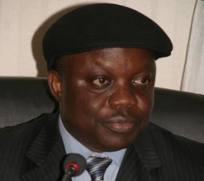
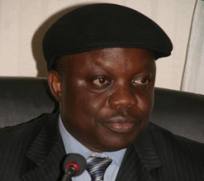
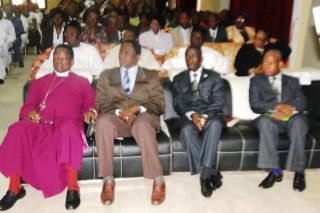
Following the recent mass exodus of Northern Muslims from Delta State due to Boko Haram’s quit notice to Christians living in the North and recall of all Muslims living outside, the state governor, Dr. Emmanuel Uduaghan has assured the Hausa/Fulani Communities in the state of adequate protection of their lives and property by State Government.
Uduaghan, who gave the assurance at a meeting with the Hausa/Fulani communities in Asaba, said adequate measures have been taken in collaboration with the security agencies to protect them and therefore there was no need to panic or relocate from the State.
He described members of Arewa Communities in the state as indigenes and thus should regard Delta as their home. The Governor promised to continue to identify with them explaining that he would promote and boost the relationship that has been existed for more than 100 years.
His words: “l want to assure you of adequate protection and security of your lives and property. You have been here for so long and you do not have any other place.”
According to the governor, the Commissioner of Police, the Director of SSS and the Army Commander are on top of the security challenges and would not allow anyone in the State to be harmed.
He enjoined them to report any problem to the traditional ruler in their neighbourhood as well as identify strange and unscrupulous visitors who could constitute threat to the state.
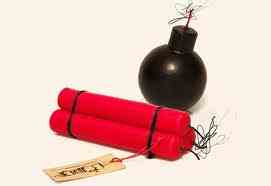
Recall that a member of the Muslim community was allegedly recently apprehended by the police in Agbor with explosives targeted to bomb a church on a Sunday morning.
Advising them to live harmoniously with their neighbours, the Governor enjoined them to caution cattle herdsmen to desist from carrying dangerous weapons.
“Live peacefully with your neighbours and advice herdsmen among you not to look for trouble and should not be carrying dangerous weapons.”
The Governor who said some of the negative reports being speculated about the state was not true, put it this way “Most negative reports making the rounds are not true. Delta State is peaceful and there has been no religious or tribal conflict. I am happy that our Arewa brothers can confirm this.”
Speaking on behalf of the Arewa Community in Delta State Hon. Bawa Abdullahi said his people are indigenes of the state especially as their fathers, grand-fathers and great grand-fathers had lived in the state for more than 200 years.
Hon. Abdullahi said many of their parents married Deltans and were born in the state and they therefore have no place to run to, explaining that some of their parents held elective positions and fought with the late Dennis Osadebey for the creation of Delta State.
The on-going strike action embarked upon by the Nigeria Labour Congress (NLC) and the Trade Union Congress (TUC) alongside their affiliate unions over the recent removal of fuel subsidy and subsequent increase in petrol pump price was successful in parts of Delta state as total compliance was observed.
The strike action had paralyzed economic activities in the state, grinding to a near halt all socio-economic endeavours of most people.
In Asaba, Delta state capital, all public and private offices, including the federal and state secretariats, banks, the Government House and the House of Assembly complied fully with the strike action as they were either locked or sealed up by the striking unions who went about with chains and padlocks.
The state acting chairman of the Nigeria Labour Congress (NLC), Comrade William Akporehe, who led the protest march from Cable Point, in Asaba, the state capital through Nnebisi road to Government House and the House of Assembly, before retiring to the Labour House, off Okpanam road urged the people to join in the strike action because the protest is for the interest of the Nigerian people.
At government House, Asaba, the Secretary to the State Government (SSG), Comrade Ovuzourie Macaulay, expressed delight over the peaceful nature of the protest, saying that the state government has provided several hundreds of buses and speedboats to mitigate the effect of the removal of fuel subsidy and make transport cheap for Deltans.
Also addressing the protesters, Speaker of the Delta state House of Assembly, Engr. Victor Ochei enjoined labour to be open for dialogue in the resolving the contending issues on the fuel subsidy removal.
The peaceful protest was manned by various security agencies which ensured that hoodlums did not hijack the protest for selfish purposes as well as a breach of the peace and security of lives and property.
The Police Public Relations Officer (PPRO), Mr. Charles Muka disclosed that the state command had ensured that its men were fully on ground to forestall any kind of chaos, adding that there had been no record of breakdown of law and order.
Meanwhile, in Warri, although the protest was totally enforced, some hoodlums who wanted to disrupt the peaceful nature of the protest were chased away by security agents, while a pro-subsidy group almost clashed with members of the labour unions before it was curtailed by the police.
The state labour leader, William Akporehe, has however declared that the strike would continue if the federal government refuses to revert to the status quo, adding that all earlier efforts by labour and the federal government to reach an agreement were deadlocked.
He commended the leadership of NLC, TUC, and all affiliates of organised labour for coming out enmasse for the protest, and assured them that labour would ensure that the wishes of the people are met.
AHEAD of gubernatorial elections in 2015, the Ndokwa ethnic nationality in Delta State has said they will work with other ethnic groups to ensure the emergence of an Ndokwa man as Governor in the state.
This position was made known at the weekend when a socio-political organization, Ndokwa Unite celebrated their day at Kwale, Ndokwa West Local Government Area of Delta State.
Those who spoke at the occasion include a former gubernatorial aspirant in the defunct Bendel State, Chief Otunuya Iwegbue (aka Okpondiogwu), the Pro Chancellor of Novena University, Ogume, Mr Chuks Ochonogor, Barrister Benedicta Osakuni-Izuegbu, Commissioner in the Delta State Oil Producing Communities Development Commission (DESOPADEC) and the President of Ndokwa National Union (NNU), Pharm. Paul Enebeli who was represented by Pastor Jonathan Dike.
Others who spoke include, Engr. Smart Agunobi and Attorney at Law, Francis Obi.
According to Dr. O. P. Opia, in a welcome address, Ndokwa Unite was formed to project Ndokwa cause among other communities in Delta State and Nigeria at large adding that the Ndokwa people “must strive to attain the top most position in Delta State.”
Also, Mr Ochonogor said that the emergence of Ndokwa man as Governor in 2015 is not impossible if the people are united, stating that individually, every Ndokwa son and daughter is committed to ensuring that an Ndokwa man becomes the Governor in 2015.
He called on the people to avoid “pull him down” syndrome and urged politicians to avoid applying violence as such will not endear them to the people.
Chief Iwegbue said, Ndokwa is well positioned to produce the Governor in 2015 being an area rich in oil and gas and with cordial relationship with their neighbours in Aniocha, Ika, Urhobo, Isoko, Ijaws, among others, emphasizing that victory in election is collective and as such, the Ndokwa nation will work with all ethnic groups in Delta State to ensure that an Ndokwa man emerges victorious in the 2015 gubernatorial election.
The former governorship aspirant said Ndokwa people can no longer play second fiddle to anybody but deserves the number one position in the state as an “Ndokwa agenda will be acceptable to all Deltans.”
President of Ndokwa National Union, the apex body of socio-cultural organizations in Ndokwa-land, Pharm. Enebeli, whose address was read by Pastor Jonathan Dike, urged the people to shun violence and be united to ensure that they achieve their mission.
While, Mr. Henry Okechukwu described the turnout of people as encouraging as a result of the political reawakening in Ndokwa land, Mrs. Benedicta Osakuni-Izuegbu called for a more united Ndokwa.
For Mr. Obi and Agunobi, an Ndokwa man is better placed to emerge as Governor in 2015 and as such, concerted efforts should be made especially, in terms of relating with other ethnic nationality to buy into the idea.
The Court of Appeal sitting in Benin has dismissed the appeal filed by Chief Great Ogboru of the Democratic Peoples Party (DPP) and sustained the declaration of Dr. Emmanuel Uduaghan of the Peoples Democratic Party (PDP) by the Independent National Electoral Commission (INEC) as winner of the April 26, 2011 governorship poll in Delta state.
While dismissing the appeal for lack of merit, Justice M. Dattijo Mohammed said “all the preliminary objections are unmerited and are accordingly overruled; the main appeal lacks merit and it is dismissed and the three cross-appeals having succeeded and are hereby allowed”
In his reaction to the judgement, Governor Uduaghan said that his election victory at the Court of Appeal, Benin City would spur him to greater achievements as he enjoined Deltans to trust him.
He described the victory as victory for the people, for democracy and for development. “This victory is for all our people for the truth and for making the votes count”, the governor said.
Also reacting, Secretary to the Delta State Government (SSG), Comrade Ovuzourie Macaulay, “said that God has done it again, we have been vindicated because all our appeals in this court have been upheld because though we won at the tribunal, there were still some levels of injustice in the judgment that was delivered at the tribunal”.
He appealed to the opponents to join Dr. Uduaghan to move the state forward as it would continue to move.
Recall that Chief Great Ogboru had appealed against the judgment of the lower tribunal at Asaba, claiming that the tribunal erred in its ruling by declaring Dr. Uduaghan as winner of the said election and prayed the appellate court to declare him winner, having scored the majority of the lawful cast.
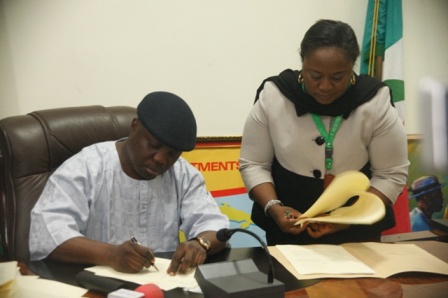
GOV. UDUAGHAN SIGNS 2012 N437BN BUDGET @ EXCO CHAMBERS, GOVT. HOUSE, ASABA, WITH ACTING CLERK, DELTA STATE HOUSE OF ASSEMBLY, MRS. LYNA OCHULOR
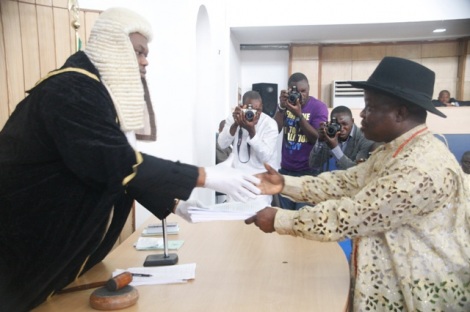
Delta state governor Dr. Emmanuel Uduaghan has signed the 2012 appropriation bill of 437 billion naira into law and promised to pay special and prompt attention to the Transport, Education and power sectors.
Recall that the governor had in December last year presented a budget proposal of N383,390,132,338: 100.00 to the state House of Assembly, The budget was made up of N169.82 billion for recurrent expenditure and N213.57 billion for capital expenditure.
But the new face of the budget, tagged “Budget of Sustainable Development”, had showed an aggregate increase of over N54 billion from the earlier proposed sum of over N383 and a total of over N75 billion increase when compared to the 2011 approved estimate of N361.90 billion.
While signing the budget into law at the Exco chambers, Government House, Asaba, Governor Uduaghan explained that the transport sector would enjoy prompt attention as his administration has already taken delivery of over 200 buses to cushion the effect of fuel subsidy removal by the Federal government.
His words “We are paying special attention to the transport sector because we are providing palliatives to reduce the hardship the removal of fuel subsidy would cause the people”.
He also noted that the energy sector would also enjoy special funding so that there would be uninterrupted supply of electricity and reduction on the use of generator, explaining that the state government would soon take delivery of 300 transformers and install them to increase electricity supply.
“We are expecting about 300 transformers and we hope to use them to boost electricity supply. Once this is done, people will reduce the use of generators and consequently fuel”.
He assured Deltans that his administration would do better this year through accelerated infrastructural development and called on Deltans to support his administration and provide useful and constructive criticism rather than destructive and injurious ones.
“My administration welcomes constructive criticism and not destructive ones. We need constructive criticism from the opposition and all other camps but not the criticisms that will distraction us and lead to the distraction of the state. We are focused and need positive advice”.
Governor Uduaghan who commended the state House of Assembly for promptly passing the appropriation bill which he described as a record in the history of the state, promised to work harmoniously with the House to enable it make laws that would improve the living standard of the people.
Earlier, during the presentation of the bill to the governor, the Speaker of Delta state House of Assembly, Engr. Victor Ochie said the House decided to make a difference in passing the bill in a record time. The Speaker promised to continue to keep to the trend in the passage of future bills but could not explain the reason behind the increment in the proposed budget.
Uduaghan, had while presenting the 2012 budget to the state House of assembly late last year, explained that the budget was predicated on result-oriented strategies, adding that “Government is moving away from the usual budget practices of mere allocation of figures to a practical, structured, and robust approach that can sustain development. This Budget, therefore, is crafted to address the problems that have confronted us over the years”, he had said.
Various contractors handling major road, drainage projects in Delta state, especially in Asaba, the state capital have ignored the January 3 deadline issued by Governor Emmanuel Uduaghan to them to return to site.
Governor Uduaghan had on Tuesday revealed that contractors handling projects for the state where paid over N15billion last December and as such have no excuse for not being on site after the Yuletide.
Blank NEWS Online findings have however revealed that contractors are yet to return to site. The Asaba-Ughelli dualization road project, Okpanam-Legislative Quarters and Anwai-Government House drainage systems which have become death-traps to motorists are still unattended to.
Uduaghan had threatened that due to the encouragement given to the contractors, any of them who fail to go back to site this week would be deemed to have abandoned their projects since the money paid was to accelerate work and enable them meet set target as a result of the now conducive weather.
“I am expecting contractors executing government projects to return to site. We paid them N15billion before Christmas and I believe they have no reason not to go back to site by tomorrow (Tuesday 3rd of Jan 2011)”.
But true to bookmakers’ prediction, the contractors have shunned Governor Uduaghan and his threat, just as majority of Deltans say that the abandoned roads and drainage projects have become death-traps.
“These roads and drainages have killed many of our people as vehicles oftentimes plunge into them”.
They also queried why major projects awarded by the state government since the inception of the Uduaghan-led administration are usually abandoned without the perpetrators brought to book.
Delta State Governor, Dr. Emmanuel Uduaghan has lamented the impact of the recent Bonga oil spill on some communities in state and across the Niger Delta region, calling on Shell to give full disclosure of the impact and extent of damage of the spill.
While saying that he expects Shell to take steps to ensure adequate clean-up and compensation for the affected communities, Uduaghan said the marine life and economic wellbeing of the coastal communities are deeply threatened.
He therefore dismissed claims by Shell that the spill was contained before spreading as not being supported by hard evidence of what is happening in Ogulaha, Beniboye and Okuntu in Delta State and Orobiri, Odiama and Aggeh communities in Bayelsa State, which have experienced the impact of the spilled oil.
The state governor reminded Shell that BP took steps to act in cleaning up and compensating those affected by its large scale spill in the Gulf of Mexico two years ago and does not think the Niger Delta environment should be different.
He further called on the federal government through its agencies, NOSDRA and NIMASA to ensure that full remedial measures are taken to restore the environment and to mitigate further damage.
According to Governor Uduaghan, “shortly before Christmas it was reported that a blow-out occurred leading to spill in the Bonga oil field. Recent events now show that my fear of the spill spreading to the shores as a likely consequence has occurred. Although Shell claims that its containment of the spill was successful, reports before me from communities indicate otherwise.
“My position is that this is not the time to avoid responsibility on this issue. Shell should step forward and follow the examples of BP which had similar experience and acted responsibly. Delta state will follow closely what happens in those communities and demands that necessary action be taken to restore the environment back to the people.”
Leaders of the Okpe nation have stated that they have no intention to articulate any means of conflict and crisis with the Itsekiri, or to engage them in any battle. However, they accused Itsekiri leaders of designing evil scheme to instigate crises and communal battle in Okpe land.
In a statement issued on behalf of the Okpe nation and signed by Prof. Emurobome Idolor (President, Okpe Union, Sapele Branch) and Mr. Isaac Ohwosoro (Secretary, Okpe Union, Sapele Branch), the leaders said the Itsekiri came to the Okpe communities as individual traders who were generously allowed to stay for exchange of commodities.
“Apart from trading in specific locations on the river banks of Okpe communities, the Itsekiri came to Sapele and some other Okpe communities as refugees of ‘the Nana war’ in the late 19th century; and the Itsekiri refugees paid homage to the Okpe in Sapele and the other Okpe communities.”
“As refugees of the Okpe from the time of ‘the Nana war’ to the recent time of ‘the Itsekiri-Ijaw war’, the Itsekiri conduct themselves with undue arrogance as they turn around to make claims to the ownership of the territorial asylum”.
They described the Itsekiri as opportunists who took advantage of positions that their sons had in the colonial and subsequent administrations even to date to cause conflicts and crises in the Niger Delta region, and which accounts for the number of communal battles and wars they had fought with their neighbouring Urhobo, Ijaw and Okpe.
Recalling how in 2004 the Itsekiri tried to incite the Delta State Government against the Okpe immediately after the grave attack they launched against Ugbukurusu, an Okpe community, they said since Dr. Emmanuel Uduaghan became governor of Delta State, Itsekiri have made many attempts to incite the government of the state against the Okpe in attempt to use the contemporary administrative forces to cede all Okpe land to the Itsekiri.
They alleged that the Itsekiri have a substantial fund in Texas, USA, which they set up over the years with a view to invading their neighbouring communities in order to take over their land.
“We are aware too that they have utilized this fund to acquire weapons of warfare, stocked in strategic warehouses within and around Okpe territory, which they intend to try out in scuffle, with the hope that the Delta State government would support them with public funds, security forces and other resources. “
They urged the Itsekiri monarch, Itsekiri Leaders of Thought and the Itsekiri Establishment, as well as the Delta State government to call to order, those who are contriving evil of deliberate communal provocation in Sapele in particular and in Okpe Kingdom in general.
“It is pertinent to remind the Itsekiri elders and leaders that, over the years, the Okpe had provided them refuge at times of their battles and needs. There is the fact of complexity of inter-marriages and family networks between Okpe and Itsekiri.
The leaders also described as spurious and provocative the claim that the Okpe nation is a ‘stateless society’ and that the Itsekiri founded all the major Okpe towns including Sapele, Elume, Mereje, Orerokpe and Aghalokpe.
The Itsekiri’s continual provocation, according to the Okpe leaders, is again manifested by their erroneous claim that the 1942/43 Sapele land case was inconclusive in the Law Court.
“These claims are indeed sly-dogs to tell to the marines. Chief D.O. Dafinone provided explicit and incontrovertible evidence of how the Sapele land case was concluded at the High Court of the Warri Judicial Council and the West African Court of Appeal. There is no doubt that the Itsekiri live in Sapele. As to how they came to live in Sapele, both the trial Court as per Justice Jackson and the West African Court of Appeal found that: “After the Nana war which took place in 1894, a large number of Jekkris ran for refuge to Sapele and obtained permission of the Sobos (Sapele Okpe people) to settle, giving customary dashes for the customary privilege”. The verdict of the trial and appellate courts based on this finding is reported in 9 WACA at page 85. The historic verdict that Sapele land is owned by Sapele Okpe people cannot, therefore, be dismissed by the Itsekiri.”
“If indeed the Itsekiri arrived in the Okpe territory before the Okpe people as Prof. Jennifer Alao claims, where is the history of the warfare between the Okpe and Itsekiri, or of the displacement of the Itsekiri by the Okpe as of that time? How many Itsekiri were in these Okpe towns before the fictitious late arrival of the Okpe, and how were the Itsekiri roots completely expunged from all available historical, legal and administrative records, including oral tradition to prove that these places are not Okpe communities from their origin till date?”
As part of its New Year gift to Nigerians, the Federal Government on Sunday, January 1, 2012 formally removed fuel subsidy. This move by the federal government may have put to rest agitations over the controversial economic issue.
Making the official pronouncement on Sunday, Petroleum Products Pricing Regulatory Agency (PPPRA) revealed that petrol, Premium Motor Spirit (PMS) will now be sold at N141 per litre.
The PPPRA, in a statement made available to Blank News Online declared that:
”Following extensive consultation with stakeholders across the nation, the Petroleum Products Pricing Regulatory Agency (PPPRA) wishes to inform all stakeholders of the commencement of formal removal of subsidy on Premium Motor Spirit (PMS), in accordance with the powers conferred on the agency by the law establishing it, in compliance with Section 7 of PPPRA Act, 2004.
”By this announcement, the downstream sub-sector of the petroleum industry is hereby deregulated for PMS. Service providers in the sector are now to procure products and sell same in accordance with the indicative benchmark price to be published fortnightly and posted on the PPPRA website.
”Petroleum products marketers are to note that no one will be paid subsidy on PMS discharges after 1st January 2012.
”Consumers are assured of adequate supply of quality products at prices that are competitive and non-exploitative and so there is no need for anyone to engage in panic buying or product hoarding.
“The PPPRA in conjunction with the Department of Petroleum Resources (DPR) will ensure that consumers are not taken advantage of in any form or in any way.
”The DPR will ensure that the interest of the consumer in terms of quality of products is guaranteed at all times and in line with international best practice.”
“In the coming weeks, the PPPRA will engage stakeholders in further consultation to ensure the continuation of this exercise in a hitch-free manner.”
ADDRESS BY PRESIDENT GOODLUCK JONATHAN, GCFR, ON THE DECLARATION OF A STATE OF EMERGENCY IN CERTAIN PARTS OF NIGERIA TO RESTORE PUBLIC ORDER, PEACE AND SECURITY, December 31, 2011
Fellow Nigerians, it has become necessary to address you on recent events in some parts of the country that have threatened our collective security and shaken the foundations of our corporate existence as a nation.
You are all aware of the security challenges which the activities of the Boko Haram sect have foisted on the country. What began as sectarian crises in the North Eastern parts of the country has gradually evolved into terrorist activities in different parts of the country with attendant negative consequences on our national security.
Government in an effort to find a lasting solution to the security threats occasioned by the activities of the Boko Haram sect, constituted a Presidential Committee under the Chairmanship of Ambassador Usman Gaji Galtimari, to ascertain the immediate and remote causes of the crises. While efforts are being made to implement the recommendations of the Committee, the crises have assumed a terrorist dimension with vital institutions of government including the United Nations Building and places of worship becoming targets of terrorist attacks.
While the search for lasting solutions is ongoing, it has become imperative to take some decisive measures necessary to restore normalcy in the country especially within the affected communities. Consequently, I have in the exercise of the powers conferred on me by the provisions of section 305(1) of the Constitution, declared a state of emergency in the following parts of the federation, namely:
(i)BORNO STATE
a) Maidugiri Metropolitan LGA
b) Gamboru Ngala LGA
c) Banki Bama LGA
d) Biu LGA
e) Jere LGA
(ii) YOBE STATE
a) Damaturu LGA
b) Geidam LGA
c) Potiskum LGA
d) Buniyadi-Gujba LGA
e) Gasua-Bade LGA
(iii) PLATEAU STATE
a) Jos North LGA
b) Jos South LGA
c) Barkin-Ladi LGA
d) Riyom LGA
(iv) NIGER STATE
a) Suleja LGA
The details of this proclamation will be transmitted to the National Assembly as soon as they reconvene from their current recess, for their necessary action.
The Chief of Defence Staff and the Inspector-General of Police have been directed to put appropriate measures in place to ensure the protection of lives and properties of residents in the affected parts of the country. I therefore urge the political leadership in the affected states and Local Government Areas to give maximum cooperation to the law enforcement agencies deployed to their respective communities to ensure that the situation is brought under control within the shortest possible time.
The Chief of Defence Staff, in collaboration with other Service Chiefs, has also been directed to set up a special force unit within the Armed Forces, with dedicated counter terrorism responsibilities.
As part of the overall strategy to overcome the current security challenges, I have directed the closure of the land borders contiguous to the affected Local Government Areas so as to control incidences of cross boarder terrorist activities as terrorists have taken advantage of the present situation to strike at targets in Nigeria and retreat beyond the reach of our law enforcement personnel.
Let me assure our neighbours, especially within the ECOWAS sub-region, of Nigeria’s commitment to its international obligations as provided by the ECOWAS Protocol on Free Movement of Persons. The temporary closure of our borders in the affected areas is only an interim measure designed to address the current security challenges and will be reviewed as soon as normalcy is restored.
I commend the efforts of our political leaders at various levels as well as our traditional and religious leaders for their support for the various conflict resolution mechanisms and peace building measures that have been initiated by this administration. We call on the citizenry to continue to provide useful information to our law enforcement agencies to enable us arrest the situation.
Terrorism is a war against all of us. I call on all Nigerians to join hands with government to fight these terrorists.
Our attention has been drawn to a publication in the Vanguard newspaper of Thursday, December 8, 2011, page 43 captioned ‘Scientific Perspective of Sapele’ said to be written by one Prof. Jennifer Alao who claimed that her writing stemmed out of a book titled ‘History of Sapele in Scientific Perspective’, alleged to have been authored by ‘Eyebira Agharowa Emmanuel (Honsbira) and Olomu Oghanrandukun Oritseweyinmi (St. Ifa)’ and published by ‘Warri Ancient History and Literary Society’. Apart from the spurious and provocative claim that the Okpe nation is a ‘stateless society’, the writer further claimed maliciously and wrongly that the Itsekiri founded all the major Okpe towns including Sapele, Elume, Mereje, Orerokpe and Aghalokpe. The writer is, however, ignorant that even Onigu Otite, Professor and a foremost political Sociologist, in his anthropological case study of Okpe Kingdom (1973:113), had authoritatively listed all these towns amongst the headquarters of the twelve administrative districts of Okpe Kingdom founded by the descendants of the four founding princes of the Okpe nation.
The Itsekiri’s continued provocation is again manifested by their erroneous claim that the 1942/43 Sapele land case was inconclusive in the Law Court. These claims are indeed sly-dogs to tell to the marines. Chief D.O. Dafinone, in the Vanguard newspaper of December 13, 2011, pages 52 and 53, has provided explicit and incontrovertible evidence of how the Sapele land case was concluded at the High Court of the Warri Judicial Council and the West African Court of Appeal. There is no doubt that the Itsekiri live in Sapele. As to how they came to live in Sapele, both the trial Court as per Justice Jackson and the West African Court of Appeal found that: “After the Nana war which took place in 1894, a large number of Jekkris ran for refuge to Sapele and obtained permission of the Sobos (Sapele Okpe people) to settle, giving customary dashes for the customary privilege”. The verdict of the trial and appellate courts based on this finding is reported in 9 WACA at page 85. The historic verdict that Sapele land is owned by Sapele Okpe people cannot, therefore, be wished away by the Itsekiri.
Besides, Onigu Otite makes it clear that the second largest town in the former Midwestern State, Sapele, belongs to Okpe people and about 1963, the Okpe Kingdom had 150 towns and villages, all founded by the descendants of the four sons of Okpe, namely Orhue, Orhoro, Evbreke and Esezi. If indeed the Itsekiri arrived in the Okpe territory before the Okpe people as Prof. Jennifer Alao claims, where is the history of the warfare between the Okpe and Itsekiri, or of the displacement of the Itsekiri by the Okpe as of that time? How many Itsekiri were in these Okpe towns before the fictitious late arrival of the Okpe, and how were the Itsekiri roots completely expunged from all available historical, legal and administrative records, including oral tradition to prove that these places are not Okpe communities from their origin till date?
It is amazing how certain individuals can simply misuse the human freedom of expression to put up illogical and provocative publications such as this fiction in the media. The reviewer and writers of the publication ought to have presented researched materials to lend credence to their claims of a scientific perspective. We have not seen any such evidence. We have not even heard of, nor seen any scholars who know the reviewer and the writers. We therefore wonder if they are not fictitious, whose intendment is to unwarily spark communal conflagrations between the indigenous Okpe community of Sapele and the Itsekiri people and thereafter disappear into thin air. Which sound professor would put up a scruffy publication, which appears neither a book review nor the draft of a drama? The ‘Warri Ancient History and Literary Society’ quoted as publisher seems to be the sponsor and not a publishing company.
We have made efforts to get copies of the publication and so far found that no such a book was ever published in 2011 as can be inferred in the review by Prof. Alao. We found speculations, however, that it is a mere movie script comprising fiction and imaginations. It seems to us that the Itsekiri have fashioned out this confrontational publication as an evil scheme to instigate crises and communal battle, perhaps because as it is well known to us, they have acquired a huge armoury of guns and other war materials which they wish to try out on their Okpe hosts. It should be noted that it is not our intention to articulate any means of conflict and crisis with the Itsekiri, or to engage them in any battle; we wish to make it clear and to put the records in the public domain that while the Okpe nation maintains critical knowledge and watch of the Itsekiri criminal intent and project in their relations with the Okpe Kingdom, we will continue to sustain our records of peaceful hospitality towards all Nigerians, including the Itsekiri who reside in the two Local Government Areas of Okpe and Sapele in Delta State.
Onigu Otite (1973) wrote about the framework of pluralism and integration as a phenomenon of colonization by which diverse socio-cultural peoples were grouped into one society. This was the experience of the Okpe, Isoko and Urhobo which were grouped and called Sobo. According to Otite, it was on October 1, 1938 that the name ‘Sobo’ or ‘Subou’ was officially changed to Urhobo as the appropriate and desired collective name for the socio-cultural units which used to be independent of one another due to their separate settlements in their present territories. In the same vein, Otite drew reference to the observation of L. N. Bowen, a European explorer who remarked that the Okpẹ were reputed to be the most progressive and best administered ethnic group through their native authority, the Orodje (king) of Okpẹ, and set a good example for the others in the whole of the Western Urhobo Council Area and Warri Province. As a result, ‘Orerokpe the capital of Okpe kingdom was made the headquarters of Western Urhobo District Council.
From the point of view of linguistics, Talbort, in his book, The Peoples of Southern Nigeria, Volume IV (1926), stated that the earliest of all the Nigerian languages from the 1st millennium B.C. is Ijaw, a relic of pure Negro speech and Edo to which the Okpe, Urhobo, Isoko are associated; and much later in the 2nd millennium B.C. the Itsekiri which was founded by Oginuwa in about 1480 became historically associated with the Yoruba. Historical records and oral tradition state that the earliest Europeans, the Portuguese visited the west coast of Africa and made contact with Benin City in 1485 and traded with the inhabitants of the hinterland, which included Benin, Urhobo, Okpe and Itsekiri.
In oral cultures, musicians are acknowledged historians who keep records of events in musical compositions that are performed and transmitted through various forms of oral literature from generation to generation. In the particular case of Okpe people, igoru being one of their oldest music, according to Idamoyibo (2006) in his in-depth research captured the history that the Itsekiri monarchy migrated from Benin through the waterways to the Itsekiri settlements of Ode Itsekiri (Old Warri) and Koko. In the course of time, Itsekiri merchants and petty business men and women traded with the Okpe and other peoples in market locations by the watersides in Okpe communities like Sapele, Ajaguoyibo, Ajagolo, Elume, Ikeresan (Orhorhomu), Ugbukurusu and Obotie. The penchant for Itsekiri names of waterside market out posts have nothing to do with settlement of Itsekiri traders and ownership of these isolated market locations in Okpe land.
This oral account confirms that the Itsekiri came to the Okpe communities as individual traders who were generously allowed to stay for exchange of commodities. Apart from trading in specific locations on the river banks of Okpe communities, the Itsekiri came to Sapele and some other Okpe communities as refugees of ‘the Nana war’ in the late 19th century; and the Itsekiri refugees paid homage to the Okpe in Sapele and the other Okpe communities. We recall also that when the Itsekiri conducted their warfare with the Ijaw between 1997 and 2003, they sought for refuge in many Okpe communities and they were so provided refuge. As refugees of the Okpe from the time of ‘the Nana war’ to the recent time of ‘the Itsekiri-Ijaw war’, the Itsekiri generally conducted themselves with undue arrogance as they turn around to make claims to the ownership of the territorial asylum. They have shown the same attitudes of making bogus claims to land ownership in places such as Ajalomi in Abraka, Otumara in Okpara and Ugbomoja in Jesse where they also traded with the Urhobo.
It is a known fact that the Itsekiri are opportunists who took advantage of positions that their sons had in the colonial and subsequent administrations even to date to cause conflicts and crises in the Niger Delta region, and which accounts for the number of communal battles and wars they had fought with their neighbouring Urhobo, Ijaw and Okpe. Corroborating this fact, the distinguished historian, Prof. Obaro Ikime (2005) intimated us that the British began penetration into the Urhobo (and Okpe) region from 1896 and sought for assistance of persons who knew about the hinterland peoples and the land. They found some assistants from among the Itsekiri who live at the coast. It was in this way that a few Itsekiri British-appointed political agents found their way into Urhobo land (and Okpe land) during the establishment of British colonial rule.
Obaro Ikime stated further that Chief Dogho, an influential Itsekiri merchant assisted the British to conquer Chief Nana, also an Itsekiri in August 1894, for which he (Dogho) was given several appointments in appreciation. He was appointed president of Benin River Native Court in 1896, British political agent in 1897, permanent president of both the Warri native Court of Appeal in 1914, and Native Authority for the Warri Divisional Province, which covered the territories of the Urhobo, Okpe, Isoko, Ijaw, Ukwani and Aboh ethnic groups. In the 1920s, Dogho began to collect full rents for plots of land in Agbassa (Urhobo). And by 1925, the Urhobo of Agbassa in Warri took Dogho to court, challenging his rights for collecting rents in their own land, but lost the case. By extension of the same act, Chief Dogho instructed the Itsekiri in Sapele to stop paying rents to their Okpe landlords, arguing that Sapele land belonged to the Olu of Itsekiri whom he claimed to represent. The Okpe so resented this action that it resulted into the Sapele land case which the Okpe won in 1943.
Further on how the Itsekiri took advantage of political powers available to them, Prof. Peter Ekeh (1999) wrote that Urhobo and Itsekiri youths in Okere, Warri had a fight on June 4, 1999, which was flashed on the cyberspace that evening as a joint operation between Ijaw and Urhobo in an effort to wipe out the Itsekiri. The Itsekiri Survival Movement directly accused the Urhobo of engaging in “genocide’’ and “ethnic cleansing’’ while the Ugbajo Itsekiri, an aristocratic club of the Itsekiri in the United States, released on the internet and cyberspace the text of a letter it presented at a meeting at the State Department, inviting the United States to intervene in the crisis of the Western Niger Delta of Nigeria. Ekeh concluded that the Itsekiri had often incited government against its neighbouring ethnic groups, thus again attempted to incite the US government against the Urhobo with the accusation on genocide – an unforgivable offence of the 21st Century.
In recent times, we recall how in 2004 the Itsekiri tried to incite the Delta State Government against the Okpe immediately after the grave attack they launched against Ugbukurusu, an Okpe community, because the current Governor of Delta State, an Itsekiri was SSG in the State and since after he became Governor, they have made many attempts to incite the government of the state against the Okpe in attempt to use the contemporary administrative forces to cede all Okpe land to the Itsekiri. We have reliable information that the Itsekiri have a substantial fund in Texas, USA, which they set up over the years with a view to invading their neighbouring communities in order to take over their land. We are aware too that they have utilized this fund to acquire weapons of warfare, stocked in strategic warehouses within and around Okpe territory, which they intend to try out in scuffle, with the hope that the Delta State government would support them with public funds, security forces and other resources.
Having raised these observations, we hereby call on the Itsekiri monarch and Itsekiri Leaders of Thought and the Itsekiri Establishment, as well as the Delta State government to call to order those who are contriving this present evil of deliberate communal provocation in Sapele in particular and in Okpe Kingdom in general. It is pertinent to remind the Itsekiri elders and leaders that, over the years, the Okpe had provided them refuge at times of their battles and needs. There is the fact of complexity of inter-marriages and family networks between Okpe and Itsekiri. Less than two years ago, (Vanguard: 1st March 2010. P. 29), an Okpe civil society group, Okpe Scholars Association Worldwide, raised very pertinent issues and questions for the Itsekiri people, but which they have not addressed; and now the resurgence of fundamental matters of communal provocation.
The issues and questions include: Do we now bequeath dispute, warfare and mortal enmity to our children? Is it because the Head of the Executive, the Security Agencies and the Judiciary of the state today are of Itsekiri extraction that the Itsekiri trouble makers have suddenly waken up with schemes of battle and bogus claims to ownership of Okpe land and communities? Over the years, until the Itsekiri began to occupy these positions, the Okpe and Itsekiri have lived together relatively peacefully without the intoxication and arrogance of aggressive attacks on the Okpe Kingdom by the Itsekiri. Be it known that the Okpe people are critically aware of this new development. We are in no doubt that these false and bogus claims of land ownership are meant to provoke the Okpe people and lure them into the type of conflict, killing and destruction which Nigerians witnessed recently in the Itsekiri and Ijaw conflict.
The Okpe will however continue to maintain peace and order, and not start any crisis or battle with the Itsekiri; but if the Itsekiri think that intensive crises or battle is in their best interest, then let them start it.
We therefore aver that “Enough is Enough” and the Me-Generation Group in Itsekiri Lands are hereby warned that the Battle for their Souls is less more difficult to win than the Battle of their Mortal Men.
Oghara, hometown of former governor of Delta state, Chief James Ibori, may be witnessing some ruckus as the choice of Chief William Ibori, elder brother of the former governor as spokesman (Unugbrogodo) of Ogharefe community in Ethiope west local government area of Delta state has caused untold mayhem among rival groups in the clan.
One person has been reported dead as a result of the communal crisis in an alleged gun duel with mobile policemen drafted to the area to curtail the near-war situation.
A dependable source revealed that the position of spokesman for Ogharefe community which has been in contention is being contested for by one Chief Erubami (a.k.a Ogbo) and Chief William Ibori, but that trouble started when the later favoured for the exalted position.
Another source disclosed that the deceased person, a member of the community’s youth group and alleged loyalist to Chief Erubami was shot dead by a team of mobile policemen drafted to the scene of the crisis, during a gun duel.
An insider source also confirmed that Chief Willian Ibori had the backing of the state government while other sources say that Chief Erubami was not a true son of Ogharefe since his mother hails from there while his father is from Oghareki, one of the ancestral communities in Oghara Kingdom.
Chief WilliamIbori was on Wednesday sworn in as the new spokesman (Unugbrogodo) of Ogharefe community, a development which allegedly angered the Erubami led faction and leading to untold crisis.
Meanwhile, the Delta state police command has confirmed the incident but denied that the youth leader was shot by the police, saying that one person has been arrested for arms possession.
The state Police Public Relations Officer (PPRO), Charles Muka, said “I have contacted the Divisional Police Officer (DPO) in charge of the area. There is youth leadership tussle and according to the DPO, the youths mobilized, armed themselves with various weapons. We even arrested somebody with an automatic Pump Action gun, but later the corpse of a man was discovered inside a vehicle parked, with injuries in a very different location and there is no trace to who killed him.
He added that “the corpse of the deceased has been removed to the mortuary for autopsy while the police are monitoring the situation with full investigation to ascertain the circumstances that led to the crisis.”
As the Supreme Court delivers judgement on the April 16, 2011 Presidential election which has been in contention at the Tribunal and Courts since the Independent National Electoral Commission (INEC) declared Dr. Goodluck Ebele Jonathan as duly elected President of the Federal Republic of Nigeria, the major contenders, President Goodluck Jonathan of the Peoples Democratic Party (PDP) and General Muhammadu Buhari of the Congress for Progressive Change (CPC) reacts to the verdict of the Supreme Court.
Blank NEWS Online presents their separate statements:
JONATHAN:
PRESIDENT JONATHAN WELCOMES SUPREME COURT CONFIRMATION OF HIS VICTORY IN APRIL ELECTIONS
President Goodluck Ebele Jonathan welcomes the unanimous confirmation by the Supreme Court of Nigeria today of his victory in the April, 2011 Presidential elections.
The President applauds the ruling by seven justices of the court which puts a final seal of approval on his victory which was already acknowledged by the vast majority of ordinary Nigerians, political parties and the international community.
He also commends the presidential candidate of the Congress for Progressive Change (CPC), General Muhammadu Buhari for availing himself of the country’s legal and judicial system in expressing his reservations about the conduct of the elections.
Now that that process has run its full course, President Jonathan hopes that General Buhari and his party will accept the ruling of the esteemed Judges of the Supreme Court in good faith and join hands with him and other well-meaning Nigerians to build a united, stronger and prosperous nation that present and future generations of Nigerians can be proud of.
He expects that General Buhari will continue to contribute positively to national development and also mobilize his supporters across the country to join in the process of national reconciliation and national renaissance.
President Jonathan thanks all Nigerians once again for their trust and confidence which gave the Jonathan/Sambo ticket an overwhelming victory in the elections.
He assures the nation that the federal government, under his leadership, will remain fully focused on its objectives and continue to work assiduously to implement its agenda for national transformation in fulfillment of his promise of better living conditions for all Nigerians.
Reuben Abati, Ph.D., Special Adviser to the President(Media & Publicity), December 28, 2011.
BUHARI:
SPEECH BY GENERAL MUHAMMADU BUHARI ON THE SUPREME COURT VERDICT, DECEMBER 28TH, 2011
As in 2003 and 2007, the Supreme Court this morning rejected CPC’s appeal against the Lower Court verdict that the rigged Presidential election of 16th, April 2011 was properly conducted. All who witnessed the conduct of the 2011 elections would know that this decision of the Supreme Court is politically motivated and has little judicial content. This Supreme Court has proved no better than the Supreme Courts of 2003 and 2007. For the records, let me refresh the public memory about what happened in the litigations after the 2003 and 2007 rigged elections. In 2003 we presented a cast iron case before the Court of Appeal citing several major infringements of the Electoral Act 2002. In particular we subpoenaed INEC to furnish the Court with proof of the “result” they declared. They did not, because they could not. The Court still declared the result as valid. Worse still, the Supreme Court upheld this dubious ruling of a dubious election.
In 2007 I and my Party the ANPP produced copious proof that the presidential election was rigged in the most blatant fashion. For one, ballot papers were distributed to polling stations on blank sheets of paper, making it impossible to carry out an audit trail. Secondly, during the process of tallying the result, the egregious Professor Maurice Iwu, then Chairman of INEC excused himself from the collation venue (after only 11 states and Abuja of the 36 states were tabulated) and announced the “result”. At the time he made this announcement voting materials had not even fully arrived in some states. Only in Nigeria and only under a government like PDP’s would these criminalities pass the sanction of the Judiciary. Yet on appeal, the Justice Idris Kutigi Supreme court after a long adjournment, declared the election valid, with three justices dissenting. In both elections, local and international observers condemned the elections in no uncertain terms.
What happened in this year’s 2011 elections eclipsed all the other elections in the depth and scope of forgery and rigging. Initially there were high hopes that after 2003 and 2007 a semblance of electoral propriety would be witnessed. The new chairman of INEC, Professor Jega, was touted as competent and a man of integrity. He has proved neither. After asking for – and getting – close on #100 billion for the election including biometric data with all ten finger prints to conduct a thorough electoral exercise, he botched it. When our Party CPC demanded forensic material, finger printed ballot papers to prove colossal and widespread multiple voting throughout the country rendering the election invalid in at least 25 out of the 36 states of the federation, INEC refused to provide them in Court, citing national security. A laughable excuse if ever there was one. The national and international monitors having seen their work wasted and ignored this time took the line of least resistance and declared the elections as o.k. Who can blame them? Yet the Justices of the Supreme Court have now seen nothing wrong in this.
To nobody’s surprise therefore, that spontaneous violence broke out in parts of the country after the announcement of the “result”. The Lemu Panel has come up with detailed causes of the riots and given lie to those who wanted to label the riots as my handiwork. The facts are that people were deeply angered and deeply provoked at the wanton conduct of the elections: the snatching and stuffing of ballot boxes, violence unleashed on opposition supporters, use of the police and elements of the army to intimidate injure and kill opposition supporters and flagrant change of results after collation such as in Niger, Bauchi and Kaduna states. Moreover the declaration of 86% – 90% of votes registered and cast in most part of the South-East and South-South states was highly implausible given the general turn-out of 50% – 60% in the rest of the country. No election is credible where 100% of votes cast were for one candidate in many constituencies and 90% in some states. This is plain fraud. No election can be validated if 100% of those registered all cast their votes in favour of the same candidate. It is for these reasons INEC refused to release the biometric data. The Supreme Court has turned a blind eye and deaf ear to these gross irregularities. That is the theme running through all three elections since 2003.
The country now has to live with the consequences of the actions of PDP government in collaboration with INEC, police and security services over the last 10 years. A country on the brink of developing into the major continental Power in 1999 is now a fractured society, corruption everywhere, violence everywhere, a sense of helplessness and hopelessness nearly everywhere. While the country is sliding into this chaotic state, PDP governments at the centre and in the states are engaged in massive and mindless plunder of the country’s resources in total disregard of the suffering masses.
The country now is in an emergency situation. Law and order can break down at any time. Those in charge of the country should be warned that promises and sweet words are no substitute for practical action. To avert the looming chaos in the New Year, immediate steps should be taken to drastically reduce the cost of governance in the three tiers of government. Salaries and especially allowances should be drastically reduced; security votes should be abolished – not increased as the 2012 Budget has done. Votes for the Armed forces, Police and Security Services should be transparent and accountable; foreign travel and estacodes should be stopped for at least six months other than for the Presidency, Ministry of Foreign Affairs and medical emergencies. Government House expenses in all the states should be drastically reduced, foreign travel suspended for a while. The National Assembly should give a lead in reducing their allowances substantially and stopping their foreign travels. These savings should be applied to education, infrastructure and agriculture with emphasis on youth employment through meaningful and practical emergency programmes. The public will see through any cosmetic or token gestures and will not tolerate a continuation of status quo. Corruption and plunder are the root causes of unemployment, insecurity, violence and unrest.
If all hands are on deck to help save our country from imminent collapse we should stabilize. When that happens Nigeria should take a close look at the country’s structure in a calm and unemotional atmosphere. Hopefully we may come to a better form of government to see Nigeria through the next 50 years.
An explosion, suspected to be bomb has rocked Sapele in Delta state, making it the second of such explosion. The last incident affected a mosque in the area during prayers.
The bomb was allegedly thrown into an Islamic school, located on the Hausa Quarters by Urhobo road in Sapele at about 9:30 pm on Tuesday.
The blast which ripped parts of the classrooms in the Islamic school injured six pupils attending Arabic classes. The affected children, according to sources were among those who live within the Islamic school premises.
A dependable source told Blank NEWS Online that “the incident happened at about 9:30 pm. Some persons on a motor bike were spotted throwing an object into the school compound. They took off as soon as the blast occurred.”
Meanwhile, the Delta state Police Public Relations Officer (PPRO), Chales Muka, while confirming the incident said “The explosion is true but the bomb was discovered by experts to be of low capacity. It was thrown into a classroom by unknown persons on a motorbike. The six children who were injured are presently receiving treatment in one of the hospitals in the state.”
Muka said that the police have commenced full scale investigation into the incident, adding that residents of Sapele should not panic but go about their businesses.
The United States says it is determined to help Nigeria in bringing perpetrators of terrorism to justice.
President Goodluck Ebele Jonathan (GEJ)
The US said this due to the Christmas Day bombings in Suleja, Niger state and Jos, Plateau state which killed more than 40 persons and left many injured.
The bombings were allegedly perpetrated by the Boko Haram Islamist sect, after they claimed responsibility for the attacks specifically targeted at churches.
A statement issued by White House spokesman, Jay Carney on behalf of President Barack Obama said, “We have been in contact with Nigerian officials about what initially appear to be terrorist acts and pledge to assist them in bringing those responsible to justice.
“We condemn this senseless violence and tragic loss of lives on Christmas Day. We offer our sincere condolences to the Nigerian people and especially those who lost family and loved ones”, the statement disclosed.
Meanwhile, President Goodluck Jonathan has condoled with the families of those who lost their lives in the dastardly act, saying that the federal government is poised to use resources at its disposal to ensure security of lives and property of the citizenry.
In a statement issued by Special Adviser to the President on Media and Publicity, Reuben Abati described the bombings as “a dastardly act that must attract the rebuke of all peace-loving Nigerians.
“These acts of violence against innocent citizens are an unwarranted affront on our collective safety and freedom. Nigerians must stand as one to condemn them.
“Government will not relent in its determination to bring to justice all the perpetrators of today’s (Sunday December 25, 2011) acts of violence and all others before now”.
The Minister for Police Affairs, Captain Caleb Olubolade, who visited the scene of the blast, said “This is like an internal war against the country”.
The Boko Haram Islamist sect has claimed responsibility for the Christmas Day explosions in Suleja, Niger state and Jos in Plateau state respectively.
A spokesman for the Boko Haram Islamist sect, Abul Qaqa disclosed that “We are responsible for all the attacks in the past few days, including today’s (Sunday) bombing of the church in Madalla. We will continue to launch such attacks throughout the north in the next few days.”
At least 27 people were killed in the bomb blast on Christmas Day near the St. Theresa Catholic Church in Madalla, Suleja, Niger state. Father Christopher Barde said the explosion happened as the Christmas morning service was ending.
Another twin explosion also rocked the Rikkos area of the Jos city near a church where worshippers were observing Christmas service while the other blast occurred near the Mountain of Fire evangelical church within Jos.
The National Emergency Management Agency (NEMA) confirmed the explosions in Suleja and Jos just as rescue and medical attention were on hand.
As the world celebrates Christmas, the birth of our Lord and Saviour Jesus Christ, I call on all Christians; indeed, all Deltans and all residents in Delta State, to reflect on the virtues and teachings of Jesus Christ in their lives and activities so that Nigeria and indeed the world would be a better place for all of us. I congratulate all Christians for witnessing yet another Christmas season. I advise all of you to use the festive period for sober reflections and total spiritual renewals and devotion towards living in peace and harmony with adherents of other religions.
2. The birth of Jesus Christ being celebrated at Christmas, should be used to promote peace, love, understanding and unity, including the display of the spirit of tolerance in the accomplishment of our vision of building a better State and country. I wish to admonish all Christians to emulate Jesus Christ in words and deeds, imbibe the core lessons of freedom, love, tolerance, sacrifice, generosity and peaceful co-existence, which Christ stood for.
3. Let me use this opportunity to praise Christian religious leaders and their counterparts of other faiths in the State for conducting themselves peacefully in their religious activities and for joining government in promoting religious and ethnic harmony in the State. I urge all Christian and other religious leaders not to relent in their prayers for peace, unity and development of the State. I encourage all Nigerians to always portray the positive sides of the country and de-emphasize its negative sides as it is the only way our dear country will assume its pride of place in the comity of nations.
4. This administration remains dedicated to pursuing more people-oriented policies and programmes, which have direct bearing on the lives of our people. It is my sincere hope and assurance that the New Year would usher in more progress, greater prosperity and endearing fulfilment for all. In spite of several challenges we have had to contend with as a State, I believe that we can all look forward to 2012 and beyond with greater optimism and hope. We remain fully committed to delivering on our vision of diversifying the State economy from its reliance on oil.
5. I wish all Deltans and indeed all Nigerians, a Merry Christmas and a Happy and Prosperous New Year in advance as I pray for the warmth of God’s love to fill every heart and home.
By Usman Mohammed>>>
The Nigerian police force Borno state command is looking for one Mr. RICHARDSON ABHULIMEN for homosexual activities. Mr. RICHARDSON ABHULIMEN, (m) 44 years old hails from Edo state.
Blank news correspondent gathered that Mr. Richardson and one Ehikoya (AKA Latoya) were engaged in homosexual activity on the 12th day of December,2011 in Maiduguri, Borno state. Our source further gather that locals have been uncomfortable with their union and behaviour until that faithful day when they were caught on the act.
The local vigilante was alerted who therefore apprehended them at about 9.00 hrs. They were beaten and in the process his gay partner Mr. Ehikoya was killed while Richardson was rescued by the Nigeria police patrol team and arrested.
Unfortunately, our police source said Mr. Richardson escaped from their custody and that they are hunting for him.
Homosexuality is alien to our country Nigeria and a taboo by our customs and tradition. It is forbidden by the Christian and Islamic religion. Richardson Abhulimen have violated the sharia and customary laws of the federal republic of Nigeria and shall be punish accordingly if found guilty. Mr. Richardson is therefore wanted to face the full arms of the law.
Our police source further said that they are pleading with the public, anyone with useful information concerning the whereabouts of Richardson should please contact the nearest police station for a handsome reward.
ADDRESS BY DR. EMMANUEL UDUAGHAN, GOVERNOR OF DELTA STATE WHILE PRESENTING THE YEAR 2012 BUDGET PROPOSALS, TO DELTA STATE HOUSE OF ASSEMBLY, ON WEDNESDAY, 14 DECEMBER, 2011
Rt. Hon. Speaker,
Honourable Members,
Mr. Speaker, I stand before you and distinguished members of the Delta State House of Assembly to present my fourth budget, since becoming the Governor. It is a budget we have christened, “Budget for sustainable development”.
2. Mr. Speaker, we have very good reasons to envision that this budget is capable of continuing to deepen the successful initiatives to reduce poverty and promote the general welfare of our people. Right from the beginning, the burning passion of this administration has been to initiate changes not seen since the creation of the State and indeed in any other part of the country. It began with the articulation of our vision to diversify the economy of the State otherwise known, as building DeltaWithout Oil.This is anchored on our three point agenda of Peace and Security, Human Capital and Infrastructure Development.
3. Mr. Speaker, it has been a tall order and a herculean undertaking. But I am proud we did not falter. I am proud we kept the faith. Nearly five years into this tough and difficult journey, I see the unfolding of our dreams before our very eyes. It started as a dream but now a Delta State that will in future depend on the creativity and resourcefulness of her people is gradually emerging. We now have a Delta that is attractive enough for huge investments from across the world. Today, we have a growing entrepreneurial class at different levels from micro to macro. In a few short years, some of these entrepreneurs will point to this time as their finest moment. A Delta that only the lazy and visionless persons are still waiting for manna to fall from heaven. All these point to one thing: not long from now, we shall see a Delta whose development will not be tied to Federal Allocation for survival and progress.
4. When you look around you Mr. Speaker, the landscape of Delta State is changing. More strategic infrastructures are being built now than any time in our history. More people are enjoying liberal State support and benefits. Our cities are showing signs of rapid growth, life and vibrancy. We are very active in the nation and international scene promoting the opportunities and possibilities within Delta State. Our opinion and contribution is sought as a vibrant sub-national State with a visionary and responsible government amongst other sub-national governments.
5. Mr. Speaker sir, Honourable members, I cannot fully catalogue the tangible and intangible progress that Delta State has made since we came on board. It is important to note that the Executive branch cannot take the credit alone. We did not do it alone. It is due to our collective efforts. I must therefore, commend the House for being a worthy partner in advancing the visions of this administration and Delta State as a whole.
6. Among the important preconditions for economic growth in any society is appropriate institutional environment. These include in the main, the presence of political stability and social order. We will continue to strengthen our peace and security agenda using the tools of advocacy, promotion of criminal justice and conflict resolution mechanism to ensure that the agenda of government is achieved.
7. Mr. Speaker sir, Honourable members, to make the great economic leap we desire and to cover the gap in funding, we must think outside the box, we must move away from our usual pattern of making budgets and expecting adequate funding from the centre. Funding from the monthly Allocation cannot meet our needs. Funding from the monthly Allocation cannot support our strong determination to reduce poverty. We simply have to re-strategise and improve our internally generated revenue without putting unbearable burden on our people. We must block areas of leakages in the system, we must minimize excessive expenditures. We must remain committed to the strategy of diversifying the economy of the State. We must continue our huge investment in agriculture to create wealth and employment. We must continue to improve the atmosphere of peace and security to attract commerce.
8. Taxation as you know, Mr. Speaker, is a credible source of revenue to finance infrastructure. We have taken positive steps in this direction, with the Delta State Internal Revenue Consolidation Law. Remarkably the implementation of the law has started to yield concrete results with significant increase in the Internally Generated Revenue. I will highlight details during the review of the 2011 budget performance in the course of this presentation. Wealth creation is a single most important challenge of this administration. We must create more wealth and generate more employment for our increasing youth population through the diversification of the State’s economy. In this regard, we have put in place the necessary institutional framework for the socio-economic and infrastructural development of the State for attracting private sector participation in key areas.
9. A key anchor of our diversification strategy is the deliberate stimulation of industrialization of the State. To this end, this administration has established three special economic zones viz, the Warri Industrial Business Park, the Koko Free Trade Zone and the ICT Park in Asaba. The idea is to attract Foreign Investors to the State. Currently, oil revenue contributes 90% of the GDP in Delta State. It is our desire that by the time the special economic zones take full effect, the graph will change and private sector activities will contribute more to the wealth of the state than oil. It is for this reason; I want to use this opportunity to once again call on Foreign and Local Investors to take advantage of the Special Economic Zones being put in place by this administration to invest in Delta State.
10. I have also taken further steps to harness the rich and human resources of Delta state by composing a first class state Economic Advisory Team drawn from the private sector working with top government officials, with Mr. Bismarck Rewane, as chairman, Mr. Albert Okumagba, Mr. Nduka Obiagbena, Ms Evenly Oputu, Dr (Mrs) Ndidi Nnoli Edozien, the MD of Chevron and a host of others as members. We are counting on them to use their contacts, knowledge and expertise to enrich government’s engagement strategy with the private sector.
11. So far, through our strategic partnership with NNPC representing the federal government, we have been able to attract major investors to the Koko Free Trade Zone. The investors’ investment covers petrochemical, fertilizer and fertilizer blending plants, Liquefied Petroleum Gas bottling and distribution plants and a Central Processing Facilities (CPF). These projects herald the takeoff of Mr. President’s Gas Revolution Agenda. We sincerely thank him for supporting the location of these investments in Delta state.
12. There are also strong expressions of interest by local and foreign investors in the Warri Industrial Business Park (WIBP). Even with these expressions of interests we are not resting on our oars to attract more investors to the State. In the special economic zones as positioned, we have a strong catalyst for infrastructural development in energy, opportunities in Petro-chemicals, fertilizer production, many ancillary industries, agro-processing and agriculture. There will be a consequent supply chain with a spiral effect in employment generation and growth in small and medium scale enterprises.
13. Permit me, Mr. Speaker, Honourable members, to briefly review the Year 2011 Budget and afterwards present to you an outline of the Year 2012 budget proposals for the State.
COMPONENTS OF THE 2011 BUDGET
14. In the 2011 fiscal year, a budget of N361.90bn (three hundred and sixty-one billion, nine hundred million naira) was approved for the services of the State Government. The amount is made up of a recurrent expenditure budget of N134.67bn (one hundred and thirty-four billion, sixty hundred and seventy million naira) and a capital budget of N227,22bn (two hundred and twenty-seven billion, two hundred and twenty million naira). The profile of the 2011 budget was as follows:
(A) REVENUE
S/N
Revenue Profile Sources
Approved 2011 Budget
% Appropriation
i
Internally Generated Revenue
34,601,446,623
9.56
ii
Statutory Allocation Including Mineral Rev. Derivation
179,174,871,560
49.51
iii
Value Added Tax
9,927,756,200
2.74
iv
Other Capital Receipts
138,200,000,000
38.19
Total
361,904,074,303
100
(B) EXPENDITURE
S/N
Expenditure Profile
Approved 2011 Budget
% Appropriation
I
Recurrent Expenditure
134,674,349,420
37.21
Ii
Capital Expenditure
227,229,724,963
62.79
Total
361,904,074,303
100
YEAR 2011 REVENUE BUDGET PERFORMANCE
(JANUARY 2011 TO SEPTEMBER 2011)
15. The State Government, during the nine months of January to September, 2011, recorded a total revenue performance of N169.89bn (one hundred and sixty-nine billion, eight hundred and ninety million naira), representing an overall performanceof 62.59% over expected proportionate receipts ofN271.42bn. Out of this amount, the sum of N139.04bn(one hundred and thirty-nine billion, forty million naira) was received as Statutory Allocation from the Federation Account. The amount represents 103.47% performance of the proportionate estimate of N134.38bn (one hundred and thirty-four billion, three hundred and eighty million naira). On the other hand, the sum of N6.25bn(six billion, two hundredand fifty million naira) was recorded as receipts from Value Added Tax (VAT) out of the proportionate projected receipts of N7.44bn (seven hundred billion, four hundred and forty million naira),representing a budget performance of 84.59%, while the sum of N24.54bn (twenty-four billion, five hundred and forty million naira) was recorded as Internally Generated Revenue (IGR) out of the projected revenue of N25.95bn (twenty-five billion, nine hundred and fifty million naira), representing a budget performance of 94.58%. As for Other Capital Revenues, nothingwasreceived during the period under review. However, proceeds from the Development Bond were received in the last quarter of this year, 2011. The breakdown of the revenue receipts from individual revenue sources is provided hereunder:
S/N
Sources
Approved 2011 Budget
Proportionate Budget Jan-Sept, 2011
Actual Revenue Jan – Sept, 2011
%
Per
I
Internally Generated Revenue
34,601,446,623
25,951,084,968
24,545,129,537
94.58
Ii
Statutory Allocation Including Mineral Rev.Derivation
179,174,871,560
134,381,153,670
139,047,644,025
103.47
iii
Value Added Tax
9,927,756,200
7,445,817,150
6,298,516,378
84.59
Sub total
223,704,074,383
167,778,055,788
169,891,289,939
101.26
Iv
Other Capital Receipts
138,200,000,000
103,650,000,000
–
0.00
Total
361,904,074,383
271,428,055,788
169,891,289,939
62.59
16. The above revenue receipts represent a 12.85% increase on N150.54bn (one hundred and fifty billion, five hundred and forty million naira) recorded for the corresponding period of January to September, 2010. The area that was significantly affected is the Statutory Allocation from which N115.62bn(one hundred and fifteen billion, six hundred and twenty million naira), was received in 2010 as against N139.047bn(one hundred and thirty-nine billion, forty-seven million naira) received for the same period in 2011. It is important to note, however, that there is an improvement in the collection of IGR in the State. The N24.54bn(twenty-four billion, five hundred and forty million naira) collected this year is N8.37bn higher than the sum of N16.16bn(sixteen billion, one hundred and sixty million naira) collected for the same period in 2010, this represents 51.84% increase. This perhaps, can be attributed to the conscientious effort of government owing to the passage of the revenue bill, which gave an autonomous status and other incentives to the State Board of Internal Revenue.
EXPENDITURE (JANUARY TO SEPTEMBER, 2011)
17. As for expenditure, a total sum of N146.025bn (one hundred and forty-six billion, twenty-five million naira) was spent during the period January – September, 2011. Out of this amount, the sum of N87.96bn (eighty-seven billion, nine hundred and sixty million naira) was spent on recurrent items as against a proportionate approved budget of N101.00bn (one hundred and one billion naira) representing a budget performance of 87.07%. A total of N77.97bn(seventy-seven billion, nine hundred and seventy million naira) or 111.49% accounted for Personnel and Overhead costs as against the proportionate budget ofN69.934bn (sixty-nine billion, nine hundred and thirty-four million naira). The sum of N9.97bn (nine billion, nine hundred and seventy million naira) was spent on Pension and Gratuities, Statutory Salaries, 10% Statutory Allocation to Local Government Councils, 2.5% Allocation to Local Government Pension Fund as against the proportionate approved budget of N31,07bn (thirty-one billion naira) for the period. This represents a performance of 32.10%.The breakdown is summarized below:
Recurrent Expenditure
Approved 2011 Budget
Proportionate Budget Jan-Sept, 2011
Actual Revenue Jan – Sept, 2011
% Per
i
Personnel Costs
45,533,777,699
34,150,333,274
48,363,618,535
141.62
ii
Overhead Costs
47,712,864,840
35,784,648,630
29,609,141,738
82.74
iii
Con. Rev. Charge
41,427,706,881
31,070,780,161
9,973,985,157
32.10
Total
134,674,349,420
101,005,762,065
87,946,745,430
87.07
18. The sum of N48.36bn(forty-eight billion, three hundred and sixty million naira) was spent on personnel cost against a proportionate budget ofN34.15bn (thirty-four billion, one hundred and fifty million naira), representing a performance of 141.62%. This is an increase of N17.98bn(seventeen billion, nine hundred and eighty million naira) or 59.20% over the sum of N30.37bn (thirty billion, three hundred and seventy million naira) spent on personnel cost for the corresponding period in 2010. The increase in personnel cost is consequent on the upward review of wage bill of Delta State workforce. The deficit however, has been provided for in the 2011 budget re-alignment.
19. The sum of N227.22bn (two hundred and twenty-seven billion, two hundred and twenty million naira) was budgeted for Capital Expenditure. During the year, actual expenditure for the period, January-September, 2011 was N58.07bn (fifty-eight billion naira) as a against the proportionate budget figure ofN170.42bn (one hundred and seventy billion, four hundred and twenty million naira), representing a budget performance of 34.08%. It is important to note that out of the actual capital spending of N58.07bn (fifty-eight billion naira), DESOPADEC accounted for N21.85bn (twenty-one billion, eight hundred and fifty million naira). This represents 37.63% of the total actual capital spending. A breakdown of the Sectoral performance for the period is as follows:
Capital Expenditure
Approved 2011 Budget
Proportionate Budget Jan-Sept, 2011
Actual Revenue Jan – Sept, 2011
% Per
I
Economic
68,642,401,721
51,481,801,291
15,529,900,939
30.17
Ii
Social
39,853,916,768
29,890,437,576
3,996,309,079
13.37
Iii
Environmental
61,082,444,392
45,811,833,294
9,482,005,362
20.70
Iv
General Administration
22,150,962,082
16,613,221,562
7,212,837,218
43.42
V
DESOPADEC
35,000,000,000
26,250,000,000
21,857,484,429
83.27
Vi
Contingency Fund
500,000,000
375,000,000
–
0.00
Total
227,229,724,963
170,422,293,722
58,078,537,026
34.08
YEAR 2012 BUDGET
20. Mr. Speaker, distinguished members of the Delta State House of Assembly, I have just presented to you a concise review of the implementation of the 2011 budget. I shall therefore proceed immediately to present to you, the budget for the 2012 fiscal year.
21. Mr. Speaker, we have articulated a budget proposal of N383.39bn(three hundred and eighty-three billion, three hundred and ninety million naira) for the 2012 fiscal year. The amount is made up of N169.82bn (one hundred and sixty-nine billion, eight hundred million naira) or 44.30% for Recurrent Expenditure and N213.57bn (two hundred and thirteen billion, five hundred and sixty-seven million naira) or 52.31% for Capital Expenditure.
22.The year 2012 budget proposal shows an aggregate increase of N21.08bn(twenty-one billion naira) or 5.94% when compared to the year 2011 approved budget of N361.90bn (three hundred and sixty-one billion, nine hundred million naira)
23. The 2012 budget is predicated on result oriented strategies. Government is moving away from the usual budget practices of mere allocation of figures to a practical, structured, and robust approach that can sustain development. This Budget, therefore, is crafted to address the problems that have confronted us over the years.
24. Mr. Speaker, Members of this Honourable House, the key objectives of Year 2012 Budget would be geared towards poverty reduction and empowerment of our people: we want to increase access to quality healthcare, social service and infrastructure targeted towards the attainment of the Millennium Development Goals (MDGs); we want to enhance the value of the public-private partnership in all aspects of economic and social development of the State; we want to foster the generation of more employment opportunities for our teeming youths; we want strong and diversification of the economic base of the State.
SOURCES OF FUND
25. The main sources of funds for the 2012 budget are:
Sources
Proposed Budget 2012
Percentage %
I
Internally Generated Revenue
51,447,050,581
13.42
Ii
Statutory Allocation Including Mineral Rev. Derivation
170,000,000,000
44.34
Iii
Value Added Tax
9,991,239,535
2.61
Iv
Other Capital Receipts
151,951,842,222
39.63
Total
383,390,132,338
100.00
INTERNALLY GENERATED REVENUE
26. With the passage of the Delta State Internal Revenue Consolidation Bill 2009, the Board of Internal Revenue, will continue to enjoy government support and will be strengthened to improve its tax administration machinery. Some strategic measures we took to support the BIR in revenue mobilization include granting it autonomy; reorganization of its management and administrative structure; automation of the board’s collection mechanism; maintaining a good Database Management System (DBMS) and Tax Administration; collaborating and interfacing with other MDAs connected with IGR operations in the State. It is as a result of these actions, that we are expecting the sum of N51.44bn(fifty-one billion, forty-four million naira) from Internally Generated Revenue in 2012 as against the sum of N34.60bn (thirty-four billion, sixty million naira) under the 2011 budget. The IGR estimates for 2012 is higher than the 2011 approved estimates by N16.84bn (sixteen billion, eight-four million naira) or 48.68%. This optimism is derived from the measures we have put in place. I therefore sincerely appeal to all Deltans, corporate bodies and other residents in the State to faithfully meet their civic obligations to the State without coercion.
MONTHLY ALLOCATION
27. Monthly Allocation from the Federation Account is the principal source of revenue of government. We have proposed the sum of N170bn (one hundred and seventy billion naira) in the 2012 draft budget as Statutory Allocation, against the 2011 figure of N179.10bn (one hundred and seventy-nine billion, one hundred million naira). The 2012 proposed estimates is N9bn(nine billion naira) or 5.12 % lower than that of 2011.
OTHER CAPITAL RECEIPTS/MISCELLANEOUS
28. The sum of N151.95bn (one hundred and fifty-one billion, nine hundred and fifty million naira) is proposed as Capital Receipts/Miscellaneous for 2012. This is an increase of N13.75bn (thirteen billion, seven hundred and fifty million naira) or 9.95% from N138.20bn (one hundred and thirty eight billion, two hundred million naira) approved for the 2011 budget. The second tranche of the N100bn(one hundred billion naira) Development Bond amounting to N50bn (fifty billion naira) is being expected in 2012. Most of the projects funded with bond proceeds are expected to generate revenue directly and indirectly, and hence will increase IGR and support the servicing and repayment of the debt. We are hopeful that they will also attract Foreign Direct Investments (FDI) which will also in turn increase our revenue base. We will explore more credible ways of managing the deficits. A realistic approach is the re-alignment of the budget within the year. This involves sourcing of funds within the fiscal year from less performing budget heads to areas which require additional funds. This way, we will avoid the usual borrowing from commercial banks. We are also counting on improved revenue receipts from our internally generated revenue sources and hopefully from the statutory allocations from the federation accounts.
RECURRENT EXPENDITURES
29. The total recurrent expenditure estimates for 2012 is N169.82bn (one hundred and sixty-nine billion, eight hundred million naira) made up of personnel costs of N80.56bn(eighty billion, five hundred and sixty-four million naira) or 47.44% and overhead costs of N48.68bn(forty-eight billion, six hundred and eighty million naira) or 28.67%. The personnel costs proposal for 2012 is higherthan the 2011 approved personnel costs of N45.53bn (forty-five billion, five hundred and thirty-three million naira) by N33.03bn (thirty-three billion, thirty million naira) or 76.93%, whilethe overhead costs of N48.68bnproposal for 2012 is higher than the 2011 overhead costs of N47.71bn by N 976.23m or 2.05%. On the other hand,the Consolidated Revenue Fund Charges ofN40.56bn(forty billion, five hundred and sixty-nine million naira) proposal for 2012 is lower than the 2011 approved amount of N41.42bn (forty-one billion, four hundred and twenty-seven million naira) by N857.73m or 2.07%. The recurrent expenditure estimates is summarized hereunder:
Items
Proposed Budget 2012
Percentage %
I
Personnel Costs
80,564,125,769
47.44
Ii
Overhead Costs
48,689,103,852
28.67
Iii
Consolidated Revenue Fund Charges
40,569,967,479
23.89
Total
169,823,197,100
100
30. Mr. Speaker, Members of this Honourable House, the increase in personnel costs is predicated on payment of the minimum wage promised to workers by this administration. The 2012 proposal has a25% mark up of existing personnel costs actual projections for this year, toaccommodate promotions, conferment of incremental credits and other staff emoluments. This increase as you will observe, has impacted hugely on the overall budget size.
CAPITAL EXPENDITURE ESTIMATES
31.The proposed capital expenditure estimates for 2012 is N213.56bn (two hundred and thirteen billion, five hundred and sixty-sixty million). The dominance of capital estimates over recurrent in the past years demonstrates this administration’s commitment towards substantial infrastructural development throughout the State. The proposal is N13.66bn (thirteen billion, six hundred and sixty-two million) or 6.01% lower than the 2011 capital budget of N227.22bn (two hundred and twenty-seven billion, two hundred and twenty-nine million). The decrease is due mainly to the desire of this administration to avoid over ambitious capital budget which cannot be actualized. The sectoral breakdown of the capital expenditure estimates is as stated hereunder:
Sector
Proposed Budget 2012
Percentage %
I
Economic
72,944,525,971
34.16
Ii
Social
45,310,654,218
21.22
Iii
Environmental
37,807,522,376
17.70
Iv
General Administration
22,004,232,673
10.30
V
Delta State Oil Producing Areas Dev. Commission
35,000,000,000
16.39
Vi
Contingency
500,000,000
0.23
Total
213,566,935,238
100
SECTORAL HIGHLIGHTS
32. Mr. Speaker, Sir, Honourable members of this House, let me now highlight some salient areas of the capital proposals.
AGRICULTURE
33. Currently employing over 60% of the working population, agriculture, in its totality, remains the core of our economy. It provides a source of livelihood in one form or the other for a vast majority of our people. The focus of government therefore is to ensure food security, availability of raw materials for industries and full employment opportunities in the state.
34. To achieve this, we have undertaken various programmes/projects in food and tree crops development, agricultural mechanization, agricultural credit, farm settlement scheme, communal farming, farm inputs distribution, livestock and fishery development, produce inspection, veterinary services, and the Youth Empowerment through Agricultural (YETA) programmes. We are also involved in some Federal and development partner-supported agricultural projects such as Root & Tuber Expansion Programme (RTEP), National Programme on Food Security (NPFS), Third National Programme on Fadama (FADAMA III), and Community Based Natural Resources Management Programme (CBNRMP)
35. Mr. Speaker, this administration will also build on its partnership with the private sector in the production and processing of cassava, including the cultivation of rice. In the overall pursuit of increased production in the agricultural sector, extension services and agents will be strengthened to be more productive. A key strategy for the 2012 fiscal year is the Cassava Development Initiative Programme driven by the Federal Government. To demonstrate our readiness to be part of this initiative, we have allocated the sum of N2bn(two billion naira) for the programme. We hope to be able to partner with the Private Sector to acquire starch and cassava flour plants.
INDUSTRY
36. Mr. Speaker, Honourable members, one of the viable instruments we are using to reduce poverty and create a vibrant culture of entrepreneurship is the Delta State Micro Credit Programme. Through this Scheme, government is creating opportunities for our people who might otherwise be unable to access such facility. The micro credit programme has three attributes viz, empowering of the grassroots population, creating new wealth at that level and reducing unemployment in the productive age bracket. From inception in December, 2007 to May 2011, a total of 85,776 persons comprising 54,531 women and 31,245 men were empowered in various micro enterprises, this includes 411 persons under Delta Oceanic Micro Credit Scheme Account (DOMSA). This programme will continue to receive maximum attention in 2012. The sum of N1.5bn (one billion, five hundred million naira) is allocated to the Micro Credit Scheme in the 2012 fiscal year.
37. Mr. Speaker, in the realization that the totality of the revenue receipts of government from all sources is insufficient to provide the critical infrastructure necessary to drive businesses, various strategies are being pursued by government to attract public/private partnership (PPP) for infrastructure development of the State. One of such strategy is the Warri Industrial Business Park (WIBP). Warri is on its way to being industrialized with the development of this initiative. The Park is conceived as one of the key strategies of government to diversify the state’s economic base, attract new businesses and stimulate existing ones in the oil city. The park is envisioned to reshape the economic potentials of Warri and the state at large, as it will focus on the real sector of the economy—manufacturing. It will be environmental friendly and will provide a range of services for all types of enterprises on completion. We are in the process of awarding the first set of contracts to develop the infrastructure in this park.
38. Clearly a successful industrial park with world class facilities will reverse capital outflow from the State and attract both foreign and local investments, we are therefore proposing the sum of N3.0bn(three billion naira) for the park in the year 2012 budget proposal.
TRANSPORTATION
39. In line with our policy of diversifying the economy and providing a solid infrastructure and industrial base for the State, we have in the last five years embarked on an integrated transportation network comprising air, sea and road transport linkages to facilitate rapid socio-economic transformation and development.
40. The Asaba International Airport has come on stream with limited commercial flight following the deployment of professional officers from NAMA, FAAN and NIMET. The Airport, which has a runway of 3.4km long and 60m wide was conceived, with the understanding that stable and reliable means of transportation forms an essential component of the economic development of any country or state. Asaba forms a connector between western, eastern and northern Nigeria hence this administration thought it expedient to provide a Nigerian category “A” Airport in the State capital to cater for our air transportation needs. It will boost the socio-economic fortunes of the State as it will take advantage of the vast business opportunities within the State and across the Niger as businessmen would be able to travel and handle multiple business matters more effectively. Currently only two airlines are operating scheduled flights daily on the Lagos and Abuja routes. Several other airlines have indicated interest in operating at the Airport. On completion, it will have a maximum take-off weight of 630 metric tonnes vessels such as Boeing 747. Government has acquired additional land to develop the Cargo Section which will comprise of a parallel taxiway to the runway, warehouse, customs, immigration and security terminal, a Tarmac to hold Boeing 747s, and heavy duty equipment. The sum of N4.0bn (four billion naira) has been provided for its completion in the draft year 2012 Budget.
41. Further on air transportation, the provision of a second Runway and expansion of the existing one at Osubi Airport to enable it accommodate wide body aircrafts is another infrastructural transformation project being embarked upon by this administration to tap into the business opportunities in that axis. The project will take off fully in 2012. The sum of N8.0bn (eight billion naira) is proposed for the Osubi Airport expansion.
42. On roads, government will continue with its commitments to provide an effective, sustainable road network that will enhance transportation and communication State wide. The goal is to integrate the remote rural and riverine communities to urban centres and provide integrated road projects throughout the state. Also government has embarked on the construction of roads to various agricultural centres in Umeh, Mbiri and Illah to facilitate the evacuation of agricultural products to areas where they are needed.
43. The State Government Mr. Speaker, has also embarked on the rehabilitation, reconstruction and upgrading of major roads in some towns in the State. Already, contracts for the rehabilitation, reconstruction and upgrading of 15 roads in Asaba, the state capital have been awarded while those of Warri, Ughelli, Sapele and Agbor will soon come on stream. The goal is to provide all season roads in the State.
44. In the 2012 fiscal year, government intends to increase the tempo of work on the various road dualization projects. To this end, Mr. Speaker, the sum ofN5.0bn (five billion naira) has been set aside for the Ughelli-Asaba Dual carriageway, N2.0bn (two billion naira) for the Ugbenu –Koko road, N3.94bn (three billion nine hundred and forty million naira) for the Effurun- Osubi-Eku Road, N5.0bn (five billion naira) for the TransWarri-Ode-Itsekiri Roads and bridge among other crucial road projects. The Direct Labour Agency is being repositioned as an intervention agency to carry out sustained maintenance of roads throughout the state.
45. Riverine transportation will be given a further boost in the coming year as the State government will soon take delivery of 130 boats for Riverine Mass transit scheme. This is to provide more comfortable, safe and improved movement of goods and persons within the riverine communities in the State. Also, government has built landing Jetties in some riverine communities to ensure safety and facilitate the evacuation of people and goods from the communities.
46. The government in 2012 will ensure further improvement of land transportation and safety. We will in this regard increase the installation of traffic signs on the highways and township roads across the State. We will ensure the construction and maintenance of traffic route reflection billboards, solar powered traffic light/signals and road markings. These safety measures will reduce the incidence of road traffic accidents. Government will continue to improve on the successes so far recorded in the Delta mass transportation scheme in which 500 air-conditioned buses and taxi-cabs were acquired and distributed to ease movement of people and goods in the State. A total sum of N9.4bn (five billion, four hundred million naira) has been provided for our mass transportation in 2012.
FINANCE AND INVESTMENT
47. Government will direct its investments efforts towards the generation of more employment while encouraging direct private investments. The State government will do everything to ensure the success of the Koko Export Processing Zone. The Free Trade Zone will boost entrepreneurship, because normal trade barriers such as tariff and quotas are eliminated and bureaucratic requirement are reduced. It is expected that tax break and other additional incentives will be part on the offering to stimulate real economic growth, which in turn, will create job opportunities, especially for our youths. We are proposing the sum of N2.0bn (two billion naira) to facilitate the quick take-off of the FTZ project.
48. I am pleased to inform this distinguished House that Government is in partnership with a private investor, Delta Leisure Destination Park (DLDP) to develop a world class tourism resort in the state. The project is divided into two components. The first one, located at Oleri in Udu LGA is designed to have Five Star, Three Star Hotels and mini suites with big shopping mall that will house branded designers’ shops. There is also a waterfall, cable rides, restaurants of international cuisines, and world class recreational facilities. The other component of the project is the Wildlife Park in Ogwashi-Uku. Both projects when completed will have employment capacity of 6,000 people as well as increase our internal revenue generation. The sum of N1.2bn (one billion, two hundred million naira) is allocated to the DLDP as government investment into the project for the 2011 fiscal year, while the Private Investor has mobilized $240m.
EDUCATION
49. Education as we all know remains the bedrock of any development. To that extent qualitative education for Deltans will remain a major priority of this government. We will continue with systematic improvement of the educational infrastructure in the State. We will continue to ensure regular rehabilitation and renovation of existing schools. This administration has commenced the construction of model schools across the State. No child will be denied access to fair opportunity to proper education, therefore this administration will continue with its policy of equitable distribution of teachers to the urban and rural/riverine areas. Although we have returned some schools to their original owners – the Missionaries, we will not shirk from our responsibility of close inspection, monitoring and evaluation of teaching and learning in all schools in the State. To continue to improve the capacities of our teachers and also provide adequate classrooms and learning facilities, a total sum of N13bn (thirteen billion naira) is specially provided for the upgrade of Primary and Secondary schools in the state.
50. On higher education, we are aware of the educational needs of our people, this government will continue to ensure the provision of efficient service delivery and quality assurance in the educational system in the areas of teaching, learning and research. To address inadequate admission into our schools, government will ensure that within the next five years, the carrying capacity of State-owned tertiary institutions is increased to accommodate at least 25% of the youths of Delta State, seeking admission. This, we will achieve through physical and infrastructural development of State-owned campuses and institutions in order to sustain the projected increase in the carrying capacity of the institutions. It is also important to mention that the projects proposed for the 2012 fiscal year are strategic, being infrastructural requirements aimed at making the atmosphere in our tertiary education more clement. A total sum of N7.50bn (seven billion, five hundred million naira) is allocated to Higher Education for 2012 fiscal year.
HEALTH
51. Today, Mr. Speaker, we can proudly say that we have an outstanding record in our healthcare services, because of our belief that health is wealth. With this track record we will strive to do more for our people. We will continue to pursue health reforms to ensure effective healthcare delivery, especially at the primary level to promote a healthy and productive population. The main focus of our healthcare reforms going forward is to restructure the health delivery system by shifting emphasis from curative to preventive health care.
52. Our healthcare support to pregnant women and under five children have given them great hope, it has saved so many lives and eased burden on the vulnerable in our society. More women now give birth in the same hospitals where they were registered due to increasing awareness of the programme. It is a legacy to our people which they cherish so much. In this regard, Government will intensify effort to equip existing hospitals and Primary Health Care centres to deliver more efficient services.
53. The Delta State Teaching Hospital at Oghara is fully operational. The first batch of medical students trained at the Hospital has graduated. The Teaching Hospital was planned to become a model learning institution for all cadres of the health professionals and as a referral centre per excellence within the country. It is, I am happy to say, a wonderful edifice we should all be proud of. At present, the institution has in its management professionals from within and outside the country. A total sum of N3.00bn (three billion naira) is allocated to the Health sub-sector in the 2011 budget.
ENERGY
54. Mr. Speaker, in keeping with our set objectives of realizing our goal of diversifying the State economy and the three-point agenda that targets the socio-economic and industrial transformation of the State, our emphasis in the energy sector will remain robust, because stable power supply is extremely essential if our programmes are to succeed.
55. In this connection, this administration will continue to give priority attention to the completion of on-going power generation, transmission and distribution projects. We will continue to fund the operation and maintenance of generator and solar powered streetlights that have contributed immensely to the overall security situation in the State in addition to enhancing social/commercial activities in our major cities and towns. This administration is determined to collaborate with other States in the region to acquire the unbundled/privatized PHCN assets, as soon as the details are worked out.
56. Although stable power supply remains a national challenge, we have undertaken the tough decision to setup our own independent power plan. We have to do this considering that the State gets no more than 108 megawatts of electricity from PHCN leaving out a suppressed load demand of about 1000 megawatts. Delta IPP which, was embarked upon in 2009 has attained a reasonable landmark. Most of the equipment for the project has been procured and awaiting delivery. The sum of N4bn (four billion naira) is provided in the 2011 proposed budget estimates for the IPP project.
ENVIRONMENT
57. Since assuming office this administration has taken a leading role in promoting measures to combat climate change and environmental degradation. Our collaboration with several global organizations, institutions and sub-national governments have secured us recognition and strategic partnership as a climate friendly State committed to promoting environmentally sustainable development.
58. One of the main successes of our climate change campaign was the commitment we extracted from one of the International oil companies, Chevron, following the pressure we mounted and with the active support of the government of California in the US, to commit to ending gas flare by the end of 2015. In 2012, we will continue with our climate change initiatives because of the enormous opportunities available, opportunities to end pollution, to regenerate our environment, to create green jobs and to attract green investments.
59. The problem of flooding, shore and coastal erosions are on the increase, which makes it imperative that we must not be bystanders on the issue of climate change. Unchecked, these problems destroy lives and impoverish our people; therefore this administration will not relent in seeking support to combat this menace, wherever possible. We are also aware that a well-planned and executed roadwith serviceable drainage systems will reduce vegetation encroachment, which has become a threat on our roads.A comprehensive drainage master plan shall be executed for all our cities. Major axial drains and discharge points shall be built as a matter of priority, while link drains shall be systematically and progressively constructed and linked to the axial drains.
60. On waste management, we will continue to refine our strategy to keep our towns clean. We will continue with the collection and disposal of solid waste in major towns in the State, in an environmentally sustainable manner. In the coming year, we will strive to make environmental management compatible with economic growth. To this end, government has proposed the sum of N1billion (one billion naira) each for the Asaba and Warri drainage projects, N500m (five hundred million naira) and N250m (two hundred and fifty million naira) respectively for Ughelli and Uzere drainage projects.
YOUTHS AND SPORTS DEVELOPMENT
61. Mr. Speaker, distinguished Honourable members, Delta State has achieved so much in Sports Development, hence this administration’s continuous drive to sustain and even exceed the high level of sporting performance exhibited by our Sports men and women, both at national and International events. We are using sports as a tool for promoting and sustaining peace and security in the State. We have been champions at four out of the last five editions of the National Sports Festival. We have won virtually all the trophies at other games. By the special grace of God we shall defend and sustain these victories.
62. In the area of youth development, government will continue to collaborate with development agencies to positively engage the youths and provide them with basic skills that would put them in good position for self employment and legitimate means of livelihood. The continuous establishment of skills acquisition centres across the State are avenues for our young people to learn trades that will enable them become economically self-reliant. The State government is working assiduously to ensure that the construction work at the Multipurpose Youth Centre, Egbokodo, is completed quickly. We are appropriately positioning this centre to reintegrate former militants to develop economically useful skills. The sum of N1billion (one billion naira) is set aside for the completion of the youth centre in the 2012 fiscal year.
63. The rights and protection of the vulnerable and less privilege in our midst remains a source of concern to government. For this reason we have taken far-reaching steps towards passing the Child’s Rights Law to fast-track the protection of our children’s rights. To further strengthen this, Mr. Speaker, I have approved the inauguration of the State’s Child’s Rights Implementation/Protection Committee for the enforcement of provisions of the law.
SPECIAL INFRASTRUCTURE DEVELOPMENT
64. To fast track infrastructural development in the state, Mr. Speaker, this administration created a Directorate for Special Infrastructure. Some of the special projects are being financed with the Delta State Development Bond. With this strategy, we hope to have accelerated infrastructure development and ensure a better life for our people. The Special Projects include:
(i) Trans-Warri/Ode-Itsekiri Bridge and Access Roads Project – N5.00 bn
(ii) Ughelli-Asaba Road Dualisation Project – N5.00bn
(iii) Ogheye Floating Market Project – N1bn
(iv) Sapele/Abigborodo/Arowon Road – N3,2bn
(v) New Government House Complex, Asaba – N2,00bn
(vi) Osubi Airport Development – N5.00bn
(vii) Sapele Modern Market – N1.00bn
(viii) The four (4) new Polytechnics Project (Sapele, Bomadi, Aboh and Abigborodo) – N4.00bn
(ix) Primary and Secondary Schools – N7.53bn
(x) Remodeling and rehabilitation of Baptist Hospital, Eku – N1.7bn
(xi) Maternal and Child Care Centre, Warri and Ekpan – N1.31bn
(xii) Mass Transportation – N5.41bn
MILLENNIUM DEVELOPMENT GOALS
65. In the last four years, the State government has been working in collaboration with the Federal Government to advance the attainment of the goals of MDG. Government has consistently set aside funds as counterpart contribution to the partnership which has so far yielded positive results. For the 2012 fiscal year, the sum of N1.5billion (one billion, five hundred million naira) is set aside as the State’s counterpart fund for the attainment of the Millennium Development Goals.
DELTA STATE OIL PRODUCING AREAS DEVELOPMENT COMMISSION
(DESOPADEC)
66. Mr. Speaker, you will recall that this administration took far reaching steps towards the reorganization/re-structuring of DESOPADEC in the areas of fiscal management, and policy implementation. This was to make it an efficient and effective intervention agency. With this effort, the Commission is well positioned, to discharge its assigned roles creditably.
67. In accordance with the law setting up the Commission, therefore, we have set aside for the 2012 fiscal year the sum of N35billion (thirty-five billion naira) representing 50% of projected derivation revenue receipts from oil accruable to Delta State for the development of oil producing communities. About90% of the allocation to the Commission will be channeled towards infrastructural development in the oil producing communities focusing on completion of ongoing projects, youth and women development, rehabilitation and reconstruction of schools, rural health care, rural roads, housing, and electrification.
BUDGET IMPLEMENTATION
68. Mr. Speaker, Sir, to ensure efficient and successful implementation of this budget proposal, we intend to apply stricter control over expenditure, we will be firm on fiscal discipline at all levels of governance. We will monitor closely the activities of departments of government to ensure the realization of the goals of this budget. We will continue to strengthen relevant institutions in charge of government businesses to improve on the skills and competencies of their officers’ as they discharge their responsibilities. The Ministry of Economic Planning will be empowered to provide advice to agencies, where necessary, in regard to actions proposed to achieve the Budget objectives.
69. Budget implementation would be reviewed and tracked periodically, and at a minimum, quarterly, to ensure that programs are implemented effectively and to identify any financial or policy slips. In this regard, all Ministries, Departments and Agencies will be required to report on their physical and financial progress in implementing the Budget on quarterly basis. The Economic Intelligence Unit (EIU) in the Ministry of Economic Planning will be strengthened in the area of price intelligence, expenditure control and tracking to ensure that government gets value for money spent in any transaction, while at the same time adhering strictly to due process.
70. The role of the project monitoring teams, aside, the responsibility for successful execution of any project rests with the implementing agency. Ministries, Agencies and Departments are therefore required to pay greater attention to the strict supervision of projects under them.
CONCLUSION
71. Mr. Speaker, members of this Honourable House, I cannot end this presentation without reminding us yet again that no matter what tempting figures we set out in the budget proposals for year 2012, our projections will be fruitless if we do not make conscious efforts to ensure peace, security and harmony in the State. In fact, the importance of the relationship between democratic stability and economic development is worth stressing and I count on your continuous support of government policies and programmes.
72. Please permit me therefore, Mr. Speaker, to once again convey the most sincere gratitude of the Executive Arm of government to you all in the area of ensuring the even development of our State. Your supportive role, understanding and frankness have helped to guarantee the very smooth take-off of the second tenure of this administration. I salute you all.
73. Our goal, Mr. Speaker is to lighten the burden of our people. But much as we are prepared, we are also aware of our limitations as a government. We cannot do it alone and we do not have all the answers. We, therefore, seek the support, cooperation and collaboration of all citizens in the state. We have encountered difficult challenges these past few years. We are grateful to God Almighty for giving us the strength and wisdom to face the challenges. I wish to thank all our people for the support they have continued to give to this administration. Trusting in their continued support, encouragement and guidance, I am confident that we can face the future with courage as we all join hands to move Delta State to greater heights.
74. Mr. Speaker, I wish to acknowledge, with deep gratitude, the prayers and goodwill of all Deltans towards this administration and my humble self. Mr. Speaker, allow me to also thank members of my team who are contributing immensely to the success of government. Above all, I thank God Almighty for his mercies and grace upon us all.
75. Compliments of the season to all of you. Thank you and God bless Delta State.
Renowned accountant, Chief David Dafinone has reviewed the history of Sapele, saying the Sapele Okpe Community Land Trust Association owes no duty to any person or group of persons who dispute Okpe claims to the ownership of lands in Sapele.
In an address delivered at a meeting of Okpe leaders in Sapele, the Second Republic Senator described the Itsekiri people as tenants in Okpe land.
He explained that a deed of lease made the 3rd day of December, 1908 between Chief Dore Numa of Benin River, Trader, acting for and on behalf of the Chiefs and people of Sapele (hereinafter called the Lessor) of the one part and James Jamieson Thorburn, Companion of the Most Distinguished Order Of Saint Michael and Saint George, Acting Governor and Commander-in-Chief of the Colony of Southern Nigeria (hereinafter called the Governor) of the other part declared Okpe people the owners of that land now commonly known as the Sapele Township.
HISTORY OF SAPELE AND SAPELE LOCAL GOVERNMENT AREA IN OKPE KINGDOM DELTA STATE
1. CROWN LAND LEASES IN SAPELE
(i) Approximately 510 acres of land leased by Sapele Okpe community on the 3rd of December, 1908 to the British Crown which lease expired on the 2nd of January, 2007. The land has not been surrendered to the community;
(ii) By a Deed of Lease made the 3rd day of December, 1908 between Chief Dore Numa of Benin River, Trader, acting for and on behalf of the Chiefs and people of Sapele (hereinafter called the Lessor) of the one part and James Jamieson Thorburn, Companion of the Most Distinguished Order Of Saint Michael and Saint George, Acting Governor and Commander-in-Chief of the Colony of Southern Nigeria (hereinafter called the Governor) of the other part.
Witnesseth that in consideration of the annual rent of One Hundred Pounds (£100) to be paid by the Governor and his successor (as hereinafter mentioned), the Lessor hereby conveys to the Governor and his successors ALL that piece or parcel of land situated at Sapele comprising approximately 510 acres or thereabout.
To HOLD the same in trust for His Majesty, his heirs and successors for a term of Ninety-nine (99) years according to the free interest and meaning of the Public Lands Ordinance 1908. He, the Governor and the successors yielding and paying to the Lessor the annual rent of One hundred Pounds (£100) henceforth on the 1st day of January in each (4) year clear of all taxes and deductions.
In witness whereof the said Dore Numa has set his hand and seal on the day and year above mentioned, and the said James Jamieson Thorburn has hereto set his hand and caused the seal of the Colony to be affixed this 3rd day of December, 1908, and registered as No. 208 in Volume 1B of the Lands Registry at the office at Warri, which said Deed is now kept at the Land Registry in the office at Asaba, Delta State;
(iii) The lessee’s right under the said lease, became vested in the Governor of Western Region by virtue of the provision of the Apportionment of Assets and Liabilities Regulation, 1954;
(iv) By a Deed of Assignment dated the 15th of March, 1960 and registered as No. 60 at page 60 in Volume 313 of the Lands Registry, Ibadan but now kept at the Lands Registry office at Asaba, Delta State, the land in the lease was assigned by the Governor of Western Region of Nigeria to Sapele Okpe Communal Lands Trustees for the remainder of the term of the said lease save, except the Federal and State Governments property described in the schedule thereto;
2. ITSEKIRI LAND CLAIMS IN SAPELE AND THE JACKSON JUDGEMENT
On May 05, 1942, Judge J. Jackson (In the High Court of the Warri Judicial Division) ruled in favour of the Okpe in a case brought before him by “Chief Ayomanor and Edwin Omarin on behalf of themselves and the Chiefs and people of Sapele against Ginuwa II, His Highness, The Olu of Itsekiri for himself and as representative of the Itsekiri people of Sapele.
After reviewing the testimonies of the contending parties, and reviewing all available evidence, Judge Jackson made the following remarks:
1) The evidence shows that after the overthrow of Nana at his town EBROHIMI, a large number of Jekris ran for refuge to Sapele, thereby obtaining the permission of the Sobos to settle and give customary “dashes” for the grant of that privilege. That was in 1894.
2) On December 3, 1908, the Governor of the Colony of Southern Nigeria acquired a lease of this land for a term of 99 years at an annual rental of 100 pounds from a Trader – Chief Dore Numa of Benin Rival, acting for and on behalf of the chiefs and people of Sapele.
3) Judge Jackson Described the evidence of the Itsekiri “which emanated largely from the fertile brain of that self-styled historian, Chief William Moore,” as containing a considerable amount of amusement to the Sobos in Court. As a background, or a frame to the picture of events within living memory, it appears to have no relation whatsoever.
4) The evidence called by the plaintiffs’ shows that until 1932, the relationship between them and Dore remained cordial, but ceased, when Dore claimed Sapele land to be his and ordered the Jekris living there and around not to pay rent any more to Sobos, a claim which the defendants erroneously assert to this day.
5) In dismissing the evidence of the Itsekiri that a deed was signed confirming the claim of Dore Numa, Judge Jackson opined: “…. If the deed was in fact signed at Sapele, why the oath of proof did not say so?”
6) Who were the ‘Chiefs and people of Sapele’ at that time? I have already found as a fact, that the only persons, who exercised any authority upon the land, as Chiefs prior to 1908, were Sobos and Not Jekris. The plaintiffs told me that Dore conveyed to the Government in his private capacity as their agent for this purpose. The deed sets out ‘Chief Dore Numa of Benin River, Trader, acting for and on behalf of the Chiefs and people of Sapele.)
7) The evidence before me satisfies me that when Chief Dore Numa did convey this land to Government for a term of years, he did so upon the authority of the Chiefs and people of Sapele, who were members of the Okpe Clan and residing in that area and around it, now known as the Sapele Township
8) In regard to the first agreement, the Okpe Clan, indisputable, occupied the land in dispute as farm land known as Sapele or Uruapele. The greater contains the less and the plaintiffs Omarin and Ayomanor are undoubtedly blood descendants of the founders of the original village known as Sapele.
9) I do grant to the plaintiffs Ayomanor and Omarin, and to those members of the Okpe Clan who are the blood descendants of the founders of the settlement now known as Sapele lands, a declaration of title that they are the owners of that land now commonly known as the Sapele Township. The plaintiffs are entitled to the full costs of this action which I assess at 150 pounds.
West African Court of Appeal Judgement on Itsekiri Appeal against the Jackson Judgement on Sapele Lands (holden at Lagos, Nigeria, Friday the 30th day of April, 1943, before their honours: Sir Donald kingdom, Chief Justice, Nigeria – President; Sir Philip Bertis Petrides, Chief Justice Gold Coast; and George Graham Paul, Chief Justice Sierra Leone)
After listening to the contending issues in the appeal lodged by the Itsekiri, the Chief Justices noted as follows:
I) The evidence of the Okpe “is supported strongly by the evidence of a completely neutral witness, the late Mr. I.T. Palmer, a Yoruba, whose distinguished career in Nigeria is well known.
II) The evidence of Ibuke, Etotoma who was a Jekri and who occupied the land opposite Renner’s compound as shown in the plan of Sapele submitted during the Sapele land case averred in evidence that the Jekris have no proprietary interest in Sapele Lands.
III) On the other hand, the evidence for the appellant is not impressive to read… The traditional history emanating from the ‘fertile brain’ of the Appellant’s self-styled’ historian is indeed fantastic and unconvincing, and the attempt to produce facts to back up this fantastic story is not at all impressive to read.
The Court of Appeal therefore issued the following ORDER.
(I) The Appeal is dismissed with costs at 200 guiness.
(II) It is further ordered that in lieu of the declaration of title granted in the court below, there be granted to the plaintiffs, as they are described in the writ, a declaration of title to all that piece of parcel of land situate at Sapele comprising approximately 510 acres or thereabouts commonly known as Sapele Township to the Western Bank of the Ethiope River on the East by the Southern bank of the Benin River…
It is necessary to place on record the following:
(i) There was no Nigeria as we have it today before the protectorate Ordinance of 1984;
(ii) The entity called Nigeria came into existence after the Berlin Conference of 1885 during which the Colonial powers partitioned and divided Africa into its components parts.
(iii) Between 1848 and 1936, there was no king in Itsekiri Kingdom.
3. AFRICAN TIMBER AND PLYWOOD LIMITED (NOW UNITED AFRICAN COMPANY PLC) LEASES
(i) By a Deed of Lease dated the 29th of March, 1951 and registered as No. 6 at page 6 in Volume 22 of the Land Registry at Ibadan but now at Asaba , a parcel of land measuring 341.9 Acres was leased to African Timber and Plywood Limited for a term of 60 years by the representatives of Oton, Ajamogha, Eghorode and Ogodo Quarters of Sapele, being members of Sapele-Okpe origin on behalf of the Sapele Okpe community;
(ii) By virtue of the Communal Land Rights (Vesting in Trustees) Law (Cap 42) Laws of Western Region of Nigeria, 1959, the premises, the subject matters of law became vested in the Okpe Community Land Trust Association (hereinafter called the Trustees);
(iii) By a Deed of Surrender dated the 11th of October, 1974 and Registered as 34/34/230 in the Land Registry, Benin City, the Company (African Timbers and Plywood Limited) Surrendered the said parcel of land to the Sapele – Okpe Community Land Trustees). This was before the Land Use Act of 1978 came into existence;
(iv) However, the dissolution of the Trust created by the Government spurred in the minds of the Sapele Okpe Community the greatest challenge arising from the promulgation of the Land Use Act, 1978.
4. CONSULTATIONS
Consultations with the best legal minds in the Federal Republic of Nigeria and supported by Judicial pronouncements from the Supreme Court were carried out by the Chairman of the Sapele Okpe Community Land Trust Association to establish thus:
(i) That the Sapele Okpe Community as represented by the Okpe Communal Land Trustee were in possession and deemed to be the holders of the Statutory Right of Occupancy by virtue of Section 34 of the Land Use Act, 1978.
(ii) That the various sub-lessors had no property in the land and could therefore not pass any valid title. The legal maxim is “maxim is “nemo dat quod non habet” applies;
(iii) That Section 4(a) and (b) of Section 34 of the Land Use Act 1978 and the Supreme Court of Nigeria Judgement in the case of Ojemen vs Momodu (1983) ANLR, pages 132 and 150 is to the effect that the Land Use Act was never intended to operate or deny the communities their right to Communal Lands. Infact, the intendment of Section 34 of the Land Use Act is to vest in the TRUSTEES a Deemed Grant of a Statutory Right of Occupancy over all leases of land in Sapele;
(iv) That the Land Use Act, 1978 was never intended to convert a Lessee into a Landlord and as a result the Lessee cannot in the first place acquire the character of a Landlord nor seek to defend its status from that position.
5. LAND WITHIN THE FORESTRY RESERVE IN SAPELE LOCAL GOVERNMENT
A. Notice of the proposed Ukpe Sobo Native Administration Forest Reserve
This notice was approved and signed by the Acting Resident of Warri Province and the District Officer, Sapele and witnessed by my father, Tom Omueya who was the interpreter on the 7th day of May, 1932.
B. Order made under the forestry Ordinance (No. 33 of 1933)
(i) The Forestry Ordinance No. 33 of 1933 shows clearly that there was an authority that gave all the parcel of land to the Forestry Department IN TRUST with particular reference to Section 17 of the Interpretation Ordinance of 1939;
(ii) The order made under the Forestry Ordinance Authority (UKPE SOBO NATIVE ADMINISTRATION FOREST RESERVE) ORDER 1933 can be better understood and explained in the Second Schedule, where the order pin-points the facts that the Ukpes/Sobos are the COMMUNAL OWNERS of the Land and the rights of which is RECOGNISED emphatically in items 1 – 3 of the Second Schedule (Rights Within the Reserve), as the Communal Owners of the Land;
(iii) It is clear that a group of people in Sapele owned Sapele including the areas carved out for the Forestry Reserve;
(iv) The natives of Sapele, represented by late Chiefs Ayomanor and A.E. Omarin then, own Sapele including the areas in question and hence they signed the authority and gave it to the Forestry Department in 1933 vide Order No 33 of 1933 signed on 16th June 1933.
(v) The maxim: NEMO DAT QUO NON HABET: (NO ONE CAN GIVE WHAT HE HAS NOT) applies
(vi) Sapele before 1954 was under the Western Urhobo Native Administration and was administered by the Udogun Okpe until 1955 when Sapele was carved out from the former Western Urhobo Native Authority and became Sapele Urban District Council with Headquarter in Sapele.
6. DEATH AND REBIRTH OF SAPELE OKPE COMMUNITY LAND TRUST ASSOCIATION
(i) By Bendel State Notice No. 123 published in Bendel State of Nigeria Gazette No. 35 and dated the 28th of May, 1986, the communal Land Right (Vesting in Trustees Law (CAP42) was revoked, and the Trust established there under was abolished
(ii) However, Bendel State Government under Section 2(iii) of the said NOTICE constituted a Committee under the Orodje of Okpe to administer all personalities of Sapele Development committee (Sapele Okpe Community Land Trust) as at the 29th of March, 1978. The then Military Governor of Bendel State further directed that the Trust shall be administered by Committee members made up of Sapele Okpe origin for the benefit of Sapele Okpe community;
(iii) To meet up with the challenges, the Okpes in Sapele appealed to the Orodje in Council to lend his support to the creation of a Trust by a letter dated the 17th of August, 1996 and addressed to the Registrar General of Corporate Affairs Commission, Abuja for the benefit of Sapele Okpe Community;
(iv) Equally, the Ministry of Social Development, Youth, Sports and Culture, Asaba in a letter dated the 30th of May, 1996 endorsed the grant of a Certificate of incorporation to Sapele Okpe Community Land Trust Association
(v) Also, on the 29th of June, 1996, the Orodje of Okpe in Council gave approval to the registration of Sapele Okpe Community Land Trust Association by the Registrar General of Corporate Affair commission at Abuja
(vi) The whole Transaction was finalized by the issue of certificate of Registration to the Sapele Okpe community Land Trust Association on the 17th July, 1996.
(vii) By a power of Attorney dated the 17th December, 1996, the Orodje of Okpe and the Authorized Representatives of the Sapele Okpe Community granted to the Trustees absolute power and authority to mange the Trust
(viii) The Orodje in Council by a further Deed of Ratification, ratified the power of Attorney dated 17th of December, 1996 and Registered as No 17 at page 17 in Volume PA.8 of the Lands Registry in the Office at Asaba, Delta State, granted the Trustees and their Successor-in-Title power to manage the Trust as follows:
a. “To hold, control, manage, administer, let, sublease, sell, grant or otherwise dispose of the leasehold interest and all other personality including any reversion thereon of Sapele Okpe Community in Sapele Township”
b. To accept Surrender of all leases, reversions and other interest in land in Sapele Okpe Community in Sapele and to receive and accept rents arrears of rent and all sums due in respect of any lease or license of Sapele Okpe community lands”
(ix) Also, the Trustees by a consent Judgment in the High Court of Justice, Delta State of Nigeria in the Sapele Judicial Division rectified the boundary between Amukpe Community and Sapele Okpe community on the 21st of December, 2006.
(x) Thus, the Sapele Okpe Community Land Trust Association owes no duty to any person or group of persons who dispute our claim to the ownership of lands in Sapele.
The Speaker, Delta State House of Assembly, Rt. Hon. Victor Ochei has assured of the state House of Assembly’s commitment to improve the lots of the Delta Printing and Publishing Company Limited (Publishers of The POINTER Newspapers).
Rt. Hon. Ochei gave the assurance when The POINTER Chapel of the Nigeria Union of Journalists (NUJ) in a delegation led by its Chairman, Comrade Fidelis Egugbo paid him a courtesy visit in his office.
Ochei, who noted that The POINTER is not growing at the pace expected of it, acknowledged some of the factors responsible for its stunted growth to include lack of motivation for its staff, circulation outreach, among others stating that the state government is interested in the organization moving to its permanent site at DBS Road, Asaba.
“I remain a friend of The POINTER and whatever it will take to see the success of The POINTER, I will not hesitate,” he assured.
Chairman of The POINTER NUJ, Comrade Fidelis Egugbo had earlier commended the Speaker on his role during the Chapel’s Press Week/Fund raising and pledged the Chapel’s commitment to partnering with him and the House of Assembly.
Delta State Governor, Dr Emmanuel Uduaghan has approved the implementation of the new national minimum wage for civil servants in the State.
A circular letter issued from the office of the Head of Service and signed by Mrs A. P. Umukoro, indicated that the implementation of the new minimum wage will take effect from March 23, 2011.
According to the circular letter made available to Blank NEWS Online, the new minimum wage affects all civil servants from Grade Level 01 to Grade Level 17, with least paid worker getting N18, 900.
Prior to this new minimum wage approval, the least paid worker’s take home pay was N17, 500.
It will be recalled that Governor Uduaghan has consistently assured the State workers that his administration will implement the new minimum wage because the National Assembly has passed it into law.
With this implementation, the Governor has demonstrated his avowed interest in the welfare of workers in the State.
The three tiers of government in Nigeria have shared a total of N603.444 billion from federally collected revenue for the month of October, which would be used for November expenditure.
A communiqué issued at the end of the Federation Accounts Allocation Committee (FAAC) meeting in Abuja reveals that the revenue which was distributed from the Federation Account amounted to N440. 472 billion, another N49. 574 billion came from proceeds of the Value Added Tax (VAT) while N113.398 billion was drawn down from the excess crude oil account to augment the revenue which was less than what was budgeted.
The N788.54 billion gross revenue received in October was lower than that of September earning of N924.523 billion with an indication of about N 135.977 billion difference.
Following the distribution among the three tiers of government, the federal government takes N216. 186 billion; state governments (N130.617 billion) and the 774 local governments have N98.941 billion while the nine oil producing states received an additional N44.402 billion, representing the 13 per cent derivation from oil and gas revenue for the month.
The sum of N264.548 billion was transferred into the Excess Crude Account; while the Nigeria Customs Service and the Federal Inland Revenue Service also got N2.488 billion and N2.744 billion representing the cost of collection of revenue within the period under review.
Members of Okpe Union Worldwide from the four ruling houses inOkpeKingdomSunday ousted their President General, Mr. Ralph Karieren for abusing his office. The union also disqualifies him from future office.
The members unanimously voted for the removal of Karieren following his inability to account for several millions belonging to the union and for using the union’s name to extort money from some individuals and organizations.
Speaking to newsmen after the union’s monthly general meeting inLagos, Secretary General of the union, Mr. Henry Ebireri said the ordeal is over.
“In this moment, our hearts are hurt. And it is very important to know that we have a duty, a mission to restore the faith of Okpe people in the integrity of the union.
He appealed to Okpe leaders at home and abroad to rally round the Acting President General, Mr. John Ekpoke.
“The union will continue to uplift the welfare of the people, develop and improve the economy of the kingdom, promote Okpe customs and traditions as well as position Okpe at the state, federal and international levels” Ebireri emphasized.
He also urged Okpe people to dishonor those who acquired their wealth illegitimately and accord respect to those who made the kingdom richer through their wealth of experience, financial resources and other contributions.
“Okpe kingdom is what it is today because many have failed to provide honest leadership.
Ebireri thanked top Okpe leaders for their understanding and support, particularly in removing bad elements from the union’s leadership.
“A great responsibility lies on us all, and that we can only succeed in shouldering the responsibility by closing our ranks and uniting our efforts in the service of Okpe Union.”
Governor Emmanuel Uduaghan of Delta State has expressed shock at the untimely death of Chief Emeka Ojukwu, the Ikemba of Nnewi.
Governor Uduaghan in a statement, signed by the Chief Press Secretary to the governor, Mr. Sunny Ogefere, lamented the death of Chief Ojukwu. The governor described his death as “a sad loss to the country whose initial news of recovery from his hospital bed had gladdened his heart, only for the shock announcement of his demise.”
Governor Uduaghan in his condolence message to the family, the government and people of Anambra State over Ojukwu’s death recalled that he was in his life a colossus who made significant contribution to the growth and development of the country.
“Chief Ojukwu was in his life time a bright and courageous military officer, politician of immense talent, capable administrator, who even though led a secessionist struggle, came back from exile to participate in deepening the process of healing and reconciliation of the country.
“Ojukwu until his death was a strong proponent of handshake across the Niger, a vision he promoted to reconcile the peoples of south-south and South east as part of efforts to heal the wounds of the civil war. I am sure history will be kind to him.”
He prayed God to grant the family, the people and government of Anambra state the fortitude to bear the loss.
Principals of Our Lady’s Model Girls High School and Urhobo Model College, both in Effurun have been removed and posted to secondary schools in Asaba as classroom teachers for illegal collections and disobedience to constituted authorities.
This was disclosed in Effurun by the State Commissioner for Basic and Secondary Education, Professor Patrick Muoboghare when he met with the Uvwie Traditional Council in the Palace of the Ovie of Uvwie Kingdom.
Professor Muoboghare said that he took the decision to bring sanity into the schools as well as serve as deterrent to others who believe that they could flout the directives of the ministry with impunity.
He stated that that era of treating erring school heads and recalcitrant teachers with kid gloves was over and therefore called on those involved in such nefarious acts to desist forthwith in their own interest.
The commissioner appealed to the Ovie-in- Council to take a second look at the situation of things in both primary and secondary schools in Effurun and its environs concerning indiscipline amongst the pupils and students, stressing that if nothing was done to curb their excesses, it would be difficult to have teachers to remain and teach in schools in the area.
Professor Muoboghare equally called on parents and guardians to show interest in the well-being of their children and wards, saying they had a very big role to play in moulding their characters instead of leaving everything in the hands of the teachers.
Responding, the Ovie of Uvwie Kingdom, HRH Emmanuel Sideso Abe 1, appealed to the state government to take full possession of the large expanse of land donated to Ekpan Basic School by chasing away the miscreants who had turned part of the school premises to their abode thereby constituting security risks to the school and its environs.
While assuring the commissioner of their support to the policies of the state government, the Ovie appealed to the ministry to award contracts to reputable contractors that would put up structures that could stand the test of time.
In his brief remark, the President General of Uvwie Development Union, Chief Saturday Onoge accused some principals of public schools in Uvwie of collecting illegal levies before admitting children to their schools and therefore appealed to the Commissioner to take decisive action against such characters.
***TEACHERS URGED TO GROOM FUTURE LEADERS
Teachers have been told to be agent of change so as to be able produce well groomed future leaders.
This appeal was made at Umunede by the State Commissioner for Basic and Secondary Education, Professor Patrick Muoboghare who paid an unscheduled visit to Ede Grammar School, Umunede in Ika North East Local Government Area.
Professor Muoboghare said that the primary mandate of the teachers was to mould the child who, on his or her first day in the school was timid but with time was expected to acquire new knowledge and skills from the teachers.
He therefore advised teachers to carry out their duties conscientiously so that they would be able to produce children that would stand on their own in the future.
The commissioner appealed to some teachers in the school who were always late to work to have a change of heart in their own interest, saying that ministry would not hesitate to sanction them if they continued in the act.
Professor Muoboghare directed the two Principals, Mr. B.C. Iheme and Mrs. Georgina Akpovi to ensure that the sports field was cleared of weeds immediately.
He equally admonished the Youth Corpers serving in the school to dress properly to school and ensure that they teach their lessons without fail.
The Commissioner however expressed happiness with the Home Economics teacher for preparing students that could bake cake and prepare a variety of snacks.
***CONDUCT OF NECO EXAM COMMENDED
The State Commissioner for Basic and Secondary Education, Professor Patrick Muoboghare has commended the orderly conduct of the on-going November/December 2011 National Examination Council examination (Private Candidates) in Agbor centres.
Professor Muoboghare made this commendation at Agbor during the monitoring of the examination at Gbenoba Grammar School, Agbor where he observed orderliness of the candidates in the centre.
He stated that orderly conduct was a sign that the fight against examination malpractice in the state was gaining ground and therefore appealed to those that had not yet keyed into it to embrace the new order for a better education system.
The Commissioner reiterated the determination of the ministry to wipe out the cankerworm from the education system, stressing that the ministry would continue the fight until menace was totally eliminated.
Professor Muoboghare equally used the occasion to appeal to stakeholders, such as school heads, teachers and parents to support the ministry in the crusade so that there would be no doubt in accepting certificates obtained from conducted examinations.
The Special Assistant to the Commissioner, Chief Jonathan Erekata and other officers from the ministry accompanied the commissioner during the monitoring exercise.
In quick responses to a story published by Blank NEWS Online, titled: “Uduaghan’s Response On Facebook Yields Umeh Dividends”, more Facebook fans of Delta state origin have continued to call on the state governor to come to the aid.
Our findings, according to a statement signed by Bezi Ighotegwolor, he is calling on Governor Uduaghan to urgently rescue Aladja Grammar School, Aladja from possible extinction, due to infrastructural decay.
According to him, “This school is the first secondary school that was established in the kingdom. At inception, the plan was to make the school a model college after some years but that dream is now a pipe dream.
“Be that as it may, we are imploring you (Governor Uduaghan) to use your office to save the school from going into extinction because of the deplorable state of the infrastructure of the school.
He appealed that “You are the only person, as the state governor of Delta state, who can bring back smile on the faces of teachers, students, the Old Students Association of the school and community leaders who at one time or the other did their best to help the school from dying.”
Recall that Delta state government promised to tar a 7.5km access link road to Umeh community in Isoko South of local government Area soonest, following Governor Uduaghan’s response to a Facebook site appeal which mentioned the deplorable situation of the road.
He also promised that the only primary school in the area would be renovated in addition to the construction of modern classroom blocks.
“I assure you that the contract for the road will be awarded soon and it will be given to the best contractor to handle. I will do my part to see to the completion of the road. You will also do your part in increasing your farming proceeds”, the governor had said.
Governor Uduaghan had observed that he learnt about the deplorable situation of Umeh road from the Facebook site of Barr. Duncan an indigene of the community and decided to come and see things for himself.
THE Delta State Council of the Nigeria Union of Journalists (NUJ), on Monday postponed its press week activities as a result of the death of the publisher of The Guardian Newspapers, Mr. Alex Ibru.
The publisher who was the former Internal Affair Minister during the military administration of Late General Sani Abacha, died Sunday, this week, while the NUJ celebration was on.
Comrade Norbert Chiazor, the state chairman, who had billed the President of the Nigerian Guild of Editors (NGE), Gbenga Adefaye, Governor Adams Oshiomole’s Special Adviser on the Media, Tony Iyare, and a former House of Representatives member, Patrick Obahiagbon as guest Speakers, in an announcement described Ibru’s death as “a big blow.”
The chairman, who shifted the celebration for another week, opened a condolence register at the union’s secretariat in Asaba even as he urged the National leadership of the union to impress it on media houses to carry black masthead to mourn him.
Meanwhile, President Goodluck Ebele Jonathan, Governor Emmanuel Uduaghan, Delta Information Commissioner, Chike Ogeah and the Arewa Consultative Forum (ACF) have expressed shock over the news of the passing of Mr. Alexander Uruemu Ibru, publisher of The Guardian Newspapers.
In a statement signed by Reuben Abati, Special Adviser to the President (Media and Publicity) and made available to Blank NEWS Online, President Jonathan said Mr. Ibru contributed immensely in shaping Nigeria’s media industry, setting the standard for the industry with the publication of high quality newspapers.
“This man, whose life recorded a pattern of good works, has definitely gone too soon. Many will remember him for founding The Guardian Newspapers which set the tone for independent and balanced journalism in Nigeria. Those who knew him closely will remember him for his life’s work of quiet philanthropy,” the President said.
The President recalls Mr. Ibru’s service to the country as Minister of Internal Affairs, noting that he was devoted to the promotion of reconciliation and national stability in the wake of the post-June 12, 1993 electoral crisis.
“The country benefitted from his wealth of experience and peaceful disposition. He believed in and sowed his life as a seed to God by, amongst other things, building up the Ibru Centre to advance the study of religion and religious harmony. We can see that his life demonstrated that he valued his relationship with God, with man and with his family,” President Jonathan added.
He said Nigeria has lost an astute businessman, and a committed nationalist who willingly accepted to serve the nation when the odds may have dictated otherwise. President Jonathan expresses his condolences to the Ibru Family, and prays that God would grant them comfort and consolation.
For Governor Emmanuel Uduaghan who visited the Ibru family, in Lagos and condoled with Mrs. Maiden Ibru, wife of the Late Mr. Alex Ibru, Publisher of The Guardian, had earlier in a statement issued by the Sunny Ogefere, Chief Press Secretary to the Governor, noted that late Ibru was a pride to the Urhobo and Delta State, who promoted peace and unity of Nigeria particularly with the Ibru Centre, an international ecumenical centre founded by him to enhance inter and intra religious affairs.
Besides, he said that Ibru’s The Guardian which has become the flagship of the Nigerian media revolutionized the industry with the injection of the academia into the media thereby compelling the intelligentsias to play part of the critical role of the watchdog of the society.
The Governor recalled Ibru’s tenure as Minister of Internal Affairs, stressing that in spite of the public office, Ibru did not interfere even when The Guardian was critical of the government he was serving. According to him, this was “an exceptional mark of integrity and discipline on the part of the late publisher”.
He condoled with the Ibru family, The Guardian and the friends and colleagues, urging them to take solace in the fact that Alex Ibru lived a peaceful and fulfilled life. Governor Uduaghan prayed God Almighty to grant his soul eternal rest.
According to Chike Ogeah, Delta state Commissioner for Information, the passing on to the great beyond of Mr. Alex Ovuemu Ibru, came as huge shock to the government and people of Delta State as well as to him and my family.
He said even though he did not practice journalism as an on field reporter, he has had a profound impact on the emergence of modern journalism in Nigeria when he brought The Guardian to the media landscape in 1983.
Ogeah said his newspaper redefined journalism practice in the country while his style and principle of letting experts have unfettered control of the management of The Guardian introduced a new dimension in media management – freedom and independence in editorial judgment.
‘’We are proud of this accomplished son of Delta State and take solace in the fact that his legacy is entrenched in the Nigerian media space and has already outlived him’’, he stated.
In the same development, the Arewa Consultative Forum (ACF), through its spokesman, Anthony N Z Sani, said the Forum received with shock the death of Chief Alex Ibru, describing it as a great loss to the country. “We received the news of the passing away of Chief Alex Ibru as a shock. Chief Alex Ibru’s life was eventful in service to humanity because he lived a good, meaningful life.”
“Ibru contributed in building many people’s capacity to support themselves and some others in many spheres. That is why ACF can confidently say Chief Ibru has left Nigerians with warm memories. Now that the Chief is gone, all we can do is to pray to God to provide his family, his friends, government and people of Delta state, the fortitude to endure what cannot be changed, since death is a necessary end and would come when it would come.
“The late Chief may be no more. But in so many ways he is with us, considering he needs no memento to remind us of his legacies. One way of according Chief Alex Ibru befitting recognition and respect is to live up to what he stood for and worked for in our daily lives. May his soul rest in perfect peace”, the ACF stated.
Alex Ibru: Life and Death
Chief Ibru died in Lagos today after a protracted illness that got him leaving the management of the newspaper organisation to his wife.
The nature of the illness which took the life of the prominent man from the Ibru family is yet to be disclosed but sources say the family is already meeting to put in place modalities for his burial which would be announced later.
According to a statement released by The Guardian, Ibru gave up the ghost at about 2.30pm today at the age of 66.
Alex Ibru, who was born on March1, 1945, to Chief Michael Ibru, founder of the Ibru Organisation, and hailed from Agbhara-Otor, in today’s Delta State, was Minister of Internal Affairs from 1993 to 1995 during the military regime of General Sani Abacha.
Alex Ibru was a former chairman of Rutam Motors. In 1983 he met with newspapermen, Stanley Mecebuh of the Daily Times of Nigeria, Dele Cole, also formerly of that paper and Segun Osoba, formerly of the Nigerian Herald and with 55 per cent funding from the Ibrus, they launched The Guardian in 1983, with Alex Ibru as chairman.
The Guardian had various pro-left academics on its board, with a clear bias towards Obafemi Awolowo’s Unity Party of Nigeria (UPN), and the first editor Lade Bonuola was held to strongly support the UPN. On the other hand, Ibru was from a millionaire business family and Stanley Macebuh was right wing in his views, so the paper tried to maintain a balance.
The success of the Guardian made it clear that there was an appetite for high quality journalism in Nigeria.
The military regime did not appreciate the paper’s independence and it was persecuted under military ruler, General Muhammadu Buhari (January 1984 – August 1985).
Ibru provided funding to the Civil Liberties Organization (CLO), established during the military regime of Buhari’s successor, General Ibrahim Babangida. He became Minister of Internal Affairs from 1993 to 1995 in the Sani Abacha government.
His appointment by Abacha was seen as a gesture of appeasement to the press. In December 1993 there were violent clashes between the Ogoni and Okrika people in the slums of Port Harcourt in Rivers State. Alex Ibru led a committee to tour Ogoniland and investigate the causes of unrest. Other members of the Committee were Don Etiebet, Minister of Petroleum Reserves and Melford Okilo, Minister of Tourism. The military administrator of the state, Dauda Musa Komo, escorted the group.
Embarrassingly for the military regime, during the trip a large crowd demonstrated in Bori, blaming Shell Oil pollution for their problems. Alex Ibru had told his staff on the Guardian that he would not get involved in partisan politics.
Despite this, the respected newspaper was highly critical of the Abacha regime. On 14 August 1994, The Guardian offices were raided and shut down by the government, although Alex Ibru retained his post. The newspapers were only allowed to reopen in October 1994 following an apology by Ibru for any offensive comments that may have appeared.
On 2 February 1996 his car was sprayed with machine gun fire from unidentified men who had trailed him in a deep-blue Peugeot. Both Ibru and the editor-in-chief Femi Kusa were flown to England for treatment of their injuries. After Abacha’s death in 1998, his Chief Security Officer Hamza Al-Mustapha and others were charged with the assassination attempt that left Ibru with one eye.
Following the worsening spate of insecurity in the country, especially among members of the National Youth Service Corps (NYSC) serving in Northern parts of Nigeria and have become easy preys in the hands of vexed Islamic sect, Boko Haram, the Minister of Youth Development, Mallam Bolaji Abdullahi has stopped new postings to Borno and Yobe States.
A letter dated 16th November, 2011, signed by Julius Ogunro, SA Media to the Minister and made available to Blank NEWS Online, stated thus:
“The Honourable Minister of Youth Development, Mallam Bolaji Abdullahi has observed the on-going controversy and confusion over the fate of would-be corps members originally posted to Borno and Yobe States.
“He wishes to state clearly that no new corps member would be posted to these states under the current ‘Batch C’ mobilization of corps members. The affected corps members will be called to camp and begin the orientation exercise in Benue State (for those initially posted to Borno) and Nassarawa State (for those posted to Yobe) immediately after the regular Orientation Camps close.
“Thereafter, these corps members would be posted to all states of the federation, except for Borno and Yobe States.
“The Honourable Minister wishes to assure all corps members that Government is working hard to ensure their safety and security, and commends them for their unalloyed service to Fatherland.”
Meanwhile, checks by Blank NEWS Online reveals that serving corps members are already been withdrawn from Borno and Yobe States, where the notorious Boko Haram sect recently unleashed hell and murdered several hundreds of people, including serving youth corps members, in the wake of a Muslim festival.
Our source at the NYSC Headquarters disclosed that the directive for the gradual withdrawal of serving corps members in the two crisis ridden states may have emanated from the office of the Director-General of NYSC, Brigadier- General Nnamdi Okorie-Affia, pending the restoration of peace and security of lives and property in the affected states.
Delta state government has promised to tar the 7.5km access link road to Umeh community in Isoko South of local government Area soonest; as Governor Uduaghan said his response is due to a Facebook site which mentioned the deplorable situation of the road.
Uduaghan pledged that priority would be given to the construction of the deplorable access road linking the area to the outside world, during an unscheduled visit to the largely agrarian community said.
He also promised that the only primary school in the area would be renovated in addition to the construction of modern classroom blocks.
He explained that the community would enjoy the dividends of democracy after so many years of neglect by previous administrations.
Amid chants of political slogans by the community members, the governor said; “I did not come here for politics, I came here as the governor of the state, I am the governor to every Deltan.”
The governor noted that his administration was interested in the construction of the road because of the great agricultural potentials of the people adding that the farm produce from the area can feed the state and country in general.
“I assure you that the contract for the road will be awarded soon and it will be given to the best contractor to handle. I will do my part to see to the completion of the road. You will also do your part in increasing your farming proceeds.”
Governor Uduaghan observed that he learnt about the deplorable situation of Umeh road from the Facebook site of Barr. Duncan an indigene of the community and decided to come and see things for himself.
He said “you people are sophisticated farmers, what I saw in your farm land is wonderful. You people have gone far in Agriculture. I commend you.”
In a brief response, a community leader thanked the governor for the visit saying “this is the first time we are seeing a governor in our midst. This shows that you have interest in our road.”
He commended the governor for the promise he made to renovate and re-build the primary school in the area adding that the community did not lobby for the dividends of democracy.
Delta state Commissioner for Information, Barr. Chike C. Ogeah, has disclosed that the State Government is determined to resume the restoration of the landscape in Asaba, the state capital, as well as in Warri, Ughelli, Agbor and Sapele, following the end of the year’s unusual rainy season that reached record levels.
Ogeah, in a statement made available to Blank NEWS Online, said, “With the end of this year’s unusual rainy season that reached record levels, the Delta State Government has resumed the restoration of the landscape in Asaba, the state capital, as well as in Warri, Ughelli, Agbor and Sapele.
“The Task force on Flood Control and Removal set up earlier in the year has mobilized its personnel to enforce environmental laws in nine towns in the state. The activities of the task force include the clearing of all drainage channels and natural waterways; demolition and removal of all illegal structures; clearing of refuse heaps and regulation of street trading.
“The exercise is a direct reaction to the record rainfall this year that led to extensive flooding in all the major towns in Delta State. The Nigeria Meteorological Agency (NIMET) had predicted high rainfall in Delta State in 2011.
“Asaba was projected to have 1,784mm, Warri 2,590mm and Sapele 1,993mm, figures that were even outstripped by the unusual rains. The heavy downpour had led to high surface runoffs, water surpluses in rivers which led to higher incidences of flood, erosion and sediment deposition.
“At the peak of the rainy season when the greater part of Delta State recorded over 16 hours continuous downpour, many of the towns were almost submerged.
“The taskforce has collated Drains Master Plans for Asaba, Warri Ughelli, Agbor and other major towns where notices have been served by town planning officers for the removal of illegal and makeshift structures.
“With the challenges posed by the yet unfolding impact of climate change, the Delta State Government has decided to enforce all relevant extant laws on urban planning by clearing all drainage channels, improving waste management and removal of all illegal structures.
“Research had shown that the flooding witnessed during the peak of the rainy season was due mainly to illegal structures built on drainage channels and conversion of property for purposes other than that for which approval was initially given.
“As a result, illegal structures in the major towns in Delta State, including Asaba, the state capital, will be demolished in the coming weeks as a crucial aspect of the restoration of the urban landscape. In addition, more environmental sanitation marshals will be recruited to improve the monitoring and enforcement of environmental laws and regulations.
“It must be stated that the ongoing push to enforce environment and urban planning laws is devoid of any political considerations. The near disaster that attended the record rains of this year are clear warning signs that except precautionary measures are taken, a major environmental crisis is inevitable in the coming years.
“In undertaking the exercise, however, due process will be observed as only properties that defy environmental laws will be affected while adequate notice will be given to defaulting property owners.
“Members of the 17-man Task force on Flood Control and Removal of Illegal Structures in Delta State include the commissioners of environment, lands and survey, special duties and information. Representatives of five local government areas and general manager of Urban and Regional Planning are also on the task force,” the statement said.
Delta State governor Dr. Emmanuel Uduaghan has expressed shock and sadness over the death of the NLC Chairman of the state, Comrade Mike Akusu who passed away recently.
Dr. Uduaghan who spoke at Delta State Labour House while signing the condolence register described the deceased as a resourceful unionist who stood firm and contributed immensely to the welfare of teachers.
He regretted that people misunderstood the late NLC Chairman because of the feat he achieved especially the various welfare packages he garnered for his constituency.
Emphasizing that it was difficult to understand the timing of his death, the governor said “this loss is a big one and it is difficult to say anything. Indeed he was clearly misunderstood and his death is painful”.
Dr. Uduaghan said issues bordering on the welfare of teachers created a lot of jealousy and sentiment in the entire main stream of the teaching profession even as he explained that other states in the federation were envious of his achievements.
He therefore charged the NLC and NUT and indeed his immediate family to sustain his legacies especially what he stood for so that his philosophy and dreams would not vanish with his death.
The governor who sympathized with the NLC over the death prayed God to give the Akusu family the fortitude to bear the loss.
Responding the state acting Chairman of NLC Comrade Williams Akporiehe expressed gratitude to the governor for the visit and promised to continue to promote the legacies he left behind.
Comrade Akporiehe regretted the untimely death of the deceased stressing that the late Akusu came, saw but could not conquer.
The leadership of the Okpe Union Worldwide has condemned the purported suspension of a member of the union’s secretariat by some individuals. The union warned that such plan would precipitate a crisis of epic proportions, the end of which no one can predict.
In a statement issued in Lagos on Sunday by the Secretary General, Mr. Henry Ebireri, the union said the President General, Mr. Ralph Karieren, is the key player of the suspension plot, which he sees as his only avenue to further misappropriate the union’s funds.
It said Karieren is alleged to be working in collusion with some Okpe elders to suspend some members of the executive committee, so that they can have the required number of yes men in the executive committee to take decisions that will further enhance their selfish and wicked agenda.
“But we have every reason to believe that Okpe people are peace-loving people, who will resist any attempt by anyone, no matter how highly placed or what dirty carrot he is dangling, to destabilise a union that is over eighty years. We also expect that Okpe elders and the members of the traditional council will resist any cheap attempt to compromise them.
“However, for those who will allow themselves to be used to set the union on fire and return it to the era of corruption and lack of focus, we have a warning for them: Don’t try it, because it will end up consuming you!” the statement said.
It condemned the use of the union’s name by a major player to extort money from Okpe and Urhobo leaders at home and abroad.
“Okpe people are not ready to succumb to the antics of a character, whose only claim to the union’s highest seat is to realise his inordinate ambition. Okpe people do not want the bloodbath that this top dog is threatening,” the union said.
The union’s secretariat while sympathizing with those supporting corrupt elements, urged the members to be at the union’s headquarters on Sunday, November 20, 2011 where funds collected for voters’ registration, Okpe Terminus, Rerun/General Elections, Visit of UPU leader to Lagos, Research on state of schools in Okpe land and others will be accounted for by the kingpin.
The Delta state Election Petition Tribunal for the April 26 governorship election, sitting in Asaba has upheld the earlier victory of Dr. Emmanuel Uduaghan of the Peoples Democratic Party (PDP) as governor of the state.
Recall that Chief Great Ogboru of the Democratic Peoples Party (PDP) had dragged the incumbent governor, Dr. Emmanuel Uduaghan of the Peoples Democratic Party (PDP) to court to challenge Uduaghan’s declaration by the Independent National Electoral Commission (INEC) as winner of the said April 26 governorship election.
Dismissing the petition brought against him by Chief Ogboru, the Tribunal chairman, Justice Joy Nwanna ruled in her over 3 hours judgement that the return of Uduaghan in the April 26 election was lawful.
According to her, after the accurate compilation of votes from the 25 local governments including the contested six local government areas, Uduaghan still won with majority votes.
The contested local government areas are Warri North, Warri South, Warri South West, Burutu, Bomadi and Ethiope West where the petitioner, Great Ogboru said election did not hold.
Justice Nwanna said the figures did not substantially affect the result of the election.
Although Justice Nwanna agreed with Ogboru, that proper election was not held in some places in the six contested local government areas but the said petitioner failed to prove the respondents wrong.
Nwanna likewise invalidated results in some wards in Warri North, South, Southwest and Ethiope West LGAs for non-compliance with the Electoral Act. She however upheld the election of the governor with 422, 509 votes as against 410, 552 votes got by Great Ovedje Ogboru.
Ogboru had urged the court in his prayers to return the certificate of return issued to Uduaghan to him having scored 2/3 of the total votes cast.
Reacting after the judgement, Ken Mozia, counsel to Governor Uduaghan (1st Respondent) said that the judgement has given validity to his client’s victory at the April 26 poll and shows that the election was credible.
“The judgement shows that Governor Uduaghan got the majority of lawful votes cast and still retains his position of validated declaration by INEC.”
Counsel to Chief Great Ogboru of the Democratic Peoples Party (DPP) Ichekor Nicholas faulted the Tribunal’s judgement even when the EC 25 B and EC 40 A forms were not competently tendered to the Tribunal by the 1st Respondent.
He submitted that INEC could not produce critical forms EC25B in 245 units of the disputed six council areas which means that election did not hold in those units as the result sheets (form EC8A) cannot exist independently without materials upon which the results were declared while forms EC8A-E that were tendered in evidence which have no bearing to form EC25B, EC40A and EC40C ought not to be allowed to stand, adding that INEC failed to produce voters registers for 243 units, EC40C for 820 units, EC40A in 770 units but declared results in the affected units.
Reacting to the verdict, Chairman of DPP in the state, Chief Tony Ezeagwu said the party would appeal against the judgement.
According to him petitioner’s prayers to cancel the result of Warri North local government where the governor comes from was not looked into deeply by the tribunal.
In the last election, Uduaghan scored 58,634 votes while Ogboru got 1920 in Warri North.
The State Commissioner for Information, Barr. Chike Ogeah, who commended the verdict, enjoined the opposition to join the administration to move the state forward.
Journalists at the tribunal yesterday had an ugly experience as security barred them from entering the court hall with their phones while lawyers and other chieftains were allowed.
Also in his reaction, the Deputy Governor, Prof. Amos Utuama (SAN) has said series of litigations as a result of the gubernatorial elections would not deter Governor Emmanuel Uduaghan from executing his well-thought out 3-point agenda for the benefits of Deltans.
Speaking at an interdenominational thanksgiving service to mark the victory of Governor Uduaghan at the Gubernatorial Election Petition Tribunal yesterday in Asaba, the Deputy Governor observed that Governor Uduaghan will not relent in ensuring quality service delivery to the people of the state.
He however, stated that the litigants as Deltans should join hands with Governor Uduaghan in moving the state forward, emphasizing that it was important for the state to continuously live in peace with one another and work in the interest of the state.
The Deputy Governor reiterated that the thanksgiving service that followed every electoral victory was important, noting that it was important to thank God for His blessings especially for having a well-focused person as Governor of Delta State.
“We prayed to God that after giving us this victory at the polls, He should sustain it,” the Deputy Governor said, observing that it was important to have a tenure devoid of all forms of distractions.
Those who attended the church service included the Secretary to the Delta State Government, Comrade Ovuozorie Macaulay, members of the state executive council, top government officials, civil servants and politicians.
Blank NEWS Online can disclose that Delta, Kaduna and Bayelsa have ranked higher on violence in election and post-election incidents between the months of April and September 2011.
According to a report issued by United States based civil society organisation, Fund for Peace, the general elections in April this year were riddled by irregularities and violence.
The report, made available to Blank NEWS Online states in part: “As highlighted in this report, within southern states such as Akwa Ibom and Delta, there were incidents of election violence and irregularities, especially at the gubernatorial level.”
It also said, “While the elections held in April 2011 were hailed as the fairest in Nigeria’s history by international observers, political intimidation, election irregularities and violence, including riots and bombings, occurred throughout the North and South.
The US organisation’s report while rating Delta, Kaduna and Bayelsa high on violence, also predicted violence in the 2012 Bayelsa governorship poll.
“Looking ahead, we are very concerned about the potential for violence in Bayelsa state’s upcoming gubernatorial election, slated for February 2012.
“This is particularly concerning, given a history of political violence between politicians at the state level in Bayelsa, and the state government’s frequent use of state and non-state armed forces in a manner outside of the rule of law.”
The organisation further confirmed that the Peoples Democratic Party (PDP) violation of the zoning agreement which deprived candidates from the northern part of Nigeria from contesting the presidential election until another four years in 2015 is the cause of major crisis in the North, allegedly perpetrated by the Boko Haram Islamic sect.
“The alternation of the presidency between the North and the South every two terms has been the rule since 1999, as per a PDP agreement. However, the death of President Yar’Adua mid-term in 2010 has thrown this delicate balance off kilter.
“This current term was expected to have been Yar’Adua’s (a northerner) second term, instead of Jonathan’s (a southerner) first elected term. This, coupled with an opening up of the political space and great strides being made in democratisation, has threatened those with vested interest in the status quo and brought ethnic and religious tensions to the surface,” the report stated.
The first set of 25 Medical Doctors who graduated from the Delta State University Abraka have been given automatic housemanship jobs by Governor Emmanuel Uduaghan.
Announcing this at oath-taking of the Medical doctors and the first graduation ceremony of medical students from the university in Oghara, Dr. Uduaghan said the offer was done to encourage the young doctors after years of toiling.
Governor Uduaghan who pledged to provide the Delta State University Teaching Hospital with the best medical equipment to make it a centre of excellence in the country also promised to employ more specialists so that the image of the hospital would loom large and attract students and patients from far and near.
Dr. Uduaghan said that in the near future people would no longer travel to India for medical treatment but would patronize the Delta State University Teaching Hospital Oghara because of the feat recorded.
“Delta State University Teaching Hospital, Oghara will have the best facilities and a time will come when it will take over the market from India. From far and near, students and patients will come to this hospital,” he said.
He enjoined the new medical doctors to be dedicated to their esteemed profession and not allow the quest for material wealth dent their image and calling.
Explaining that a life lost can never be brought back, the governor said the medical profession made saving of lives a priority over all other considerations.
Dr. Uduaghan charged them to shun all forms of industrial actions stressing that abandoning work meant abandoning their patients which carries grave consequences.
“Don’t deny your patient treatment because of flimsy excuses. Take very serious care of your patients. Do not allow strikes to affect you but be ready to make sacrifices and save lives,” he charged the new Doctors.
The governor expressed appreciation to the Oghara community for being a good host and appealed to the people to live with students and workers peacefully at the hospital.
Speaking before admitting the doctors into the Medical and Dental Council, the Registrar of the Council, Dr. Abdullmumini Ibrahim enjoined the doctors to be good ambassadors of their Institution and should not allow people to ask derisively which institution they graduated from.
Dr. Abdullmumini said that if they allowed such question to be asked about their competence especially their professional expertise, it would bring shame and disgrace to their institution, the profession and themselves.
He therefore charged them to be diligent and embrace the ethics of the medical profession through in-depth practical exposure.
The Vice Chancellor of the University, Professor Eric Arubayi commended Governor Emmanuel Uduaghan for intervening when the college of medical science of the institution was at a cross road over the accreditation of the medical course. Prof. Eric Arubayi said the college of health science was given its first clinical accreditation in June 2009 while the second by MDCN and final one came February 2011.
He commended the medical doctors for their patience even as he said that their perseverance and determination paid off and made them to succeed.
The Delta State Executive Council has approved the sum of N569,316,355.00 for the supply and installation of medical equipment and furniture at the Mother and Child Healthcare Complex (MCHC) at the central Hospital Warri.
The State Commissioner for Information, Chike Ogeah (Esq), who stated this in a press statement at the end of the State Executive Council Meeting, held in Asaba today Wednesday, November 2011, said that the measure was in realization of the state government’s desire to provide qualitative and affordable health care services to the people of the state.
According to him, the Mother and Child Health Care Complex (MCHC) still under construction, has been specifically designed to provide integrated health care services for mothers and children and the complex will be equipped with facilities to provide Anti-Natal Care, Labour and Delivery Care, Post- Natal Care, Immunization for Children, Nutrition Clinic for Malnourished Children, HIV prevention and treatment for both Children and Pregnant women, Emergency Obstetric Care, Neo-Natal and Paediatric Care and Family Planning.
He said that the project will include the provision of a 4- floor mother and child healthcare complex with 100 beds for the admission and care of adolescent girls, pregnant women, mothers, infants and children.
Ogeah disclosed that the executive council has approved the sum of N971, 449,580.00 for the supply and installation of medical equipment and furniture at the Eku Baptist Hospital which was taken over by the state government.
The Information Commissioner said that this project will be executed through selective tendering and with down payment of fifty percent (50%) of the contract sum to the contractor upon the presentation of a performance bond.
Ogeah also revealed that the Executive Council approved the relocation of the construction of a Model Primary School at Ikengbuwa Primary School, Ajaminmogha Warri, to Esisi road in Warri at the cost of N323, 037,707.65. The relocation was occasion by the need to provide adequate space that will enable government provide adequate facilities in the school.
The Senior Adviser on Foreign Relations (SAFRE) to the Governor and Government of Delta state, Mr. Oma Djebah has outlined his policy blueprint on how he will market Delta State and her rich potentials to the global community across the world.
Mr Djebah, a frontline Nigerian Global Journalist, former Delta State Commissioner for Information (2007-2011) and Harvard-trained Policy entrepreneur revealed that the dynamics of today’s global environment necessitated the establishment of the office with a mission to ensure that a better and enhanced foreign image is built and sustained.
Bringing his vast experience in both the private and public sectors of the global community which he has traversed in the last two decades as a top range technocrat, to bear on this new office, Djebah explained that he will use and leverage all the positive global linkages and network available to him to partner and impact on the development of the administration of Governor Emmanuel Eweta Uduaghan for the good of the State and the overall benefits of all Deltans.
He said the “enormous possibility of using the international market place to bring attention to the growing demand of a state like Delta to be a dominant player among foreign governments, international institutions and agencies for the positive development of the state will be engaged to its fullest possibility in order to maximize the potential of a government that is desirous of bringing Delta state to the world and the world to Delta state”.
Djebah, who made history as the first and only Nigerian Journalist till date to have addressed the United Nations (UN) on the invitation of the UN Leadership in New York in 2006 maintained that it has become a well-established tradition in Nigeria and other Federal government systems across the world for these government levels to assume the initiatives to foster active, positive and productive relations and linkages with foreign governments, international institutions, agencies and organizations either through its indigenes in foreign countries or through foreign sub-national states with enormous strength in economic, development and technological resources that can promote the development of that given unit or state.
Highlighting the strategy for achieving the mandate of SAFRE, the astute administrator who transformed the Delta State Ministry of Information from that of lowly rated establishment to a first line ministry said he is relying on three critical pillars of international and inter-governmental frameworks to reposition Delta State as Africa’s leading sub-national government in the world. He identified the three pillars as the Delta State’s Outreach/Partnership Unit, the Delta State Diaspora Direct Unit and the Delta State’s Direct Global Programmes Unit to bring deliverables to the people and government of the state.
“Although each component is specially designed to work on its own and bring about progress to the State, each has inbuilt capacity for seamless integration in ensuring the overall success of the work we need to do. The Delta state’s Outreach/Partnership Unit entails building good, credible and highly placed friends, allies and contact for the governor and the state, the Delta State’s Diaspora Direct Unit otherwise known as the D3 which commenced in 2009 will build and sustain positive relations with Deltans in the Diaspora for the overall benefits and development of the state while the Delta State’s Global Programme Unit will focus on ensuring the facilitation of the State government’s active participation in key global programmes across US/Canada, Europe, Asia/Pacific, Africa, the Caribbean, China and the Middle East.”
Reacting to questions about how he was able to transform the Delta State information machinery and position the State as global brand, Djebah who said he would want the past to remain as history until his forthcoming book is published, however alluded to his exemplary and outstanding service as the Commissioner for Information as one of the crucial reason why he is confident that having conquered the local scene where he transformed the almost moribund state information service into a shining example of digital innovation he will definitely succeed at the international level.
Enumerating the contributions he made to revitalizing and ensuring that the state information ministry becomes one of the most vibrant since the creation of the state, Djebah spoke about his famous THREE R’s ministerial initiative- Revamp, Re-oraganize and Reposition- noting that the creation of the True Face of Delta State to rebrand the state and project its people as peaceful, united, resourceful, overtly accommodating and developing was the holistic brand that launched the state from its traditional enclaves.
“My tenure as the Commissioner for Information in Delta state is a watershed of innovations, improvement and the creation of an enabling environment that has provided an unprecedented leeway for whosoever shall be appointed as Commissioner of Information in the state. It gives me the confidence and the assurance that having conquered at the local level I am prepared and fully empowered to take Delta state to the world and bringing the world to Delta state.
“On my assumption of duty we set out to position the Ministry as an organization which will proactively manage information within the Delta Government and between the State Government and its various publics especially the citizens of the state. We came on board in August 2007, together with my team by the end of the year we have launched the best and most aesthetically outstanding newspaper in the history of publishing in Delta state.
“We will long be remembered for hosting the first ever Information Summit in Delta state which brought about a series of events that revolutionized the future of the Ministry culminating in a synergy of civil society, Deltans in Diaspora, the media and other stakeholders in Delta. It produced a cluster of activities which positioned the ministry as the most vibrant and innovative in the state. It provided a veritable platform for publicizing holistically the mission, vision and achievements of the administration of Dr. Emmanuel Eweta Uduaghan at the local level. We are set to replicate those ground-breaking achievements at the international level.”
In its determination to improve the moral and intellectual standard of education, Delta State government has officially handed over 40 schools to the mission and former owners
The state governor Dr. Emmanuel Uduaghan who formally presented the handing-over letters to the missionaries assured teachers and non-teaching staff of the affected schools that their monthly salaries and pensions was guaranteed by the state government.
He said that his administration was determined to ensure that schools were returned to their original owners as it would help improve on the standard of education saying “This exercise is intended to improve on the standard of education. The mission has done this before and can still do it.”
The governor noted that government schools would compete with mission schools in providing quality and standard education in the state. “I believe the mission will provide a standard for government schools. We shall strive to match this standard.”
Governor Unduaghan lamented the moral decadence in the society stressing that education was gradually declining because teachers and students were no longer dedicated to their responsibilities.
Speaking further, he said the situation was different in mission schools “Society is gradually declining morally. Schools have lived up to expectation in this aspect because the students and teachers are dedicated”.
He commended the mission for their patience with government over the handing-over process adding that the process took over 10 years and promised that all issues arising from the handing over would be amicably resolved.
In a brief response, the Bishop of Anglican Dioceses of Oleh, Bishop Jonathan Edewor who spoke on behalf of the mission expressed appreciation to the state government for formally handing over schools to the mission.
He promised that the mission would do its best to build a high educational standard in the state and called on the co-operation of all Deltans in achieving this goal.
“We will not disappoint you as long as you co-operate with the mission. The mission will co-operate with the government in achieving this goal”.
Bishop Edewor commended the Commissioner for Basic and Secondary Education, Prof. Patrick Muoboghare for accelerating the handing over process and appealed to government to give the mission the free hand to run the schools.
Highpoint of the ceremony was the presentation of handing-over letters to representatives of the mission which comprised of the Anglican, Catholic, Africa and Baptist Churches.
Meanwhile, the Delta State Government had earlier approved the construction of new schools in communities that had only missionary schools as replacement for those handed over to the mission to enable them have choice over which to attend.
The State Governor, Dr. Emmanuel Uduaghan who announced this during the inauguration ceremony of the State Bursary and Scholarship Board in Asaba, said two schools had already been established in Ozoro and Ororokpe to kick start the programme.
Dr. Uduaghan therefore appealed to communities in the state having issues with the handing over of schools to bear with the state government as such issues would be addressed.
The governor explained that modalities for the return of schools to the mission had been completed, adding that the interest of all stakeholders in the issue would be addressed.
Explaining further, he said that the committee that handled the return of schools did a thorough job and all fears both from the teachers, communities and religious organization were taken care of to ensure that the exercise satisfied
He said that the handing over of schools was done in the interest of the government and the people of the state, explaining that it would go a long way in promoting academic excellence and discipline.
“My administration has approved the return of 40 schools to the missionary. The state government has also approved the establishment of two new government schools in Ozoro and Ororokpe as the only school in the community were mission schools,” he said.
He announced that the state government pays the highest amount on bursary and scholarship in the country.
The governor explained that his administration was committed towards assisting students in the state to achieve their potentials, especially through functional education.
He expressed optimism that the new board would do its best in promoting his administration’s three point agenda; “We believe that every arm of government has a touch of Christianity, we hope that the members of different boards in the state will bring religious touch into their activities in order to help the state grow.”
Responding, the Chairman of the board, Rev. Fr. Buchi Aninye thanked the state government for giving him the opportunity to serve the state and promised that he would do his best in improving the image of the state.
He called on Deltans to give the board the necessary support, especially through prayers in order to enable them excel in their assignment.
Members of the board are Rev. Fr. Buchi Aninye as Chairman, Rev. Napolean Agbikimi, Barrister Kennedy Uwabiti, Barrister William Etibiebi and Mrs Margaret Anyanka as members.