Home Blog Page 8

Oborevwori Presents N1.664 Trillion 2026 Budget …Allocates 70% To Capital Projects

0

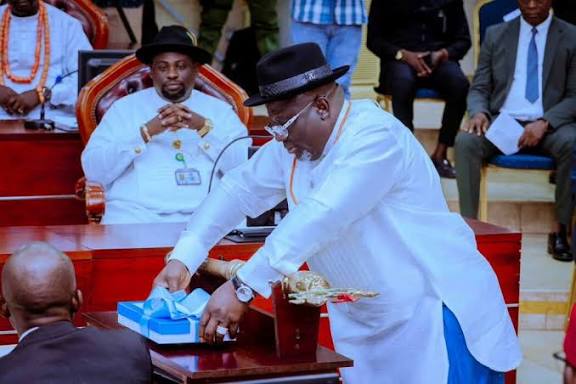
Delta State Governor, Rt. Hon. Sheriff Oborevwori, on Wednesday presented a N1.664 trillion Appropriation Bill for 2026 to the Delta State House of Assembly, with a bold 70 percent dedicated to capital expenditure, signaling an aggressive push for infrastructure expansion and socio-economic development in the 2026 fiscal year.

The presentation, held at the hallowed chamber of the Assembly Complex in Asaba, was made pursuant to Section 121 of the 1999 Constitution (as altered).

Presenting the budget Christened; “Budget of Accelerating the More Agenda”, Governor Oborevwori said the budget was crafted against the backdrop of an improving national economy, with Nigeria’s GDP projected to grow by 3.9% in 2026.

He noted that rising oil revenues, stabilising fiscal and monetary policies, tax reforms, and renewed federal efforts in tackling insecurity have rekindled hope for economic expansion and improved living standards.

The governor explained that the 2026 budget is designed to drive inclusive and sustainable growth, develop human capital, accelerate infrastructure renewal, enhance social cohesion, reduce debt exposure, and ensure better resource management.

He said that the total budget size, ₦499 billion (30%) is proposed for recurrent expenditure, while ₦1.165 trillion (70%) is earmarked for capital projects, representing a 70% increase over the 2025 appropriation.

On revenue expectations, Oborevwori stated that the state anticipates significant improvement in Federal allocations following the removal of fuel subsidy.

Statutory Allocation including mineral derivation is projected at ₦720 billion, accounting for 43.28% of total revenue, reflecting a 23.75% rise from the previous year. He also disclosed that ongoing reforms in Internally Generated Revenue (IGR) collection are expected to yield ₦250 billion in 2026, an 86.5% increase over 2025, driven by professionalized revenue processes and a broader tax net.

The governor noted a “projected ₦120 billion from VAT remittances”, citing improved VAT administration at the national level, adding that capital receipts are deliberately reduced to ₦25 billion as the state aims to maintain a zero-borrowing posture, while ₦489 billion is expected from savings and oil revenue recoveries, reflecting what he described as “the fiscal discipline and prudence” of his administration.

In the expenditure breakdown, personnel costs are estimated at ₦185 billion, overheads at ₦204 billion, and ₦110 billion allocated for social contributions, benefits, and grants.

The governor emphasized that these figures reflect inflationary trends and the state’s commitment to workers’ welfare.

Oborevwori highlighted key sectors earmarked for priority funding in 2026, saying that the Works Ministries (Urban Highways, and Rural and Riverine Roads) will jointly receive ₦450 billion to accelerate strategic road development across the state.

Education is allocated ₦105.086 billion to strengthen access to functional learning, while the health sector receives ₦50.067 billion to improve existing infrastructures across 441 primary healthcare centres, 65 general hospitals, and three tertiary facilities.

The Delta State Capital Territory Development Agency is slated to receive ₦20 billion, with the governor reaffirming his commitment to addressing flooding and expanding urban infrastructure in Asaba.

A similar sum is allocated to the Warri, Uvwie and Environs Development Agency, as massive road and flyover projects continue reshaping the oil city.

In the areas of agriculture, energy, and social protection, the proposed budget dedicates ₦10 billion to boost food security and agro-investment; ₦16 billion to strengthen electricity supply through the state’s upcoming multi-grid template; and ₦20 billion to scale up social intervention programmes aimed at lifting more Deltans out of poverty.

Additionally, ₦100 billion is reserved for direct interventions across all 25 local government areas, translating into an average of ₦4 billion each.

On security, the governor reiterated his administration’s resolve to deploy cutting-edge technology, including drones and advanced surveillance equipment while continuing logistical and financial support to security agencies.

Oborevwori, who is the immediate past Speaker of the Assembly, commended the House for its partnership and urged members to expedite consideration and passage of the budget to sustain ongoing development momentum.

He reaffirmed his administration’s commitment to building “a prosperous, secure, and stronger Delta where no one is left behind.”

Earlier in his welcome remarks, Speaker  of the State House of Assembly, Rt. Hon. Emomotimi Guwor described the budget presentation as an affirmation of the covenant between government and citizens.

He praised the governor’s leadership, noting significant achievements under the MORE Agenda, including strategic flyovers, expanded road networks, improved healthcare facilities, strengthened education, and empowerment programmes.

Guwor also commended the governor for approving the Consolidated Legislative Salary Structure (CONLESS) and initiating the construction of permanent offices for the Assembly Service Commission.

He assured the governor of the Assembly’s resolve to undertake a thorough and timely review of the appropriation bill, stressing that the Legislature remains committed to people-centered governance, accountability, and equitable development.

The Majority Leader, Hon. Emeke Nwaobi, subsequently moved for the adoption of the governor’s presentation, and the motion was seconded by Hon. Marilyn Okowa-Daramola, Chairperson of the House Committee on Finance and Appropriations.

The budget has now been formally laid before the House for legislative consideration.
With Civilization Exchange and Mutual Learning as the Brush, Paint a New Chapter of China-Nigeria Cooperation By Yu Dunhai

0

Every Wednesday at 5 p.m., the Lagos Coastal Highway is bathed in the warm glow of the setting sun, while vendors in Abuja markets pack up their last baskets of okra. At that moment, a familiar radio signal cuts through the bustling streets, carrying greetings from “Nihao! China” into thousands of Nigerian homes. Produced jointly by the Chinese Embassy in Nigeria and the Federal Radio Corporation of Nigeria, “Nihao! China” radio program uses accessible language and vivid storytelling to bring the voice of China to Nigerian audiences, adding a vibrant chapter to the cultural exchanges between China and Nigeria.

China’s commitment to cultural exchange is also integrated into our national development plan. Recently, the Fourth Plenary Session of the 20th CPC Central Committee was successfully convened, adopting the Recommendations of the Central Committee of the Communist Party of China for Formulating the 15th Five-Year Plan. This session has not only charted a grand course for China’s forthcoming development, but also created fresh opportunities for China-Nigeria relations to deepen civilizational mutual learning, solidify cooperative foundations, and thereby inject more positive energy and stability into our currently turbulent world.

The Fourth Plenary Session clearly called for “ engaging in deeper exchanges and mutual learning with other cultures, carrying out extensive people-to-people exchanges and cooperation, and encouraging efforts to build the presence of more cultural enterprises and fine cultural works on the world stage.” Rooted in China’s cultural practices, this vision reflects a profound understanding of the laws of civilizational development and closely aligns with the historical and cultural trajectories of both China and Nigeria. With a history stretching back over 5,000 years, Chinese civilization has not only thrived but has also cultivated a philosophy that “One should value not only one’s own culture, but also the cultures of others, and this will contribute to the flourishing of all cultures.” Similarly, with a rich history spanning millennia, Nigeria stands as a one of the cradle of African civilizations, nurturing the Hausa, Yoruba, Igbo, and other cultures into a vibrant and symbiotic ecosystem. Despite the geographical distance, both China and Nigeria uphold cultural traditions that emphasize inclusiveness and harmonious coexistence. This shared ethos has laid a solid foundation for deepening exchanges and mutual learning between our two nations.

Cultural exchange has long been a vital part of the friendship between China and Nigeria. A series of co-organized events, including “Happy Chinese New Year,” “China-Nigeria Culture and Tourism Week,” “Mid-Autumn Festival Gala,” “China-Nigeria Film Festival,” and the “China-Nigeria Table Tennis Friendship Tournament”, have significantly enhanced mutual understanding and deepened the bonds of friendship between our peoples. Our cooperation has also fostered a bond through educational platforms: 15 “China Corners” have been established in public high schools in Abuja, two Confucius Institutes are operating at Nigerian universities, and the “Nihao! China” program has now reached an audience of over 7 million. Furthermore, the number of Nigerian students in China has exceeded 5,000 for consecutive years, and a growing number of Nigerian creators are gaining popularity on Chinese short-video platforms. Cultural exchange has truly become a key bridge in bringing the people of China and Nigeria closer together.

Looking ahead to the 15th Five-Year Plan period, China is ready to work with Nigeria, leveraging the opportunity of the “2026 China-Africa Year of People-to-People Exchanges” to establish a multi-level, broad-ranging, and regular cooperation mechanism, making civilizational mutual learning a robust engine for practical collaboration between our two nations. China will continue to encourage young people from both countries to participate in thematic activities such as academic exchanges, skills training, and startup incubation; promote stronger news and information sharing between our mainstream media outlets; and further enhance the “Nihao! China” program to better meet the Nigerian people’s interest in learning about China. China will also deepen exchanges and cooperation in the creative industries, with increased efforts in copyright cooperation and localized adaptation in sectors such as gaming, animation, and online literature. Through these measures, we will foster understanding via exchange and promote development through mutual learning, continuously promoting civilization exchange and mutual economic benefits between China and Nigeria.

There is a saying that civilizations flourish through exchange and grow richer through mutual learning. This idea is vividly reflected in the echoing voices of reading in the “China Corners,” in the joint cultural performances on stage, in the overseas studies of young Nigerians, in the heart-to-heart interactions among ordinary people, and in the shared opportunities and collaborative exploration emerging in the creative industries. These dynamic scenes fully illustrate how different civilizations can coexist harmoniously, support one another, and prosper together.


Standing at this new historical starting point, China is ready to join hands with Nigeria to jointly draw a new blueprint for bilateral cooperation through deeper civilizational dialogue and mutual learning. Together, we will further strengthen our comprehensive strategic partnership and contribute even more to building a community with a shared future for humanity.
Yu Dunhai is Chinese Ambassador to Nigeria

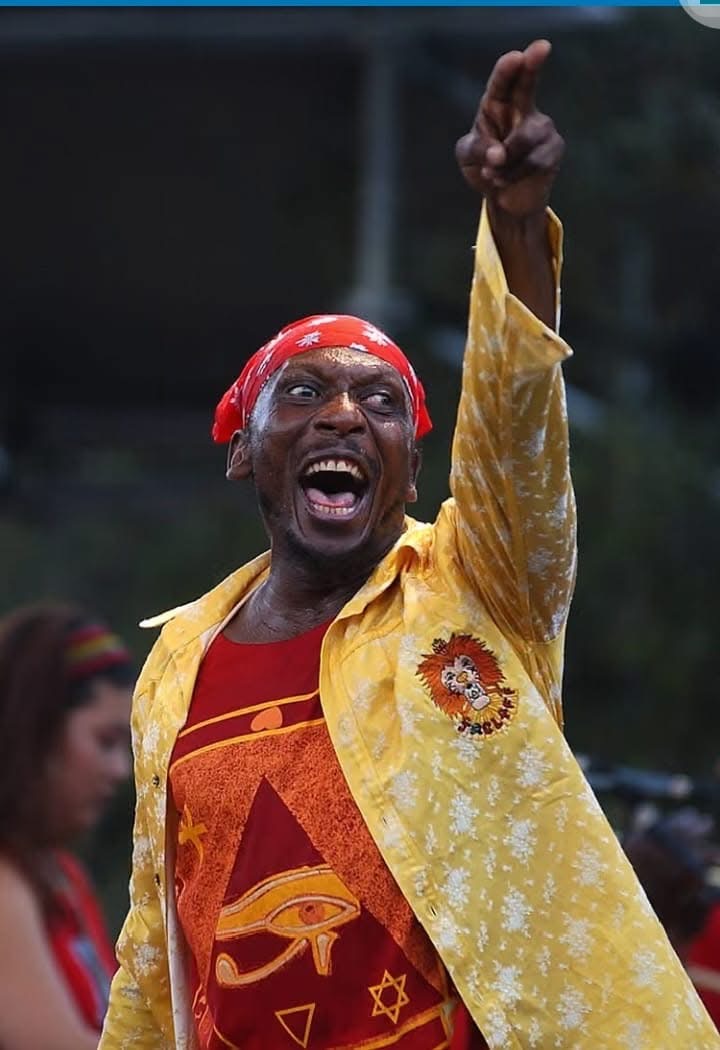
JIMMY CLIFF: A FAREWELL TO THE WORLD OF BEAUTIFUL PEOPLE

By Austen Akhagbeme

Jimmy Cliff: A farewell to the world of beautiful people, by Austen Akhagbeme

Not too many people knew him as James Chambers, but that was Jimmy Cliff’s birth name, as he grew up in the remote village of Somerton, Jamaica, until he was 14 years old, when he opted for greener pastures in the capital city of Kingston. He died on Monday 24th November, 2025 at 81 years.

He truly passed through many Rivers as a teenager, determined to have his songs charted on the world music stage. He, arguably, heralded Reggae music to the world, and the violent cultural underpinning of Jamaican life in the ghetto with the genre of music, and the political nuances laced with corruption at the time.

This was made possible by his widely acclaimed debut in the movie titled “The Harder They Come” where he played a starring role and provided the soundtrack in this popular crime movie in 1972.

Jimmy Cliff is truly a legend, with so many successful hit songs and a record-breaking thirty albums and more, in forty-plus years of bestriding the Island music world like a Colossus. From his “Wonderful World, Beautiful People” album in 1969 to his very latest album, a collaboration with Walshy Fire, titled “The Harder They Come The Remixes” released in 2024, the”Bongo Man” as he’s fondly called, remains consistent and agile even in old age.

This last album featured remixes of his hit songs like “You Can Get It If You Really Want” and “Many Rivers To Cross”. As a teenager, the 8th of 9 children from a humble background, Jimmy never allowed his background to put him and his aspirations on the ground despite many challenges. He released many singles that didn’t strike a chord with public acceptance, yet the Bongo Man kept going.

Just like he said in his 2003 interview with “The Independent”, coming to live in the City from the country home in Somerton was a gamble. “But by the time I got there, I was prepared to face whatever came. Even at that young age, I knew what I wanted to do …. I had no consciousness of money. It was about getting my art expressed”

Perhaps, this determination and focus early in life led to the creation of the legend, who later grew in his various arts to win his Country’s highest honour, the Jamaican Order of Merit, alongside Bob Marley and Bunny Wailer.

In his 50 years of a robust and consistent career as an Island music icon, Jimmy Cliff sang so many evergreen songs, depicting the state of our society and humanity in his day. His song of protest, “Vietnam” helped to raise his voice over the injustices of the superpower in a world divided into two ideological parts.

There’s no doubt that when the history of the voices that brought remarkable changes to our world is written, that of James Chambers, widely known as Jimmy Cliff, will be mentioned even as he says farewell to this “wonderful world of beautiful people”.

Meet new chairman, ANIOMA state creation tech C’ttee

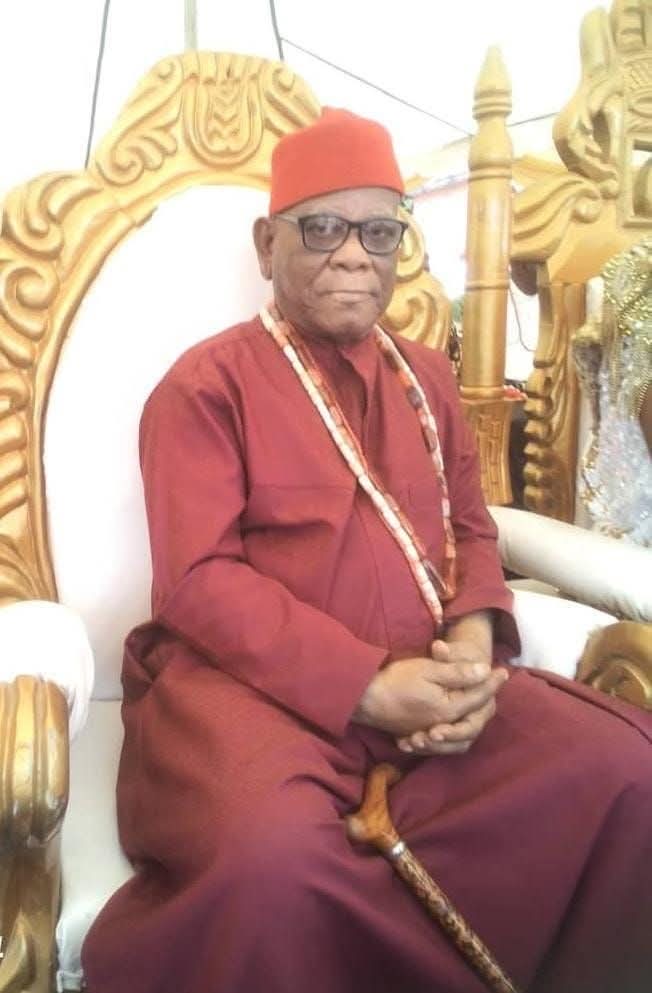
The Technical Committee on the Creation of Anioma State has announced a major leadership change following the voluntary resignation of its former chairman, His Royal Majesty, the Asagba of Asaba, Prof. Epiphany Azinge.

According to an official statement issued by the Secretary of the Committee, Sir (Prince) Clement N. Okonjo (JP), the Asagba of Asaba announced his decision to “excuse himself from participating as Chairman, Technical Committee of the Proposed Anioma State,” effective November 21, 2025. His withdrawal was communicated through a formal royal post on the committee’s platform.

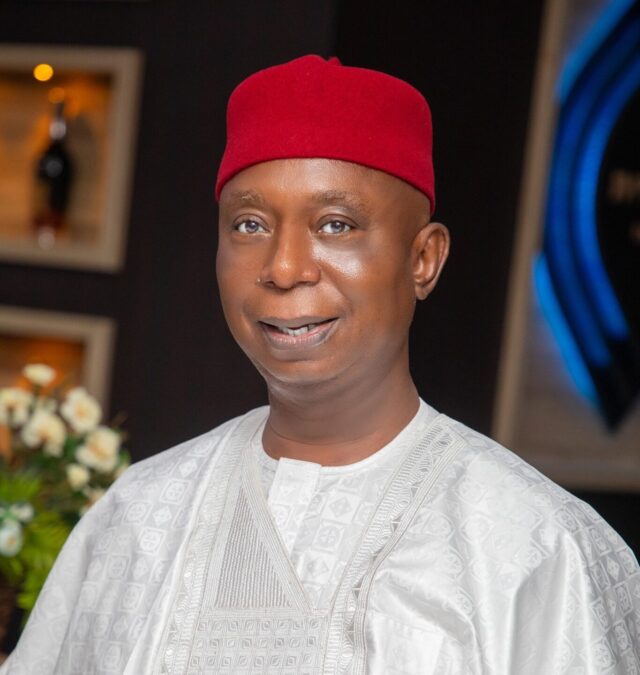
The move has been acknowledged by Senator representing Delta North, Prince Ned Nwoko, who serves as the chief proponent of the Anioma State creation initiative. Senator Nwoko expressed gratitude for the Asagba’s contributions and extended his goodwill to the monarch.

In a swift reorganization, the committee has named His Royal Majesty, the Obuzor of Igbuzor, Prof. Louis Chelunor Nwaoboshi, as the new chairman. Prof. Nwaoboshi, a distinguished professor of history, brings more than four decades of experience to the role.

He has been deeply involved in the advocacy for the creation of Anioma State and has served actively as a consulting member of the Oduoma Club throughout this period.

The committee stated that Prof. Nwaoboshi’s leadership is expected to inject renewed momentum into the state creation process, given his extensive involvement and deep understanding of the Anioma cause.

Delta Sports Commission Unveils Delta Queens Squad Ahead of 2025/2026 NWFL Kickoff

0

With the Nigeria Women Football League (NWFL) kicking off this weekend, the Delta State Sports Commission has set the tone for the new football year by unveiling the Delta Queens squad for the 2025/2026 season.

At the official presentation in Asaba, the Executive Chairman of the Commission, Hon. Onoriode Oborevwori, expressed confidence in the team’s preparedness and reaffirmed the government’s commitment to providing every necessary support for a successful campaign.

Hon. Oborevwori noted that the administration remains steadfast in advancing women’s football across the state, describing Delta Queens as a “symbol of pride, resilience, and excellence” whose achievements continue to inspire young female footballers.

With the NWFL season scheduled to begin on November 26, 2025, Delta Queens will start their quest for domestic glory with a crucial away fixture against Nasarawa Amazons, setting the stage for what promises to be a competitive and exciting season.

Nigerian Engineering Olympiad Launched to Strengthen Global Engineering Competitiveness

0


The Nigerian Society of Engineers (NSE) has expressed commitment to bolstering engineering education in the country through linking academia with industry sector to bring about meaningful growth in Nigeria.


Nigeria while announcing a bold step toward strengthening its global engineering competitiveness with the launch of the maiden Nigerian Engineering Olympiad (NEO), an initiative the Nigerian Society of Engineers (NSE), expressed willingness to transform university inventions into market-ready technologies capable of advancing national development.


Speaking during inauguration of the maiden Nigerian Engineering Olympiad (NEO), a national programme designed to identify, nurture, and commercialise engineering talent across tertiary institutions, the President of NSE, Margaret Oguntala, disclosed that the Olympiad aims at tackling pressing needs in infrastructure, manufacturing, energy transition, sustainability, and digital technology, as ultimate goal to produce a generation of job creating engineers, problem solvers, and globally competitive innovators.


The Nigerian Engineering Olympiad was organised by Enactus Nigeria in partnership with NSE, Nigerian Content Development and Monitoring Board (NCDMB), Renaissance Africa Energy Company (RAEC), and the First Exploration and Petroleum Development Company (FIRST E&P).


Oguntala said, “As the foremost Engineering professional body, NSE believes that the addition of new ideas is critical for professional development and community impact.


“Every great invention in history began with an idea. All the transformations humanity has seen from the steam engine, to towering skyscrapers, electricity, internet, and artificial intelligence started as ideas acted upon.


“Ideas do shape the world. The power of ideas in transforming societies cannot be overemphasised; indeed, great nations have stood on the shoulders of men and women of ideas to advance growth and development.


“Nigeria is brimming with such creative minds in our universities. In our quest to turn technological development as a nation, NEO offers dynamic platform for students to unleash innovative capacity, as collective effort to create environment where ideation can truly thrive.”


Oguntala, also Chairman-in-Council of the NSE, stressed the need for stakeholders from across government agencies, academia, industry leaders and media to prioritise NEO.


According to her, the Olympiad creates a structured pipeline—regional contests, prototype bootcamps, iterative design, product validation, intellectual property support and a national finale in April 2026—designed to take ideas from concept to commercialization.


She described the Olympiad as “a national innovation incubator” that will provide mentorship, seed funding and technical guidance to the top teams.


Oguntala also highlighted NSE’s recent $17.4 million partnership with MIDAS IT of India to supply advanced engineering design software to 15 universities, a step she said would “strengthen academic excellence and prepare young engineers for global competitiveness.”


She reiterated that the Olympiad reflects Nigeria’s determination to elevate its technological capacity and compete on a global scale.


She said: “Today, we ignite a spark that will light the way for Nigeria’s engineering future. The innovations born from this Olympiad could become the solutions that drive our industries, improve our infrastructure and uplift our communities.”


In a remark, Executive-Secretary, Nigerian Content Development and Monitoring Board (NCDMB), Omatsola Ogbe commended Olympiad for aligning with the Federal Government’s policy drive for indigenous innovation and industrial competitiveness.


Ogbe, represented by Director Capacity Building of NCDMB, Abayomi Bamidele explained ongoing capacity building programmes in petroleum engineering, robotics, digital technology, and advanced technical disciplines efforts would help to reinforce the Olympiad’s talent pipeline.


He disclosed that industry surveys showed not less than 79 per cent of engineering graduates lacked practical and hands-on competencies aligned with global standards a challenge NCDMB says must be addressed urgently.


According to him, engineering skills deficit contributed to shortage of competent local engineers, heavy reliance on expatriates, and increasing brain drain


“Nigeria has a population exceeding 237 million people, nearly half of West Africa, yet only about 5 per cent of our engineering graduates are industry ready at graduation.


“This Olympiad provides a structured pathway to identify and support young innovators who can design solutions for our national challenges,” he said.


For his part, Enactus Nigeria’s Country Director, Michael Ajayi, said that national-scale impact can only come from strong collaboration across government, private sector, and civil society.


Ajayi said: “This partnership proves that when we combine policy support, private-sector systems, and nonprofit expertise, we can deliver transformational impact not just for individuals, but for entire industries.


“Olympiad’s objectives include encouraging students to apply classroom knowledge to real-life problem-solving and enabling them to build engineering-driven businesses that generate jobs and wealth.”


He disclosed that the Olympiad was designed to run a seven-month cycle and will feature regional contests, intensive mentorship, prototype development, and a national grand finale scheduled to hold in April 2026.


First E&P’s General Manager for Integrated Gas Development, Yetunde Taiwo, said the company’s involvement stems from a commitment to innovation and talent development.


She said: “Our core values are around fostering talent, innovation and entrepreneurship. Some of the perennial challenges we see in the industry can actually be solved by these very bright young minds.”


She added that engaging students early with real industry problems could help reduce brain drain by creating clear pathways into the workforce.


Representing Renaissance Africa Energy Company, Nigerian content manager Olanrewaju Olawunyi said their support reflects a longstanding commitment to developing human capital.


“We are made in Nigeria, we’re built for Africa. We invest in people. People are our biggest resource.”


He noted that Renaissance funds STEM education from primary to tertiary levels and runs fully funded scholarships—including sending candidates from the Niger Delta overseas for postgraduate studies.


“This is not just a flash. All our programs are annual and fully funded, and we also pay students during internships.”


On behalf of the Minister of Youth Development, Technical Adviser Ebiho Agun said the Olympiad aligns fully with government priorities and the nation’s long-term workforce needs.


“It provides young minds with the opportunity to stretch their imagination, deepen technical abilities, and demonstrate excellence on a national and international stage,” he said.


He described the initiative as “a catalyst for mentorship, discovery and long-term career development,” urging participants to seize the opportunity: “You are the heartbeat of Nigeria’s future. remain steadfast in your pursuit of excellence.”

TRANS-KALABARI ROAD: GOV. FUBARA’S LEGACY GIFT TO KALABARI KINGDOM Boniface Onyedi

On Monday, October 27, 2025 Governor Siminalayi Fubara undertook one strategic task, that resonates a clear vision for the immediate future. It wasn’t just one of those common State crafts, no. It was an extraordinary assignment that clearly define his innermost conviction for leadership and determination to walk the talk. Gov Fubara has been consistent in his assurances to redefine natural habitats by creating new hubs of development across the creeks and rivulets in Rivers State in order to connect the people without limitations or constraints.

So, on that fateful day he led and navigated the stormy weather by boat to inspect the 12.5 kilometer Trans-Kalabari road project awarded at the cost of N225,114,563,830.02 which was flagged off by former President Goodluck Jonathan on May 20, 2024.

This legacy project was steadily progressing before the political interregnum. However, barely one month of resuming office, Gov. Fubara has taken bold steps to physically evaluate the work done so far by the contractor, Lubriks Construction Company. Though, he has read reports from the supervising ministry on the project status, he believes in seeing for himself for proper appraisal.

After inspecting three critical points of the project tucked in the deep part of the sea and creeks, Gov. Fubara expressed a great relief adjudging the project to be progressively on course as expected.

With approximately 75% of the critical piling work completed which is a significant milestone, the project, aims to connect Port Harcourt to several Kalabari communities across the sea, reducing travel time and boosting economic activities in the region.

Highlighting such accelerated development, it becomes more heartwarming that the initial timeline of 32 months for its completion would be achieved. From the current development as confirmed by the governor, there is also indication that within the next six months, critical aspects of the piling and bridges would have been accomplished for lighter thoroughfare.

This legacy project has four river crossing bridges of 576m, 288m, 360m, 108m and nearly five decks-on-pile structures of different meters ranging from 450 to 700 respectively- showcasing its complexity and importance. Further to this, the road is to be lit up with Solar powered street lights on completion with the first phase terminating at Bakana. Once done, there would be a jolly ride from Rumuolumeni in Obio-Akpor (Port Harcourt) to Bakana in Degema Local Government Area of the State seamlessly.

Without doubt, the economic impact of the road is enormous. The project is expected to unlock tourism potentials, improve access to markets, open new cities as there are potentials for new estate development, enhance emergency response, and stimulate economic growth in the region.

The visit is an ample demonstration that Governor Siminalayi Fubara is committed to funding projects that have significant bearing on the genuine growth and development of Rivers State.

After meandering through the rivers and creeks, to feel the weight of work, asking pertinent questions, he expressed satisfaction with the progress, emphasizing the project’s significance in connecting Kalabari communities to Port Harcourt and promoting economic growth.

Excited by the works, he assured the Rivers people of timely completion, and reiterated the administration’s commitment to delivering transformative infrastructure projects across all segments of the State.

Indeed, the Trans-Kalabari road project will remain in history as a most precious legacy gift by Governor Siminalayi Fubara to the Kalabari Kingdom that no one has ever had the courage to undertake. With this effort, posterity will continue to remember Sir Siminalayi Fubara as a man of uncommon courage for development.

_Boniface Onyedi, Ph.D, SSA, Media to Governor of Rivers State, writes from Port Harcourt._

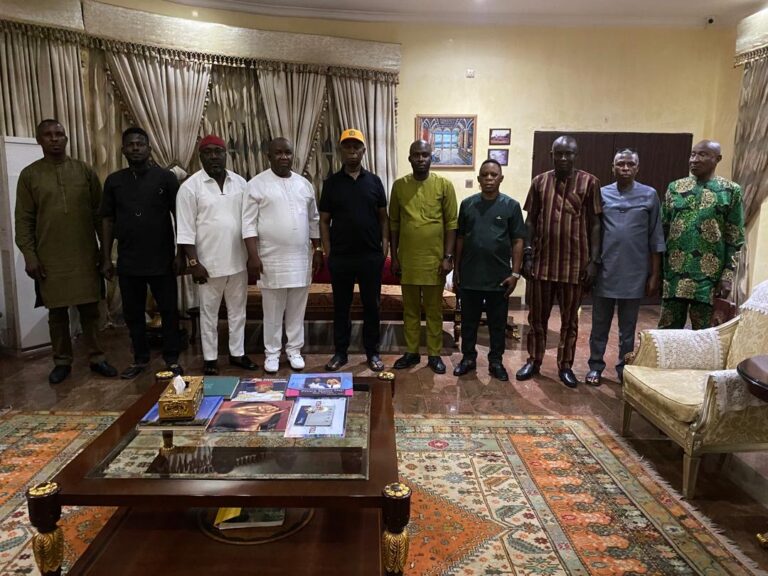
Sen NWOKO holds STRATEGIC SESSION WITH DELTA NORTH WARD CHAIRMEN for GRASSROOTS REPOSITIONING DELTA NORTH WARD CHAIRMEN HOLD STRATEGIC SESSION WITH SENATOR NED NWOKO

0

In a renewed drive to consolidate the All Progressives Congress (APC) across Delta North, Ward Chairmen from the senatorial district led by Ossai Jude Ossa of Ika North East LGA held a comprehensive strategic engagement with the Senator representing Delta North Senatorial District, Distinguished Senator Ned Munir Nwoko.

The gathering, which drew Chairmen from all 98 wards of Delta North, served as a significant interface between the Senator’s leadership and the party’s foundational structures at the grassroots.

The atmosphere was marked by optimism, strategic reflection, and a shared determination to strengthen the party’s footprint across communities.

Discussions centered on revitalizing the APC’s organizational framework, improving internal coordination, and enhancing the synergy between the Senator’s legislative and developmental mandate and the mobilization responsibilities of the Ward Chairmen.

Participants unanimously agreed that the future strength of the party hinges on a well-coordinated network that begins at the smallest political unit, the ward.

Senator Nwoko, in his keynote address, applauded the Ward Chairmen for their resilience, loyalty, and continued commitment to the party’s ideals.

He noted that the ward is the lifeline of political engagement, the first point of contact between the electorate and governance. According to him, any party seeking to remain vibrant and competitive must continuously invest in its grassroots leadership.

He emphasized that his development agenda for Delta North, including infrastructure, education, youth empowerment, and community renewal, cannot reach its full potential without an active and supportive ward structure capable of engaging residents and articulating community needs.

He encouraged the Chairmen to remain united, purposeful, and strategic in mobilizing support for the APC and advancing the district’s collective aspirations.

Senator Nwoko also reaffirmed his readiness to maintain an open, accessible partnership with the Ward Chairmen, noting that their feedback and insights are essential in shaping responsive governance.

He assured them that this engagement would not be a one-off meeting, but the beginning of a sustained series of consultations aimed at repositioning the party for future electoral victories.

Ward leaders, in their responses, expressed appreciation for Senator Nwoko’s inclusive leadership style and his consistent recognition of grassroots actors. They pledged their continued support and vowed to intensify efforts to build stronger political structures within their communities.

The session ended on a high note, with renewed confidence that Delta North is entering a new era of strategic organization, political cohesion, and strengthened unity, driven by genuine collaboration between the Senator and the ward-level leadership of the APC.

Asaba-Onitsha Expressway rehabilitation; Izeze calls for enforcement of traffic rules By Sylvester Iloba

0

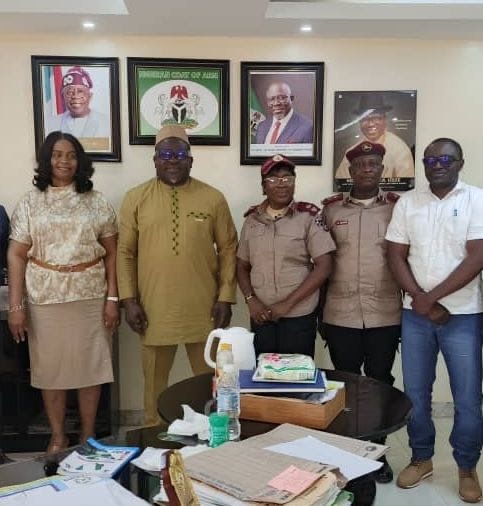
The Honourable Commissioner for Works, Highway and Urban Roads, Comrade Reuben Izeze has said that the enforcement of traffic rules on the Asaba- Onitsha Expressway was of paramount importance for easy flow of traffic while rehabilitation is taking place.
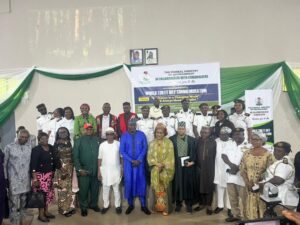
Mr. Izeze made this declaration when the Delta State Sector Commander, Federal Road Safety Corps, Mrs. Joyce Alexander paid him a working visit in his office in Asaba.

He further emphasized that the FRSC Delta Sector Command should put  traffic diversions and also sensitize the public on the need to be orderly while plying that particular portion of the road.

Speaking on the issue of the delay on the rehabilitation of the failed portion of the road he said that the Delta State Government earlier made the move twice but were stopped by the Federal Government who insisted that the road rehabilitation had been awarded.

Speaking earlier the Delta State Sector Commander, Mrs. Joyce Alexander stated that key among the reasons for their visit was to bring to the fore the deplorable State of the Asaba- Onitsha Expressway.

Mrs. Alexander said that since work has commenced on the road there is need for palliative measures on the portion of the road where traffic had been diverted.

She noted that such palliative would aid the smooth flow of traffic while work is on going, especially during the yuletide period.

The high point of the visit was the presentation of a complimentary plaque to the Honourable Commissioner for Works, Highway and Urban Roads, Comrade Reuben Izeze

NHRC, UNHCR Call for Protection of IDPs’ Rights

0


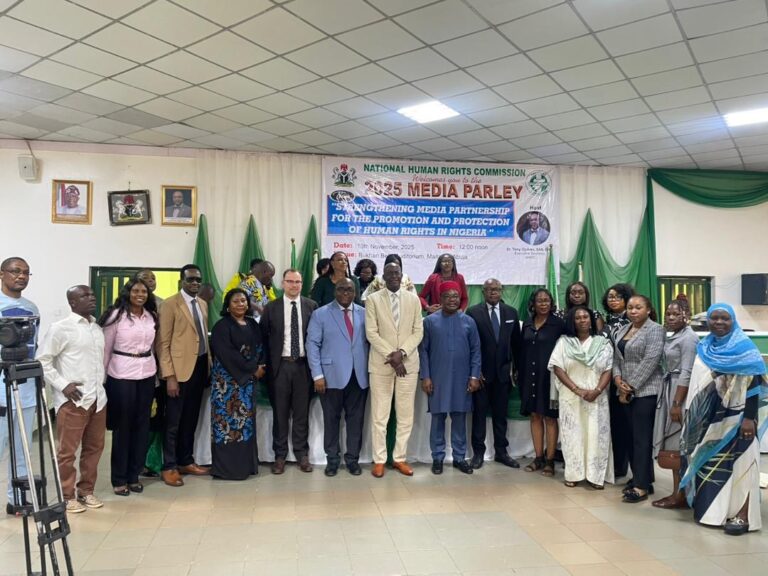
National Human Rights Commission (NHRC) in collaboration with the Office of the United Nations High Commissioner for Refugees (UNHCR) calls for the protection of the rights of internally displaced persons and forcibly displaced persons in Nigeria.
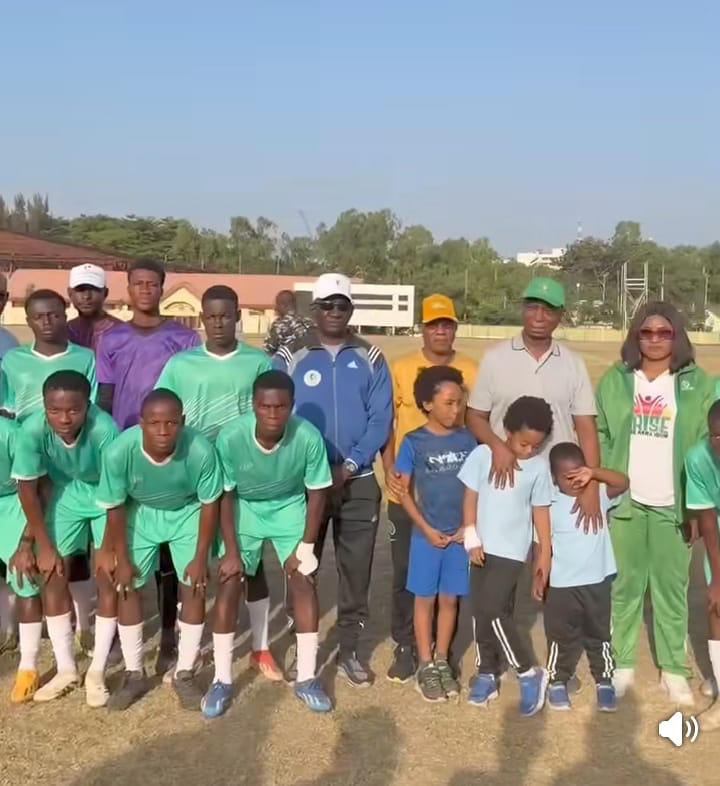

 

Benue State Governor, Hyacinth Alia, alongside national and international stakeholders, convened a high-level policy consultation themed The Protection of IDPs in Nigeria Through Durable Solutions: Strengthening Collaboration Between Governments, Civil Society Organizations, and Humanitarian Partners”. The forum focused on practical strategies to safeguard the rights, dignity, and well-being of displaced Nigerians.


Alia highlighted his administration’s efforts to bring displaced persons closer to their ancestral homes, combining security, autonomy, and dignity. “Where we are as a state today is focused on relocating IDPs as close as possible to their ancestral homes. Before they can fully return, the security situation must be carefully assessed, and in the meantime, we have begun acquiring portions of land in their primary local government headquarters. Here, they can select artisans to construct homes—permanent or temporary, as they choose.


This initiative ensures that displaced persons have options: they can eventually return fully to their ancestral homes while maintaining access to their local headquarters. These lands can serve residential or commercial purposes, providing flexibility and empowering displaced persons to rebuild their lives with dignity and autonomy,” he said.


Addressing misconceptions regarding conflict in Benue, the governor urged accurate representation to ensure effective humanitarian response. “In my state of Benue, we do not experience religious, ethnic, racial, national, or state genocide. While there are security challenges and we have lost lives over the years due to conflicts between agro-pastoralists and farmers, these incidents do not meet the United Nations definition of genocide. Unfortunately, every issue in Nigeria today is politicized, including the plight of IDPs, and this misrepresentation distorts public perception. It is crucial to understand the true nature of the situation so that interventions are based on reality, not exaggeration or political gain,” he explained.


He further emphasized that displacement requires evidence-based, collaborative solutions that uphold human rights and address systemic gaps. “Displacement remains a painful reality for thousands of Nigerians, disrupting lives, livelihoods, and communities. The human rights concerns that accompany displacement—loss of shelter, limited access to healthcare, disrupted education, insecurity, and socioeconomic exclusion—demand a collective and urgent response. I am encouraged that this consultation brings together governors, attorney generals, members of the national and state assemblies, MDAs, civil society organizations, development partners, community-based actors, and representatives of IDP-led organizations.


This inclusive platform demonstrates the seriousness of our national commitment to tackling the root causes of displacement and providing durable solutions that restore hope and dignity to affected populations,” he noted.


Reaffirming the state’s commitment to displaced persons, Governor Alia said, “In Benue State, we remain fully committed to safeguarding the dignity and rights of all displaced persons. Our administration collaborates with national and international partners to provide humanitarian support, strengthen security, and create avenues for sustainable reintegration and recovery. Displacement must never become a permanent condition. Every Nigerian deserves to live in safety, with hope and opportunity. Ultimately, a true measure of our humanity is revealed not by how safe we are, but by how fiercely we protect the rights and dignity of those who have been displaced. These individuals are where they are not by choice or fault, and only God knows when any of us—or our families—might face similar circumstances.”


Alia urged participants to focus on three key areas: strengthening policy and legal frameworks to ensure laws genuinely protect IDPs; addressing protection gaps using evidence from field monitoring and displaced persons’ experiences; and developing durable solutions, including safe return, resettlement, or local integration, with strong coordination, predictable funding, and security guarantees.


On his part, the National Human Rights Commission, Dr. Tony Ojukwu highlighted the importance of leveraging data from Human Rights Monitors and Community Protection Action Groups to inform policy and interventions. “Through the dedication of our Human Rights Monitors and Community Protection Action Group (CPAG) members, valuable evidence-based data has been generated to guide protection programming, advocacy, policy engagement, and practical interventions by the government and humanitarian actors in Nigeria,” he said.


He also noted the gendered dimension of displacement. “Furthermore, our cumulative figures from February – September confirm that Females (72,119) have consistently outnumbered Males (62,403), confirming the feminization of displacement. Children remain the single largest demographic at 64,058 cumulatively, underscoring persistent vulnerability among minors,” he added.


Acknowledging systemic challenges in monitoring, Ojukwu said, “Limited access to remote or insecure locations, inadequate logistics and communication support, as well as low digital literacy among our CPAG members, are critical issues that limit their effectiveness. We must address the findings from our internal reviews, ensuring that policy and legal frameworks support their efforts, including resolving issues of inadequate funding and securing necessary field resources.”


He stressed the importance of accountability. “On accountability, we must ensure that the cases referred to the Ministries, Departments, and Agencies (MDAs) with protection mandates or other Law Enforcement Agencies (LEAs) are pursued transparently, sending a clear message that violations against FDPs will not go unpunished,” he said, urging stakeholders to transform displacement from despair into dignity. “This is a solemn test of our collective resolve. I urge all participants to engage candidly, focus on actionable solutions, and leave this room with a renewed determination to transform displacement from a state of despair into one of dignity and recovery.”


Minister of Humanitarian Affairs and Poverty Reduction, Dr. Benard Doro, called for a shift from emergency relief to sustainable recovery. “The theme of this consultation—‘The Protection of IDPs in Nigeria with Durable Solutions, Strengthening Collaboration Between Government, Civil Society Organisations and Humanitarian Partners’—signals that we must now shift from temporary relief to sustainable recovery, from reactive response to rights-based protection, and from fragmented interventions to unified human development outcomes, ensuring that all displaced persons are treated with dignity, their rights safeguarded, and their long-term needs effectively addressed,” he said.


He emphasized that IDPs are citizens whose constitutional rights must be protected. “Internal displacement in Nigeria is not merely a humanitarian situation; it is a human rights imperative and a constitutional obligation. IDPs are not statistics, they are citizens entitled to full constitutional protection, and as such, our interventions must recognize their dignity, address their vulnerabilities, and ensure their comprehensive inclusion in the development and protection framework of the nation,” he said.


The Minister further urged operationalizing policies and strengthening coordination across agencies. “To achieve meaningful protection and durable solutions for internally displaced persons, we must operationalize the National Policy on IDPs with measurable state-level action plans, strengthen data governance, accountability, and inter-agency coordination, ensuring that NHRC field data is fully integrated into national planning. This approach will allow us to scale up livelihood, health, education, and protection interventions, promote reintegration and resilience, and harmonize the efforts of humanitarian, development, and human rights actors across all levels of government, leaving no displaced person behind.”


He said with a call to transform displacement from vulnerability to dignity. “Protecting the rights of displaced Nigerians is not merely a humanitarian obligation; it is a constitutional and moral responsibility. Displacement is a lived experience affecting millions of our citizens. Let us leave this consultation with renewed resolve—to transform the status of displaced people from despair to dignity, from vulnerability to recovery, and from crisis to opportunity. Let us act together, decisively, and sustainably, ensuring that our interventions have measurable impact, restore livelihoods, uphold human dignity, and provide hope and resilience for every internally displaced person across the nation,” he said.


Representating the country representative Ajun Jain of United Nationals High Commissioner For Refugees (UNHCR)Timothy Zandok , emphasized the global responsibility to protect displaced persons and support national institutions. “Forcibly displaced persons, whether internally displaced, refugees, returnees, or stateless, are often uniquely and adversely disadvantaged within our communal setting. Beyond the data and news headlines, it is crucial to delve deeper into what their lives truly are like, to understand their experiences, and to ensure they are included and supported within our collective capacity as global citizens,” he said .


He further noted the importance of collective responsibility and actionable advocacy. “The experiences of forcibly displaced persons, and what we can collectively do to ensure their inclusion and conservation, represent a responsibility we owe to each other as global citizens. It is for these reasons that we gather, to share expertise, draw upon our experiences, and make impactful recommendations that strengthen the protection and welfare of those whose lives have been disrupted by displacement.


UNHCR highly commends the National Human Rights Commission for boldly undertaking its mandate to protect forcibly displaced persons, and we commit to continuing our support for your leadership and ownership of this responsibility. Through sharing their voices and advocacy, we can collectively contribute to creating an enhanced, protective environment for all displaced persons,”.

Beyond Charity: How Ned Nwoko Turns Wealth into Social Investment By Chidi Chukwutem

Senator Ned Nwoko has long framed his philanthropy not merely as charity but as an economic obligation, an investment in society with measurable social returns. Over the years, his name has become closely linked with large-scale humanitarian interventions, ranging from malaria eradication efforts to educational projects, employment creation, and community development initiatives.

Nwoko’s philanthropic reach is rooted in his background as a wealthy lawyer, businessman, and politician. His foundation, the Prince Ned Nwoko Foundation, serves as the main vehicle for his humanitarian programs and has grown into one of the most visible philanthropic platforms in the South-South region. The initiatives it undertakes are far from small; they demand significant capital investment and personal involvement, reflecting his open-mindedness and hands-on approach to problem-solving.

His malaria eradication campaign remains perhaps his most ambitious undertaking. The initiative gained national attention when he traveled to Antarctica in a symbolic move to draw global focus to Nigeria’s malaria crisis. The project reportedly involves funding vaccine research, procuring fumigation equipment, supporting environmental sanitation, and proposing large-scale clean-up operations across states. Public health experts estimate that a nationwide anti-malaria project of this magnitude could cost billions of naira annually depending on its scope, partnerships, and execution model.

Education and youth empowerment are central to his philanthropic philosophy. His scholarship programs for students within and outside Delta North, as well as the establishment of the Sports University at Idumuje-Ugboko, form a cornerstone of his empowerment strategy.

Developing and operating a specialized sports institution requires enormous financial commitment, covering infrastructure, academic personnel, sports science laboratories, and international partnerships. Many locals regard the university as a long-term investment capable of reshaping the region’s human capital outlook and positioning Delta North as a hub for sports education in Africa.

Beyond scholarships and infrastructure, Nwoko has directly transformed the livelihoods of countless constituents by helping them secure employment, particularly in federal government agencies. Through personal intervention, guidance, and mentorship, many young people from Delta North now work in ministries, parastatals, and public institutions, finding stability and opportunity that would have otherwise been out of reach. From administrative roles to technical positions, these appointments have strengthened households, reduced unemployment, and fostered economic mobility across the constituency.

Nwoko’s support for people also extends to immediate, personal assistance. He is widely known for answering calls from constituents in need, students, widows, traders, and small-business owners, and ensuring that help reaches them. Whether it is funding urgent medical treatment, assisting with educational needs, or providing start-up capital, he emphasizes a hands-on approach. This open-mindedness and approachability make him accessible to people from all walks of life, reinforcing the perception of a leader genuinely interested in the welfare of his constituents.

Community infrastructure projects feature prominently in his philanthropic portfolio. Before and during his time in the Senate, Nwoko’s foundation has funded boreholes, solar electricity, road repairs, community halls, and business grants across several Delta North communities.

These interventions collectively amount to hundreds of millions of naira annually, filling critical gaps in areas where government services are slow or insufficient. At the same time, his projects create employment for local people, construction workers, engineers, health personnel, project managers, vendors, and support staff, offering livelihoods and stimulating the local economy.

The economic effects of Nwoko’s philanthropy extend beyond immediate beneficiaries. Tourism-oriented investments, such as the Mount Ned Nwoko Resort, inject revenue into surrounding hospitality and market sectors, while scholarship and sports programs develop a skilled, youthful population poised to contribute to long-term socio-economic growth. His combination of financial investment, personal engagement, and direct support, whether through employment, scholarships, or community grants, demonstrates a holistic approach to philanthropy.

Supporters describe his initiatives as genuine and self-funded, emphasizing that his approachability and willingness to listen to constituent needs make him distinct from traditional donors.

Regardless of debates, there is no disputing the economic and social consequences of his charitable activities. Nwoko’s philanthropy shapes local economies, affects public health and education outcomes, provides employment, including facilitating positions in federal government agencies and demonstrates how wealth can be leveraged as a tool for human and community development.

As Nigeria increasingly depends on private actors to fill developmental gaps, figures like Nwoko continue to stand at the intersection of wealth, governance, and social intervention.

How Ned Nwoko Blends Passion, Policy, and Youth Empowerment Through Sports

0

BY AUSTIN OYIBODE

Senator Prince Ned Munir Nwoko is known across Nigeria as a politician, philanthropist, businessman, and visionary. Yet behind the public responsibilities and national influence lies another defining identity: Ned Nwoko the sportsman. His passion for athletics is not only symbolic, strategic, or ceremonial, it is genuine, active, and deeply woven into his lifestyle, his family life, and his public service.

Long before his emergence as a national figure, Nwoko was drawn to the thrill of sports. Over the years, that passion has only intensified. What makes him stand out is how physically involved he remains. While many of his contemporaries simply watch from the sidelines, Nwoko runs into the thick of the action. He is frequently seen dribbling skillfully on the football pitch, juggling balls with ease, and moving with the agility of someone far younger. In a viral video, he played football among a group of university athletes, controlling the ball with finesse and demonstrating remarkable stamina. It was not staged or political theatre, it was a man enjoying the sport he loves.

As Chairman of the Senate Committee on Sports, this personal passion translates into leadership grounded in firsthand experience. To him, sports is not just a sector to be supervised but a system to be nurtured. He consistently advocates catching talents young and investing in youth programs that empower teenagers with discipline, ambition, and opportunity. At the 10th Senate President’s Cup, he made financial donations to the semifinalists, an act that reflected his commitment to youth development rather than routine political patronage.

Beyond national policy, Nwoko invests heavily in grassroots sports. In Issele-Uku, Delta State, he initiated the construction of a modern mini-stadium. The project was conceived as a community hub where young people can train, compete, socialize, and dream. His “Sports Meet Education” initiative awards full scholarships to students who combine academic excellence with athletic talent, giving them access to structured training, modern facilities, and holistic development. He has also encouraged international collaborations with foreign football academies to expose promising Nigerian youths to world-class training.

Behind all these public achievements lies a softer, more personal side. Nwoko’s sporting life extends into his home, where he actively uses sports to bond with his children. Videos show him playing table tennis with his sons, rallying tennis balls with enthusiasm, and engaging them in friendly drills. During family sports days, he joins them in dancing, racing, ball games, and shared laughter. He has spoken openly about how sports strengthen family ties, saying that staying active creates memories, teaches discipline, and inspires the next generation.
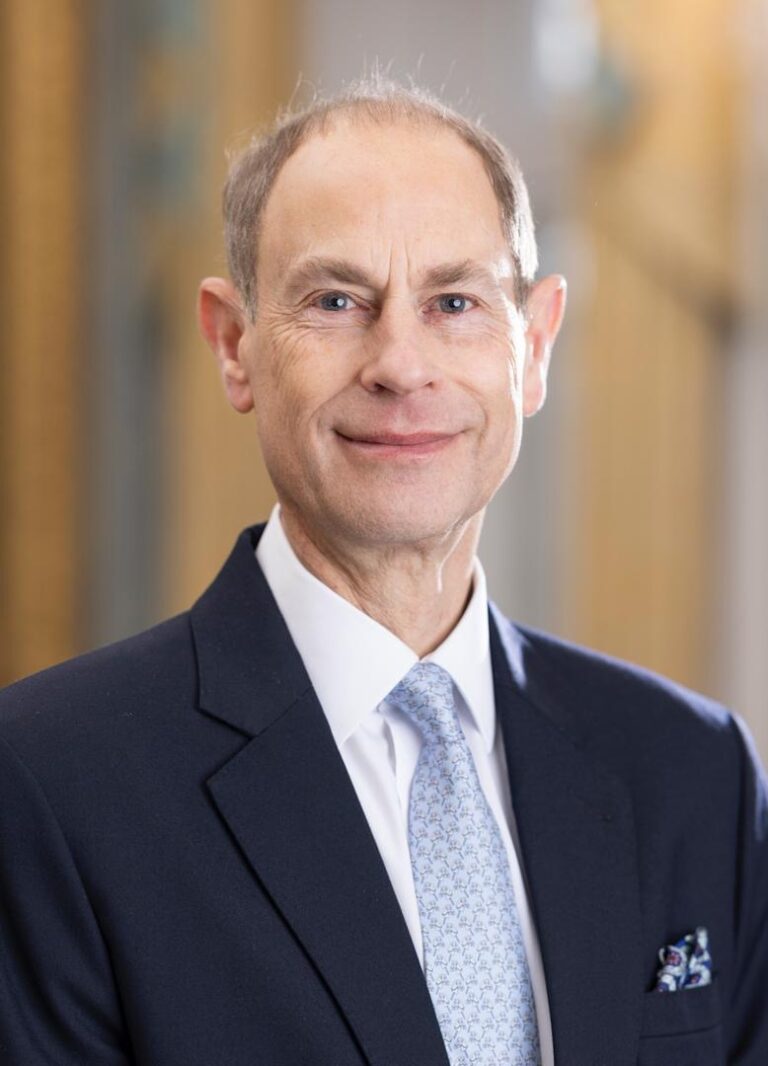
One of the most striking qualities about Nwoko is how comfortably he blends into the company of young athletes. Whether on a university field, at a youth tournament, or an informal community match, he does not stand apart as a dignitary. Instead, he becomes one of them. He trains with them, celebrates with them, and motivates them from a place of lived experience. His presence on the field bridges generational divides and sends a message that leadership is most powerful when it participates, not when it observes.

For Senator Ned Nwoko, sports is more than recreation. It is a philosophy of life, a platform for mentorship, a tool for empowerment, a path to unity, and a cornerstone of his vision for Nigeria’s youth. Through personal participation, policy leadership, infrastructure development, and family engagement, he embodies the belief that sports can transform minds, communities, and nations.

In a country where many leaders remain spectators, Ned Nwoko stands out as the rare figure who steps into the arena, not for applause, but because sports is part of who he is. Whether juggling a ball on the pitch, rallying a tennis serve with his child, or championing youth programs at the national level, he continues to prove that his greatest victories extend far beyond politics.

Duke of Edinburgh Visits Nigeria to Host Series of Events, Meets Tinubu

0

His Royal Highness The Duke of Edinburgh is expected in the country to host a series of events in Lagos, Nigeria from 17 – 23 November 2025 to champion the expansion of the Duke of Edinburgh’s International Award across the world.


He is also expected to meet President Bola Tinubu in Abuja, and get involved in some other activities at the nation’s capital.


According to a statement on Sunday, Prince Edward, as Chairman of the Duke of Edinburgh’s International Award Foundation, will convene almost 200 young people from more than 50 countries over the week, alongside hundreds of leaders delivering the Duke of Edinburgh’s International Award globally, policymakers, and representatives from global youth movements.


Young people will take part in an intensive three-day youth leadership programme, before taking part in the International Award’s triennial Forum focused on expanding access to the Award globally.


Last year almost 1.2 million young people in more than 130 countries took part in the Award. While young people in the UK make up around half of all participants, Kenya has the second-highest number of young people involved in the Award. In Nigeria – where this week’s events are taking place – participation has surged by 37% in the past year, reflecting increasing interest across West Africa.


On the eve of the Duke of Edinburgh’s Award turning 70 next year, new analysis about the global impact of the Award shows that the social value generated by young people completing the Award in the last year has exceeded £1 billion for the first time. The social value is calculated through a robust methodology developed by PWC quantifying the impact of volunteering, improved mental and physical health, and social cohesion.


The Award has gained increasing momentum in recent years, as the likes of the World Bank, World Economic Forum and International Labor Organisation have placed strong emphasis on skills developed beyond the classroom, such as teamwork, communication skills, resilience and problem-solving.


Over the course of the week the Duke of Edinburgh will meet the President of Nigeria in Abuja, convene senior ministers and international development agencies in Lagos to foster deeper collaboration on non-formal education and take part in major events hosted by the Governor of Lagos and the British Deputy High Commissioner in Lagos.


Secretary General of the Duke of Edinburgh’s International Award worldwide, Mr. Martin Houghton-Brown, commented that: “More and more young people across the world are taking on the challenge of the Award, and embracing learning outside the classroom. Through smartphones and AI, young people can access the world’s knowledge in seconds fingertips, but the Award is providing a fresh challenge and helping young people develop the skills that give them the ‘human edge’. From team work to creativity, determination to flexibility, the Award is helping young people across the world become World Ready. Our gathering here in Lagos is focused on significantly increasing opportunities for young people in every country to take on the Award’s challenge and opportunity.”


British Deputy High Commissioner in Lagos, Mr. Jonny Baxter said: “The Duke of Edinburgh’s International Award exemplifies the potential of Nigeria’s young people, and that is important because Nigeria’s success matters deeply to the UK. As partners, we share a commitment to empower the next generation, create jobs, and unlock economic potential. We applaud Nigeria’s bold reforms and are optimistic that these plans will remove constraints on Nigeria’s entrepreneurial spirit and help move Nigeria forward. The UK stands ready to work together to drive growth, stability, and prosperity for the benefit of both our countries.”


The Duke of Edinburgh’s International Award is a global framework for non-formal education, empowering young people to develop skills, resilience, and a spirit of service. It is delivered through schools, youth organisations, and community groups worldwide.


Founded in 1956 by HRH The Duke of Edinburgh, Prince Philip, the Award has grown from a UK-based initiative into the world’s most widely recognised youth achievement framework delivered in more than 130 countries and territories, with 1.2 million participants annually. The Award equips young people aged 14 to 24 with essential skills for life and work, including confidence, empathy, teamwork, resilience and leadership, through experiential learning beyond the classroom.


As the Duke of Edinburgh’s International Award approaches its 70th anniversary, more than 1,500 young people begin their Award journey every day, engaging in activities from environmental restoration and volunteering to skills development and adventurous journeys.

DAN AGBESE: MY FRIEND AT BILLINGS WAY By Austen Akhagbeme


In a nation where life expectancy is between 50 to 54 years, it will be out of place to say that my erudite friend and mentor, a writer and satirist extraordinaire, could have yet lived a little bit longer. But that could have been my heart’s desire, though.

Now you can understand why I was very shocked and pained at the news of the death of Dan Agbese at 81, earlier today. He was a good man, a detribalised Nigerian. I got introduced to him through his articles in Newswatch Magazine at a very early age. In 1989, in my petulant inquisition, I wrote him a letter via the Post office telling him that I want to be a good writer and journalist like him.

Before then, my brother, Nicholas Enegbuma and I have become addicted to his Columns in Newswatch, especially his usually philosophical “Preface to Cover” such that we maintain an archive of his writings at home.

He responded regularly to my letters encouraging me to go to school so that, in his words, “you can adequately judge other people’s writings and appreciate your own contributions”. I visited him first at his office at Oluwole bus stop, Oregun road, Ikeja in 1989. That was when our friendship began, a one-sided fatherly friendship where he remained the exclusive benefactor.

Prior to this time, I have been writing the famous “Letters to the Editor” and getting published. This, too, fuels my love for Newswatch Magazine and for Dan Agbese in particular. In 1990 at the establishment of The Mail Newspaper, published by the late Obarisi Clarkson Majomi, Dan Agbese sent for me from Kano via a mail where I reside.

I came to Lagos, a day’s journey by road to Orile-Iganmu to meet with Miss Dotun Sotonwa, Dan’s secretary at Newswatch. I got a clerical Job with the new media outfit without protocol courtesy of Dan Agbese. It was an exhilarating experience. Dan said he did this to prepare me to go to school just as I have always desired.

It was at “The Mail” I got introduced to the life in the newsroom by proxy. Though I was officially attached to the Advert Department, I got myself psychologically attached to the newsroom, running unofficial errands for great writers and journalists in our stable at the time.

Dan Agbese gave my young mind a focus and direction. He encouraged my talents and insist I must go to school. He it was that paid my first school fees at Auchi Polytechnic, in 1991 where I read Mass Communication. Though I was not a regular visitor to his home at Isaac John’s Street, Ikeja GRA, Lagos, I was a constant visitor to his Billings way office.

Dan Agbese was a detribalised Nigerian, a mentor and encourager. He was a good listener and always recaps every conversation no matter how long the discussion was. He has a way of giving you more than what you want even if you make your figure known to him.

I grew up to become that way, too, whenever I can and without offence to modesty, I’m equally a proud mentor of a first class graduate a few years back, who took advantage of me just as I did of Dan Agbese decades ago. I learned how to welcome aspiring “strangers” and young people into my life regardless of their ethnicity, from my experience with Dan Agbese.

Dan Agbese was a father figure, a mentor and a great journalistic inspiration to me as a young adult. I knew him when he was in his mid 40s, two decades of age apart and more between us. Yet, his friendliness and warmness dwarf the gap.

His towering human frame reflects his towering love for ambitious young people like me those years. He was a strong breed and conscience of the less privileged. I will always remember him. Adieu Sir!

0

The Ani-Ndokwa Clans Association (ANCA) has conferred Rear Admiral Mike Ojinika Onah (rtd.) as Patron of the association during its maiden visit to his residence in Utagba-Uno, Ndokwa West Local Government Area.

Led by its President-General, Prince Igwe Nzekwe, the association said the honour was in recognition of Admiral Onah’s integrity, leadership qualities, and longstanding contributions to the progress of the Ndokwa nation.

ANCA, which comprises 37 clans across Ndokwa and Ukwuani Local Government Areas, was established to foster unity, mutual understanding, and the preservation of cultural heritage among its member clans.

Speaking at the event, Prince Nzekwe said Admiral Onah’s distinguished track record made him an exemplary choice for the role of Patron.

He expressed optimism that the association would partner closely with him to advance development initiatives across the Ndokwa nation.

In his acceptance speech, Rear Admiral Onah urged all Presidents-General of Ndokwa clans to take proactive steps toward securing a prosperous future for the area.

He stressed the need for ANCA to play a leading role in mentoring Ndokwa youths to respect their leaders, embrace hard work, and refrain from using social media to attack political leaders.

The retired naval officer commended Governor Sheriff Oborevwori, former Governor Ifeanyi Okowa, and Deputy Governor Sir Monday Onyeme for the ongoing development projects in Ndokwa communities.

He listed the inauguration of the Delta State Free Trade Zone, the ongoing Utagba-Uno–Ndemili Road, and the Akarai-Aboh Road as key projects driving growth in the region.

In separate goodwill messages, the Chairman of Ukwuani Local Government Council, Hon. Possible Ajede; the Special Adviser to the Governor on Livestock and Inter-Ethnic Matters, Chief Jeffrey Asagba; and political chieftain Dr. Gabriel Amuchi described Admiral Onah’s conferment as well deserved.

They expressed confidence that his guidance would further strengthen ANCA’s efforts toward the overall development of the Ndokwa nation.

2027: Tinubu, Oborevwori Deserve Re-Election — Delta Works Commissioner, Izeze Delta State Commissioner for Works

0

Highways and Urban Roads), Comrade Reuben Izeze, has declared that President Ahmed Bola Tinubu and Governor Sheriff Oborevwori have earned the confidence of Deltans and Nigerians for re-election in 2027.
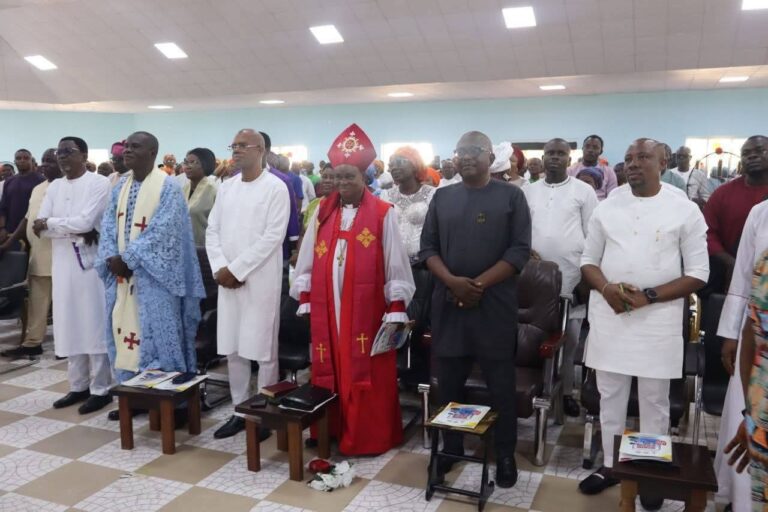
0


With profound respect and heartfelt admiration, I pay tribute to my two esteemed childhood friends, Major-General Lawrence Fejokwu and Major-General Raymond Ochei, who have both honourably retired after attaining the prestigious rank of Major General in the Nigerian Army.
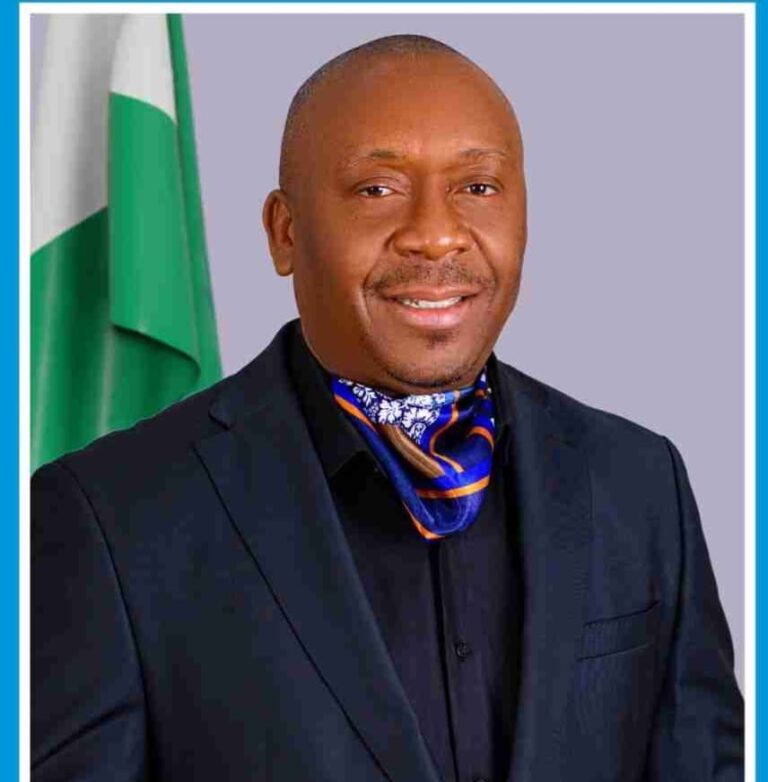
I recall with nostalgia their passing-out parades at the Nigerian Defence Academy, marking the beginning of a journey defined by dedication, discipline, and distinction. Through the years, they have demonstrated unwavering faith in the Nigerian project and an abiding sense of professionalism that has continued to inspire many.

Their trustworthiness, courage, tactical acumen, and steadfast commitment to the service of our fatherland remain a shining example of patriotic devotion and noble character.

They have retired in good health and sound well-being. I was privileged to witness the beginning of their illustrious military careers, and I thank God to be alive to witness their pulling out after such a distinguished and successful service to our nation. I heartily wish them the very best in their future endeavours.

Gentlemen, I salute your gallantry, your principles, and your exemplary service to our great nation. 🇳🇬

■ Dr. Ifeanyi Michael Osuoza

NYESOM WIKE AND THE END OF DECORUM

0

NYESOM WIKE AND THE END OF DECORUM

By Austen Akhagbeme

Ezenwo Nyesom Wike, the Minister of the FCT, is becoming a dangerous example of how not to be a public servant.

His penchant for open altercations and anyhowness is becoming unbecoming of a federal officer of the status of a minister and a former governor.

That no one can rein him in anytime he desecrates public etiquette and orally defecates on propriety, speaks volumes to the calibre of leadership we presently have as a nation.

Wike’s most recent public brawl with a young naval officer, in the full glare of his retinue of bodyguards and hangers-on has already gone viral on the World Wide Web, bringing shame and sham to the exalted office of the honourable minister.

From the rude and empty boastfulness in the name of media chats, Nyesom Wike has elevated his reckless infamy to that of harassing an officer on duty and under instruction, calling him a fool such as he has done to the young military officer now trending on social media.

Wike’s braggadocio seems to be heavily backed by the state as he seems to have his hands in every pie since the inception of President Bola Ahmed Tinubu’s administration.

The incident at plot 1946 in the Gaduwa district of Abuja, is a metaphor depicting the rudeness and impunity of power of the governing elite over the governed. Wike took a gamble that could have gone dangerously sideways but for the emotionally cool and calm officer who saved the day.

Whatever the underlying reason may be, the Minister’s open denigration of a commissioned officer was quite demeaning. As a lawyer and a life bencher, the minister should have known that Land matters are civil cases usually settled in the Courts and not by brawn.

One expects that Nyesom Wike, by now, should be busy with the EFCC following the viral news of his alleged acquisition of properties abroad, which were not captured in his assets declaration as a public servant. How about the many accusations of the alleged allocation of plots of land to his cronies and the alleged blatant land-grabbing style of administration in the federal capital?

In Nigeria, that is how we roll: we become reckless and play demi-god when we’re entrusted with power. Moreso, decency and decorum end when we have the right people drumming for us from the top. It is all about proximity to the powers that be. It is a pity!

NDLEA Strengthens Maritime Operations with Training of Officers in UK

The National Drug Law Enforcement Agency (NDLEA) has strengthened its maritime surveillance and interdiction capabilities following the successful completion of a week working visit to the United Kingdom by officers from the agency’s Directorate of Seaport Operations.


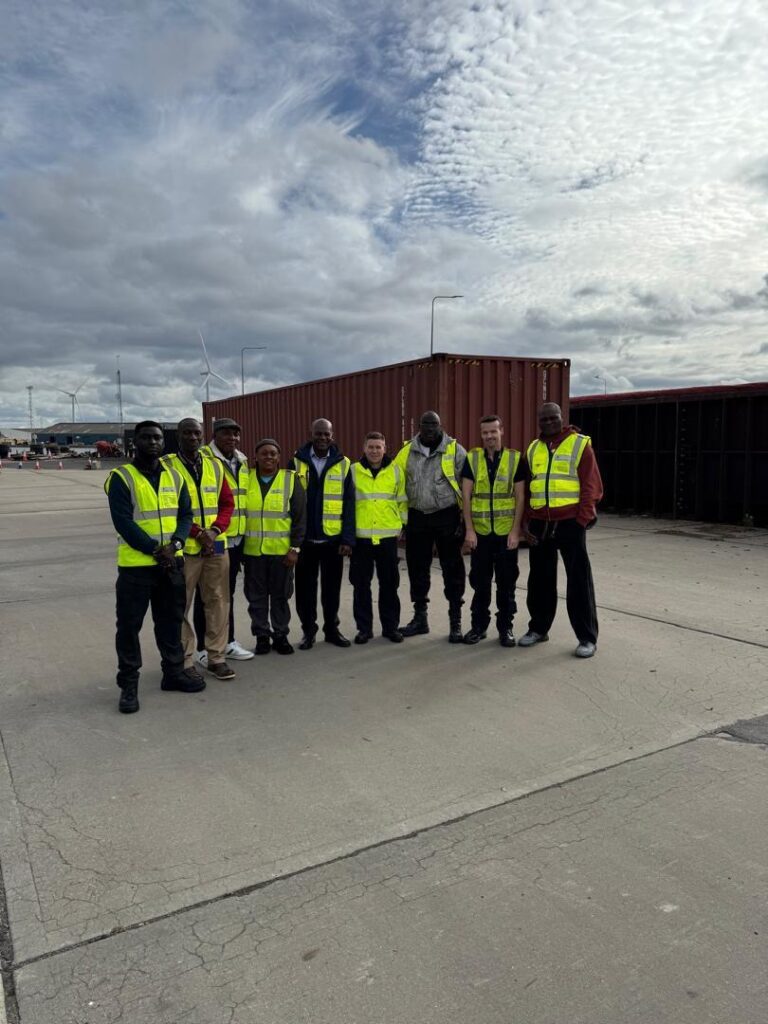
The six-man team led by Deputy Commander Narcotics (DCN) Aminu Jega, undertook the strategic engagement between 19th and 25th October 2025 under the guidance of Mr. Errol Macdonald of the UK Home Office International Operations, during which they visited key British maritime and border enforcement facilities, where they were exposed to valuable international best practices in maritime intelligence, port security and inter-agency coordination.


The second part of the training on Advanced Container Targeting was conducted for additional 19 NDLEA officers in Lagos between Monday 10th and Thursday 13th November 2025 by HOIO Intelligence team. Both the UK training tour and the Lagos residential five-day training were sponsored by the UK Home Office International Operations.


According to a statement by the spokesman of the anti-narcotics agency, Femi Babafemi, the NDLEA delegation held extensive discussions with officials of the UK Border Force, the National Crime Agency (NCA), Home Office Intelligence, the National Maritime Security Centre, and the Joint Maritime Security Centre in Portsmouth, among others.


He disclosed that during the engagements, the team received comprehensive presentations by the UK National Deep Rummaging Team, which showcased modern techniques and procedures for vessel rummage operations aimed at detecting and preventing illicit drug trafficking through sea routes.


He added that the officers also witnessed live demonstration sessions at Tilbury and Felixstowe Ports, where inward-bound containers from Nigeria were subjected to layered inspection and risk-based screening procedures.


Babafemi said another key highlight of the visit was the introduction and demonstration of the Advanced Sea Searcher System, a state-of-the-art underwater detection technology used for locating concealed contraband and drug consignments beneath ships and port structures. The system’s capacity for high-precision underwater searches was identified as a game-changer in maritime interdiction, offering significant potential for NDLEA’s future operations along Nigeria’s coastal and port environments.


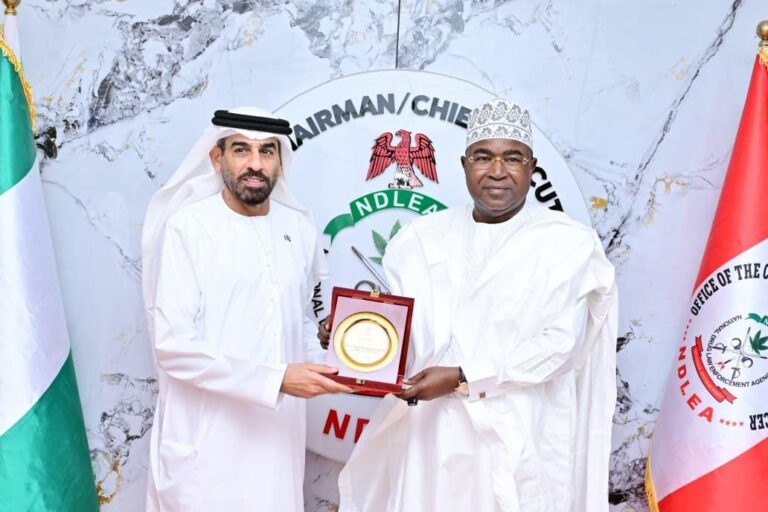
In his post-training presentation to the Chairman/Chief Executive Officer of NDLEA, Brig. Gen. Buba Marwa (rtd), the leader of the delegation Jega noted that the international exposure had deepened his team’s understanding of intelligence-led maritime enforcement, stressing that lessons learnt from the visit would enhance NDLEA’s operational synergy with other maritime and security agencies in Nigeria.


He said: “We were exposed to advanced tools, data-sharing models, and inter-agency coordination frameworks that will significantly improve our maritime intelligence gathering and port surveillance operations. The practical demonstrations we witnessed, particularly in vessel rummage and underwater detection, are invaluable to NDLEA’s ongoing efforts to counter transnational drug trafficking through our seaports.”


In his response, Marwa commended the officers for representing Nigeria well during the training tour. He reaffirmed the agency’s commitment to continuous capacity building and adoption of cutting-edge technologies in the fight against illicit drug trafficking.


“Maritime routes remain critical in global drug trafficking networks. Strengthening our officers’ technical capacity and intelligence integration with our international partners is essential to safeguarding Nigeria’s borders. The lessons from this UK engagement will be vital in enhancing NDLEA’s effectiveness in intercepting drug consignments at sea and ensuring safer maritime operations,” Marwa stated.


The NDLEA boss said the agency would continue to deepen collaboration with the UK Home Office International Operations and other global law enforcement partners as part of ongoing efforts to combat transnational organized crime linked to illicit drugs.

Delta Govt Issues Deadline for Tourism, Hospitality Operators to Renew Registration

The Delta State Government has issued a stern reminder to all operators within the state’s tourism and hospitality sector to regularize their registration and settle any outstanding renewal fees for the year 2025 without further delay.

In an official announcement released by the Ministry of Culture and Tourism, Honourable Commissioner Dr. Darlington Nnamdi Ijeh emphasized that the directive applies to all establishments including hotels, motels, guest houses, restaurants, fast food outlets, tour operating companies, travel agencies, amusement parks, gardens, and nightclubs, among others.

The ministry warned that failure to comply with this directive would attract strict sanctions, which could include the sealing of non-compliant premises, in accordance with existing state laws and regulations.

“The cooperation of all stakeholders in ensuring full compliance is hereby solicited,” Dr. Ijeh stated.

“This notice serves as an official reminder to all concerned operators to update their registration with the Delta State Tourism Board.”

The move is part of the state government’s efforts to streamline operations within the tourism and hospitality sector, enhance regulation, and ensure that all businesses operate within the legal framework established by the Ministry of Culture and Tourism.

Operators are therefore urged to visit the Delta State Tourism Board to complete their registration or renewal processes promptly to avoid penalties.

0

The Federal Government has said in the next ten years the contribution to the nation’s Gross Domestic Product (GDP) from the livestock industry may reach $94 billion.


The industry according to the government is currently contributing over $32 billion to the nation’s GDP, with great impact on national food security, job creation, and rural income generation.


The Minister of Livestock Development, Idi Mukhtar Maiha, speaking at the Policy Dialogue Workshop for the Valuation of PRISMA Project Results in the Regional Agricultural Priorities of West Africa and the Sahel, organised by the Economic Community of West African States (ECOWAS)’s Regional Agency for Agriculture and Food (ARAA) on Thursday in Abuja, said that Nigeria’s strategic plan for the livestock sector in the next ten years aims to increase its GDP contribution from the current $32 billion to between $74 billion and $94 billion.


The Minister, who was represented by the

Director, Technical Office of the Permanent Secretary, Federal Ministry of Livestock Development, Mr. Peter Alike, stated that

the government recognises livestock as a national imperative that cannot be ignored.


He noted that the creation of a dedicated Ministry of Livestock Development by President Bola Tinubu reflects government’s deliberate action towards strengthening the livestock sub-sector and driving national development.


He stated the importance of collaboration between Nigeria, ECOWAS, and other regional actors in achieving shared agricultural and food security goals.


He said: “I have told you already that we have a strategic plan which is going to run from 2025 to 2030. And we have a basket of livestock contribution to GDP which is currently about $32 billion.


“And our mission is, in the next 10 years, we want to take, there is a baseline, a base anticipation of $74 billion and then of course a high expectation of about $94 billion.


“We believe that if you actually look at the entire valuation of livestock in Nigeria here today, we are far even in excess of that.


“In Nigeria, we have over 50 million cattle in the hands of rural dwellers, and these are animals that must be fed. So, for us, feed and indeed food is a national imperative that we cannot even live for tomorrow. It is indeed an emergency because the tangential effect of not being able to provide the necessary feed and food for our animals has a direct effect on our very existence, rural livelihood, and human peace. So, for us, it is a matter of survival.


“This is the time for three things to be done. The first thing to be done is collaboration. The second thing to be done is collaboration. And the third thing to be done is collaboration. This is the time that we need each other the most.”


He cautioned against allowing the PRISMA policy dialogue to become just another routine event without tangible outcomes.


He however cautioned against excluding Nigeria in regional projects.


He said: “We don’t want this to end up as one of those workshops because it doesn’t make sense,” that the ministry is fully committed to ensuring that discussions translate into real progress for livestock development across Nigeria and the ECOWAS region.


He noted that: “If you have a project of this magnitude and you exclude Nigeria, then you are not likely to succeed. Especially, I don’t know of any other country in West Africa and the Sahel that has a dedicated Ministry of Livestock Development.”


On his part, the Acting Executive Director of the Regional Agency for Agriculture and Food (ARAA), Mr. Konlani Kanfitin, reaffirmed ECOWAS’ commitment to advancing livestock development and research collaboration in the region.


He expressed appreciation to the European Union (EU) and the Spanish Cooperation Agency (AECID) for co-financing the PRISMA Project (Research and Innovation for Productive, Resilient, and Healthy Agro-Pastoral Systems in West Africa), which promotes climate-adapted, research-based innovations in the livestock sector.


He said the PRISMA Project aligns with ECOWAS’ regional agricultural policy (ECOWAP), which seeks to transform agricultural and food systems across the region.


Kanfitin emphasised the importance of policy dialogue as a lever for coherence, strategic orientation, participatory governance, and regional integration.


He said: “The livestock sector occupies a central place in the economies of our member states. It contributes to food security, job creation, and the income of millions of rural households.


“This policy dialogue workshop constitutes a key moment for reflection and collective action; it is intended as a space for discussions and decision-making to improve the policy environment for research and innovation to increase the productivity and resilience of agro-pastoral systems in West Africa and the Sahel,” he noted.


In his remarks, Agricultural Engineer and PRISMA Researcher, Dr. Fernando Escribano, highlighted the project’s focus on tackling aflatoxins in livestock feed.


He described aflatoxins as metabolic byproducts of fungi and bacteria that can grow in the field and during storage when high moisture and temperature conditions allow, stressing the need for standard methods to control their presence in livestock feed.


“This is the scenario that we had when we started this project. We decided to focus because aflatoxins don’t have borders. Environmental impact doesn’t have borders. So, we decided to go with a harmonization exercise. We need to harmonize and define what is equality,” Dr. Escribano explained.


“We need to avoid the presence of aflatoxins in our feeds. We need to know how to sample to detect aflatoxins. We need to know how to measure aflatoxins in a relatively simple way, but in a way that we all agree to be done,” he added.


The PRISMA policy dialogue workshop was organized under the framework of ECOWAS’s regional agricultural policy (ECOWAP) and hosted in Abuja, Nigeria, with active participation and support from the Federal Ministry of Livestock Development.


The event was co-financed and technically supported by the European Union (EU), the Spanish Agency for International Development Cooperation (AECID), Luxembourg Cooperation, Belgian Cooperation, and Spanish Cooperation, highlighting a strong partnership between regional bodies, national authorities, and international development partners.

2027 election : DELTA ASSEMBLY ADOPT Tinubu, OBOREVWORI AS SOLE CANDIDATES

Members of the 1st to 8th Delta State House of Assembly, Thursday at an extraordinary session in Asaba, adopted President Ahmed Bola Tinubu, Sheriff Oborevwori as sole candidates for the 2027 and Governor Sheriff Oborevwori as sole candidates for the 2027 Presidential and Governorship elections respectively.

The serving and former legislators also at the special session, presided by the current Speaker of the House, Rt Hon Emomotimi Dennis Guwor, also passed vote of implicit confidence on the duo for their strides in promoting good governance and development.

The motion was moved by a member of the 1st Assembly, and former member of the Federal House of Representatives, Rt Hon Halims Agoda, seconded by a member of the 2nd Assembly who was the Majority Leader of the House, Hon Kris Njokwuemeni and adopted.

The adoption and confidence votes on President Tinubu and Governor Oborevwori by the serving and former members, referred to as Non-Sitting Members of the House, were the highpoint of the maiden edition of the Delta State House of Assembly Speaker’s Annual Leadership Series, with the theme LEADERSHIP DYNAMICS IN THE DELTA STATE HOUSE OF ASSEMBLY: YESTERDAY, TODAY AND TOMORROW.

In his keynote address, Rt Hon Guwor said there was the need to build a harmonious consensus in the face of diverse, complex, and competing interests in the Legislature for inclusive governance in Delta State.

“It is with great pleasure, humility, and a deep sense of history that I welcome you all to this memorable gathering of non-sitting Members and Members of the 8th Assembly of the Delta State House of Assembly. Today, we are not just holding an event; we are connecting the past with the present, and laying stronger foundations for the future of legislative governance in our dear State.

“This moment is significant because every Assembly  represented here today, from the First Assembly of 1992 to the Seventh Assembly that preceded ours, has contributed immensely to shaping the democratic journey of Delta State.

Each era came with its peculiar challenges and triumphs, yet our predecessors stayed committed to the ideals of democracy, representation, and service to the people”.

The Speaker explained that it was a privileged to have among the non-sitting Members of the House, the current Governor of Delta State, Rt Hon Sheriff Oborevwori, who once served the noble institution as a Presiding Officer of the Sixth and Seventh Assemblies.

“This event is more than a reunion. It is a forum for reflection, knowledge sharing, and mentorship. We, the 8th Assembly, recognize that the wisdom and experience of those who came before us are invaluable. Governance and lawmaking thrive when institutional memory is preserved and transferred.

By hosting you, we seek to renew the bond of fellowship among legislators past and present and to draw inspiration from your experiences in navigating the complex and sometimes turbulent waters of legislative practice”, Guwor stated.

The Speaker maintained that learning from the experiences of predecessors, would strengthen the institutional resilience and protect the dignity of the Assembly, stressing that the past, present, and future Members of the House must continue to work together to build a virile legislature that supports the Executive in achieving sustainable development and delivering quality service to the people.

“As a partner in governance, the legislature must not be seen as an adversary but as a collaborator in progress, firm in oversight, fair in judgment, and focused on results that improve lives.

“Distinguished colleagues and elder statesmen, today’s gathering is a reminder that the House of Assembly is a living institution; one that grows, learns, and evolves through each Assembly. Let us therefore use this opportunity to deepen our unity, renew our shared purpose, and strengthen our resolve to make Delta State a model of legislative excellence and good governance”, Guwor added.

The Speaker thanked the legislators for their support for Mr President and Governor Oborevwori, even as he described the adoption of the duo for another term in office as a welcome development and pointer to greater progress in the state.

In their comments, some non sitting members including Rt Hon Victor Ochei, Frank Enekorogha, Emmanuel Okoro , Basil Ganagana, Ovie Agas, Funkekeme Solomon, Orezi Esievo, Anthony Elekeokwuri and Johnson Erijo, commended the Speaker of the 8th Assembly, Emomotimi Guwor for the initiative, saying that such gathering of former and current legislators would promote peace, progress, and prosperity in the state.

The Chairman Planning Committee of the special session and Deputy Speaker of the House, Rt Hon Arthur Akpowowo, said the gathering was first of its kind in Nigeria and thanked participants for honouring the invitation, saying that the camaraderie and experiences would remain evergreen.

A communique is being expected as at the time of filing in this report.

Femi Falana Charges Youths to Defend Their Future, Hold Leaders Accountable … Receives SAM Title from UNIAbuja Law Students

0

Human rights lawyer and activist, Femi Falana has challenged Nigerian students and youths to take responsibility for defending their own future and holding leaders accountable for the country’s growing inequality and governance failures.

Speaking on Thursday during the conferment of honorary title of “Senior Advocate of the Masses” on him by the law students of the University of Abuja, Falana
expressed disappointment at what he described as the growing apathy among Nigerian youths toward national issues, contrasting it with the activism and courage that defined students of his generation.

He said: “I hardly want to go to campuses these days to address students, because I have come to the conclusion that Nigerian youths are not prepared to fight for their own future.

“When we were undergraduates, we had dreams and we fought to create a future for ourselves.”

He however lamented that corruption and mismanagement had crippled opportunities once available to young Nigerians, recalling how graduates in his time were guaranteed jobs even before completing their studies.

He reminisced that: “Before we wrote our final exams, employers came to our campuses to recruit us.

“By the time you finished your youth service, you had four or five job offers with car and housing loans waiting.”

Citing recent revelations by the National Assembly that over N210 trillion could not be accounted for in the books of government agencies, Falana wondered why such news had not provoked outrage among young Nigerians.

He said: “I read a story last week, which in our case, would have forced us to surround the National Assembly.

“Last week, the National Assembly revealed that above N210 trillion cannot be explained. That is enough to pay the nation’s humongous debts, create job opportunities for all of us, pay all our loans that have become debt traps, and give us hospitals without having to travel abroad.”

He added that: “And I’m challenging you, because we are going to take up that matter. But I’m here. So we are going to cross-fertilise ideas.”

Falana also used the opportunity to examine recent national controversies, including the altercation between the Minister of the Federal Capital Territory, Nyesom Wike, and a military officer in Abuja.

The newly decorated SAM, while condemning the officer’s obstruction of the minister’s statutory duties, however faulted the minister’s use of abusive language, saying public officials must respect citizens’ dignity.

Falana reminded law students of their moral and professional obligation to defend the oppressed and insist on accountability from those in power.

Earlier, the Senior Special Assistant to President Bola Tinubu on National Assembly matters (House of Representatives) Hon. Ibrahim Olarewaju, had, in his goodwill message, described Mr. Falana as one of the best things that ever happened to legal profession in Nigeria.

Olarewaju recounted his personal experience working under Falana, recalling how the Senior Advocate’s open-door policy and commitment to nurturing young lawyers left an indelible mark on generations of practitioners.

He said: “Mr Falana will give you every opportunity you desire in life. You call him once, he picks your call. Even as busy as he is, he finds time to mentor and guide.

“He’s one man who grows people to the height they want.”

He also reminisced about Falana’s long-standing relationship with Nigerian students, narrating an incident from 1997 at the University of Ilorin when students defied restrictions to host the fiery lawyer for a lecture.

He said: “We blocked all entrances to the university because we wanted to see him. The government didn’t want Falana to speak, but we insisted. When he finally arrived, the police had no choice but to let him in. “That day, we made history.”

The Dean of the Faculty of Law, University of Abuja, Prof. Uwakwe Abugu, described Falana renowned human rights activism as a “rallying point of justice in Nigeria” and “an immortal figure in the fight for social equity.”

Abugu commented Falana for his lifelong dedication to defending the rights of the downtrodden and promoting justice beyond the courtroom.

He noted that his interventions had restored hope to countless Nigerians, especially students unjustly treated by authorities.

He lauded the veteran lawyer’s humility and commitment to mentorship.

President of Law Students Association of Nigeria (LAWSAN), Uniabuja chapter, Muhammed Akingbolu, disclosed that the conferment of SAM on Femi Falana, was in recognition of his decades-long commitment to justice and public interest litigation.

He made the disclosure in his remarks during the Faculty’s 2024/2025 Legal Year Opening Ceremony in Abuja on Thursday.

The event was attended by legal practitioners, academics, and students who gathered to celebrate Falana’s enduring legacy in Nigerian jurisprudence and activism.

The LAWSAN President described Falana as a becon of hope, justice and a rare legal mind whose life embodies courage, humility, and mentorship.

At 70, Asagba of Asaba Shines in Wisdom, Service — Oborevwori

0


Delta State Governor, Rt. Hon. Sheriff Oborevwori, has congratulated the Asagba of Asaba, His Royal Majesty, Obi (Prof.) Epiphany Azinge, SAN, OON, on his 70th birth anniversary, describing his reign as one of peace and humility.

Governor Oborevwori who spoke on Thursday at the thanksgiving Mass held at Saint Patrick’s Catholic Church, West-End, Asaba, to mark the royal father’s platinum jubilee, said Asagba’s life is a shining testament to wisdom, integrity, and purpose.

The Governor said it was good for the Asagba to return thanks to God for His grace and faithfulness, having attained the biblical age of three score and ten in strength and sound health.
He said: “I am very happy for this celebration because it is important that when God takes you to a particular level in life, you come back to appreciate Him. This thanksgiving is special because it is not just another birthday, it is an offering of gratitude for seventy years of divine mercy, strength, and grace.”

The Governor extolled the life and leadership of the monarch, noting that his reign had been marked by peace, humility, and understanding.

“Your Majesty, your life is a living testimony of wisdom,” he said. “From the classroom to the throne, you have demonstrated excellence, honesty, and service. As a lawyer and teacher, you helped shape minds and institutions across Nigeria and beyond. As a royal father, you have guided your people with grace, fostering unity and progress in Asaba and Delta State,” he said.

Governor Oborevwori praised the Asagba’s consistent support for the state government and his remarkable devotion to duty.

“There is no invitation too small for His Majesty to honour. He attends every event, even at short notice, that humility and commitment inspire us all. I am proud to celebrate you not only as a traditional ruler but as a symbol of what it means to combine talent, purpose, and service for the good of society,” he added.
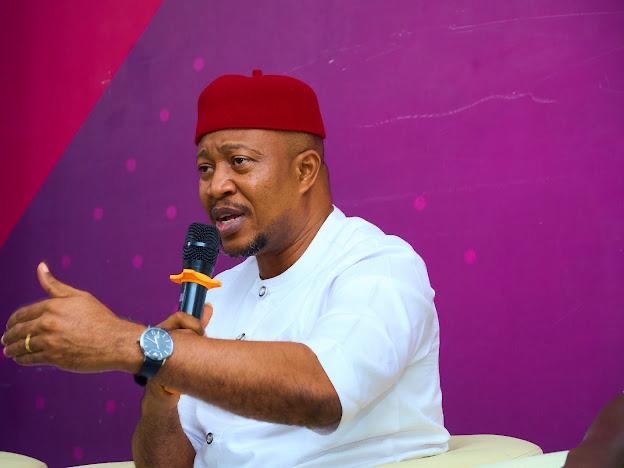
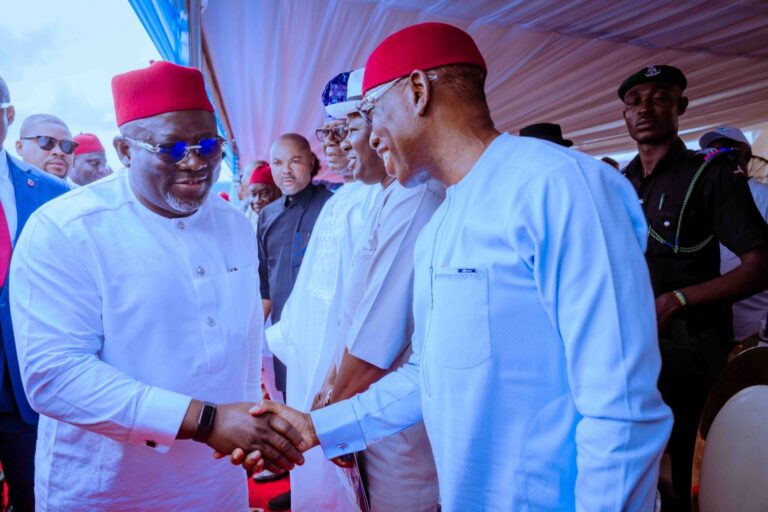
Quoting Proverbs 16:31, the Governor described the monarch’s gray hair as “a crown of glory gained through a righteous life,” and prayed that God would continue to grant him strength, wisdom, and long life.

He also commended Her Majesty, the Asagba’s wife, for her steadfast support, saying; “your wife has stood by you faithfully. I have known her for many years, and I must thank her for being a pillar of support in your journey of service to God and humanity.”

Governor Oborevwori further thanked the people of Asaba Kingdom for their loyalty to their monarch, saying their love and unity had made his reign peaceful and successful.

“To the good people of Asaba Kingdom, I say thank you for your support and for standing firmly with your monarch. Your Majesty, happy 70th birthday. May these years bring you more joy, peace, and fulfillment”, he concluded.

Earlier in his homily, the Catholic Archbishop Emeritus of Abuja, John Cardinal Onaiyekan, described the occasion as a moment of thanksgiving and reflection on a life devoted to God and humanity.

Drawing his message from Psalm 90, the Cardinal said, “the Bible reminds us that seventy is the sum of our years. It is a time to look back with gratitude and look forward with faith.”

He lauded the Asagba for his steadfast faith, wisdom, and compassion, calling him “a true monarch who has served God and humanity with love, integrity, and commitment.”

Sen. Nwoko’s Chief of Staff says Mr. Chucks not from Nwoko Royal family

0

Dr. Michael Nwoko, Chief of Staff to Senator Ned Nwoko, has dismissed as false and mischievous the recent social media allegations made by one Mr. Chucks Nwoko against the Nwoko royal family of Idumuje-Ugboko and Distinguished Senator Prince Ned Munir Nwoko.

In a statement made available to journalists, Dr. Nwoko described the comments by Mr. Chucks Nwoko as ill-informed and a deliberate attempt to drag a respected family name into unnecessary controversy.

He noted that the Nwoko royal family completely dissociates itself from the reckless and misleading claims, stressing that the individual in question is neither a member of the royal lineage nor connected by ancestry to Idumuje-Ugboko.

According to the Chief of Staff, Mr. Chucks Nwoko’s father hails from the western part of Nigeria, and by every known standard of genealogy, tradition, and descent, he has no familial or ancestral tie to the Nwoko dynasty.

“It is therefore audacious, even laughable, for him to assume a voice or claim any authority on matters concerning the Nwoko household,” Dr. Nwoko stated.

He further described the recent video circulated by Mr. Chucks Nwoko as malicious, suggesting that it either reflects ignorance of the truth or the influence of external forces determined to malign Senator Ned Nwoko.

“This is a classic case of someone seeking cheap relevance by throwing stones at a name far greater than his imagination can comprehend,” he said.

Dr. Nwoko highlighted that Senator Prince Ned Munir Nwoko remains one of Delta State’s most distinguished sons and a man whose record of service and philanthropy speaks volumes.

He pointed out that the Senator’s contributions to the progress of Idumuje-Ugboko, Delta North, and the entire Delta State are monumental, ranging from scholarship programs and youth empowerment to community infrastructure and sports development.

He added that in the 10th Senate, Senator Nwoko has distinguished himself as one of the most consistent voices for positive change, having sponsored over thirty-one bills and moved several motions addressing key national issues.

“His approach to public service is deliberate and deeply rooted in purpose. He is focused, visionary, and guided by an unflinching belief that leadership is a moral duty, not a platform for theatrics,” Dr. Nwoko emphasized.

While noting that such distractions will not deter the Senator from his commitment to public service, Dr. Nwoko asserted that those who trade in falsehoods will always find themselves stranded in the wilderness of irrelevance, while men of purpose continue to write their names in the annals of progress.

He reaffirmed that the Nwoko family stands united and proud of Senator Ned Nwoko’s achievements and that the family completely distances itself from the “reckless utterances” of Mr. Chucks Nwoko.

“He speaks only for himself and perhaps for those who feed his delusions, but certainly not for the Nwoko dynasty or the people of Idumuje-Ugboko,” he said.

Dr. Nwoko noted that Distinguished Senator Ned Nwoko remains focused on delivering effective representation and advancing the welfare of his people. “He is not a man easily swayed by noise or distracted by mischief.

His work is visible in the schools he has built, the bills he has sponsored, the opportunities he has created, and the countless lives he has touched. Those who build, as the Distinguished Senator continues to do, will always have their legacy rooted in the lives they’ve transformed,” he stated.

NdokwaForward Hails Oborevwori for Bringing Kwale Free Trade Zone to Reality

A socio-political group, NdokwaForward, has lauded the Executive Governor of Delta State, Rt. Hon. Sheriff Oborevwori, for the successful ground-breaking ceremony of theTrade Zone (KFTZ), describing the project as a landmark achievement in the state’s economic transformation agenda.

In a statement jointly signed by Hon. (Barr.) Sam Osasa, Dr. George Ugbomah, and Chief Isaac Onyesom, the group hailed Governor Oborevwori’s “purposeful and visionary leadership,” noting that the realization of the KFTZ under his administration marked “a historic milestone in the economic emancipation of the Ndokwa Nation and Delta State at large.”

According to the group, the Free Trade Zone is expected to open vast economic opportunities, including job creation, infrastructural expansion, and the attraction of both local and foreign investors. The initiative, they said, would position Ndokwa land as a major industrial and commercial hub in the South-South region.

“The Kwale Free Trade Zone will not only stimulate small and medium-scale enterprises but also empower youths and improve the overall standard of living of our people,” the statement read.

NdokwaForward reaffirmed its confidence in Governor Oborevwori’s leadership and declared its total support for his re-election bid, describing it as “our collective project across Ndokwa land.”

The group also commended the Deputy Governor, Sir Monday Onyeme, for his steadfast support and contribution to the success of the project, acknowledging him as an “illustrious son of Ndokwa” whose commitment to the development of the area has been unwavering.

“NdokwaForward remains steadfast in its partnership with the current administration and will continue to lend its voice and strength to every policy and project that uplifts Ndokwa and advances Delta State,” the statement concluded.

Shettima Calls on Nigerians in Diaspora to Invest in Nigeria’s Infrastructure

0

Vice President Kashim Shettima has appealed to Nigerians in the Diaspora to invest in the nation’s infrastructure, small businesses, and human capital development.


The Vice President, who was represented by the Permanent Secretary, Ministry of Foreign Affairs, Ambassador Dunoma Ahmed, made the appeal during the opening of the 8th Nigeria Diaspora Investment Summit (NDIS) in Abuja.


Shettima said the Tinubu administration was creating a business environment that would enable diaspora investments to thrive under the Renewed Hope Agenda.


The three-day summit, themed, “Fast-Tracking Regional and National Development by Mobilising Diaspora Investment”, gathered an assemblage of government officials, investors, and entrepreneurs with the aim of mobilising diaspora capital for national growth.


Shettima added that the platform of the Nigeria Diaspora Investment Summit aligns perfectly with Tinubu’s administration’s objectives of attracting investment, creating jobs, and building human capital.


He said: “To our brothers and sisters in the diaspora, I extend a heartfelt call: come home, not only physically but economically. Invest in our roads, our startups, and our people.”


He stressed that the administration’s focus on transparency, accountability, and policy consistency was meant to restore investor confidence, stating that: “We understand that investors, especially those in the diaspora, need assurance of stability, safety, and returns. This government is resolute in providing all three.”


Shettima added that the government’s reforms in the financial sector, particularly the unification of foreign exchange rates and the removal of fuel subsidies, were already yielding results that would, in time, strengthen the investment climate. “Difficult decisions are being made for sustainable growth. We are laying a foundation for a Nigeria that works — not just for today, but for generations to come,” he said.


The Vice President also disclosed that the administration was prioritising youth entrepreneurship through initiatives like the Expanded National MSME Clinics and Digital Innovation Hubs, aimed at supporting startups and fostering technology-driven growth, stating that: “We are building an economy where innovation thrives, where young Nigerians at home and abroad can transform ideas into industries,” he noted.


He also assured that security challenges were being addressed through intelligence-driven operations and regional collaboration, stating that “a secure nation is a prosperous nation, and every investment thrives best in peace.”


Speaking earlier, the Minister of Solid Minerals Development, Dr. Dele Alake, said the diversification policy of the Tinubu administration had brought in over $1.3 billion in mining investments within a year.


He said over 3,000 inactive licenses had been revoked to clean up the sector and encourage credible investors, adding that new applicants must now show plans for local mineral processing before getting approvals.


The Minister explained that Nigeria’s vast mineral resources, including lithium, gold, and nickel, were now being repositioned for export and industrial use. “Our aim is to ensure that value addition happens within Nigeria, so that we export finished products, not raw materials,” Alake said.


He said the government was finalising a Solid Minerals Development Roadmap, which would create an end-to-end system for exploration, mining, and processing. He said partnerships with diaspora professionals and investors were welcome in building refineries, training institutions, and logistics infrastructure for the mining sector.


“Mining is the new oil,” Alake declared. “And we are determined to ensure it becomes a sustainable pillar of the Nigerian economy.”


In his part, the Minister of Information and National Orientation, Alhaji Mohammed Idris, urged Nigerians to promote a positive image of their country, noting that “no dollar will come into a country people speak ill of.”


He said Nigeria’s recent removal from the Financial Action Task Force’s (FATF) grey list was proof of the administration’s credibility and the growing confidence of the international community. “It shows that reforms are working, and that Nigeria is now seen as a responsible, transparent partner in global trade,” he added.


Idris noted that image-building was not just the responsibility of government but a collective duty of all citizens, including those abroad. “Every Nigerian is an ambassador. The way we talk about our country affects how investors perceive us,” he said.


He also reaffirmed the government’s resolve to strengthen communication channels with the diaspora through structured public diplomacy and digital engagement. “We will continue to tell Nigeria’s success stories — not propaganda, but the real progress being achieved across sectors,” he assured.


On her part, the NiDCOM Chairman, Hon. Abike Dabiri-Erewa, said Nigerians abroad remained one of the country’s greatest assets, contributing $25 billion in remittances in 2024, the highest in Africa.


She revealed that: “Our goal is to look beyond remittances and channel this capital, expertise, and goodwill into sustainable investments that create jobs and drive inclusive growth.”


Dabiri-Erewa explained that the Diaspora Investment Summit had become a catalyst for partnership between state governments, private investors, and the Nigerian diaspora.


She said: “Through this platform, several projects — from real estate to agriculture, renewable energy, and ICT — have received direct diaspora fundings,,” stressing that the Commission was developing a Diaspora Investment Trust Fund to pool resources for large-scale ventures, while also working with the Ministry of Foreign Affairs and the Central Bank of Nigeria to streamline remittance channels and protect investors.


She said: “We are committed to making every Nigerian abroad feel safe and proud to invest back home.”


She praised the resilience of Nigerians in the diaspora, describing them as “ambassadors of excellence” who continue to make global impact “from healthcare to technology and academia, Nigerians abroad have distinguished themselves, and we must harness that energy for national transformation.”

Unshaken by Critics, Ned Nwoko Pushes Ahead with Anioma State Vision

By Austin Oyibode

In Nigeria’s often turbulent political theatre, where controversies rise and fade with the speed of social media trends, calmness has become a rare quality. Yet, amid the noise, criticism, and speculation surrounding his recent activities, Senator Ned Nwoko remains remarkably unruffled. The lawmaker representing Delta North Senatorial District has, in recent months, drawn both praise and fire for his bold advocacy for the creation of Anioma State and his outspoken defense of Anioma identity. But rather than retreat or react defensively, Nwoko has chosen a posture of quiet confidence, one that speaks to both his conviction and his understanding of Nigerian politics.

From the outset, Nwoko’s political career has never been without controversy. A man of immense ambition and vision, he has built a reputation as one of Nigeria’s most outspoken senators, unafraid to challenge established norms or push for ideas that unsettle the status quo. His latest crusade, the demand for the creation of Anioma State, has ignited fresh debate across Delta and the South-East region. While many within Anioma and the wider Igbo nation have rallied behind the proposal, a vocal few have questioned his motives, accusing him of personal ambition or political grandstanding.

To Nwoko, such accusations are distractions. He insists that his pursuit of Anioma State is not about power or personal gain but about historical justice and balanced representation. The South-East geopolitical zone, he notes, remains the only zone in Nigeria with five states, while others have six or more. The creation of Anioma, he argues, would not only correct that imbalance but also give the people of Delta North a stronger sense of belonging and control over their resources. “This is not about politics,” he said recently. “It is about fairness, identity, and the right of a people to be properly represented in the Nigerian federation.”

The senator’s resolve has been tested by waves of skepticism, misinterpretation, and even subtle opposition from political quarters within Delta State. Some local leaders have expressed fears that the creation of Anioma state could weaken their influence or disrupt existing structures of governance. Yet, despite the undercurrents, Nwoko has refused to be drawn into public altercations or political mudslinging. His approach has been measured, focusing instead on building consensus in the National Assembly and mobilizing grassroots support through engagement and education.

Reports from Abuja indicate that Nwoko’s efforts are already yielding results. A significant number of senators have endorsed his proposal, and the Senate Committee on Constitutional Amendment is reviewing the bill with growing interest. President Bola Tinubu, according to the lawmaker, has also shown an encouraging disposition towards the idea, expressing willingness to sign the bill into law if passed. Such momentum reflects not only political skill but also Nwoko’s steady temperament, a man who understands that big ideas often attract big resistance, and that patience is as vital as passion in leadership.

Observers note that the senator’s calmness under pressure is not new. In his business and philanthropic endeavors, he has displayed a similar steadiness of purpose. Whether leading the anti-malaria campaign across Africa or investing in large-scale agricultural and educational projects in Delta State, Nwoko has shown a preference for long-term impact over short-term applause. His approach to politics follows the same pattern, calculated, visionary, and grounded in the belief that transformative change is rarely achieved through noise.

Of course, Nwoko’s detractors continue to question his motives, suggesting that his advocacy might mask future political ambitions. But even in the face of such insinuations, he has remained composed. “If my ambition is for Anioma to develop, then I stand guilty,” he once quipped. That kind of self-assured response captures his current mood, calm but focused, assertive but unshaken.

Those close to him say that the senator has learned to view criticism as a natural part of public life. “In politics, you can’t please everyone,” he reportedly told a group of supporters in Asaba. “The important thing is to stay true to your vision and do what is right.” It is this mindset that seems to guide him as he navigates the current political storms surrounding the Anioma agenda.

Beyond the legislative efforts, Nwoko has also championed the cultural and social reawakening of the Anioma people. He has urged them to embrace their Igbo identity boldly and to see themselves as integral to the broader Igbo nation. His speeches often echo the themes of unity, self-determination, and pride in heritage, themes that resonate deeply among his supporters but also provoke discomfort among those wary of ethnic affiliations. Still, the senator has not softened his stance. To him, truth must be spoken, even when inconvenient.

As the campaign for Anioma State gains traction, one thing remains clear: Ned Nwoko’s calmness in the face of noise is not indifference, but discipline. It is the stillness of a man who believes in the legitimacy of his cause and the inevitability of its triumph. While others shout from the sidelines, he works quietly in the corridors of power, gathering allies, shaping policy, and keeping his eyes fixed on the bigger picture.

In a political climate often driven by emotion, gossip, and impulsive reactions, Nwoko’s unruffled demeanor stands out. It reflects both maturity and strategic patience, traits that separate serious reformers from opportunists. Whether or not Anioma State becomes a reality in this political cycle, the senator has already succeeded in reawakening a sense of purpose among his people and forcing the nation to confront an overdue conversation about equity and inclusion.

The noise will fade, as all political noise eventually does. What will endure is the quiet determination of a man who refused to be distracted from his vision. For Ned Nwoko, the mission continues, calm, steady, and unshaken.

UAE Assures NDLEA of Support, Partnership, Commends Marwa Over Drug War

0

UAE Assures NDLEA of Support, Partnership, Commends Marwa Over Drug War

The government of the United Arab Emirates (UAE) has assured the National Drug Law Enforcement Agency (NDLEA) of support and stronger partnership while commending the Chairman/Chief Executive Officer of the agency, Brig. Gen. Buba Marwa (rtd) for providing excellent leadership that has led to streaks of operational successes in the fight against substance abuse and illicit drug trafficking in Nigeria.


The assurance and commendation were conveyed when the UAE Ambassador to Nigeria, Salem Saeed Musabbeh Alshamsi paid Marwa a courtesy visit at the agency’s National Headquarters in Abuja on Tuesday.


The Ambassador said: “I’m here to appreciate your hard work and the great leadership you have provided the NDLEA. We have been following your achievements very closely, and I must say you have done very well and still doing excellent job. We follow all the good work that you’ve been doing, especially all the drugs you’re seizing and blocking from coming to the UAE and we’re so proud of your achievements and that’s why we’re here to deepen our cooperation with your agency in the area of fighting drug trafficking. The UAE looks forward to working more closely with Nigeria on drug enforcement matters.”


While extending an invitation to Marwa to visit his counterpart in UAE and the Dubai Police leadership for further engagements, the envoy expressed the readiness of his government to sign a Memorandum of Understanding (MoU) with NDLEA on areas of collaboration with the agency.


“We need to exchange information about drug dealers, and all of their activities. We are here to help and to support you, especially on this matter. It’s very important that we have a very great communication between the UAE and Nigeria especially now that the relationship between United Arab Emirates and Nigeria has become one of the best. If there is any other thing I could do to support the great work you’re doing here, please do not hesitate to ask me and I’ll be available and willing to do it in appreciation of your great leadership. Our mission is to be here for you, assist and support you”, the Ambassador stated.


In his response, Marwa expressed appreciation to the envoy for his kind words on his person and the work of NDLEA, while also commending the developmental strides in UAE. He praised the Ambassador’s years of dedicated service and the huge leap in trade and movement between Nigeria and UAE in the last two years, which he said is in line with the renewed hope agenda of President Bola Ahmed Tinubu.


“I’d like to acknowledge the strong diplomatic relations between our two countries that have continued to grow stronger every year. And Your Excellency has just told us now the latest in billions of dollars in non-oil trade and this is something that we welcome very much in Nigeria because the President’s Renewed Hope Agenda wants to achieve not just peace and stability, but prosperity for all Nigerians. The drug scourge is universal, both the trafficking of it and the abuse of it and there’s a need for collaboration between nations to achieve solutions on this. And in Nigeria, the NDLEA is the agency that is tasked with the control of illicit drugs in the country.”


Marwa noted that in the last four years, the agency had intercepted a total of 302.202 kilograms of assorted illicit substances going to the UAE either at the Murtala Mohammed International Airport Lagos or some courier companies in Lagos.


As the largest anti-narcotics agency in Africa, Marwa said NDLEA partners all leading drug law enforcement agencies across the world. “We welcome the collaboration between NDLEA and our counterparts in UAE, we’re also willing to honour the invitation to visit UAE for collaborative discussions and sign the MoU”, he assured the envoy.

Oborevwori Unveils Delta’s Revolutionary New Industrial Pavilion, Flags Off Kwale Free Trade Zone

0


Delta State Governor, Rt. Hon. Sheriff Oborevwori, on Tuesday, unveiled a major leap in the state’s journey toward industrial transformation as he performed the groundbreaking ceremony of the Kwale Free Trade Zone (KFTZ), Kwale, Ndokwa West Local Government Area.

The KFTZ is a flagship component of the Delta Special Economic Zone Project.

In what he called “a promise made, promise kept,” Governor Oborevwori said the project would unleash unprecedented economic growth, attract global and local investors, and create thousands of direct and indirect jobs, thus positioning Kwale as a strategic hub for energy, petrochemicals, agro-processing, logistics, and manufacturing.

He said: “Today’s groundbreaking is not just another project launch. It is the fulfillment of our commitment to diversify Delta’s economy, expand our industrial base, and lay the foundation for generational prosperity. We are building a Delta where innovation, technology, and industry will thrive”.

Highlighting the state’s comparative advantage, Oborevwori said Kwale’s abundant gas resources and central location make it a natural magnet for investors seeking cost-effective and energy-efficient industrial operations.

He revealed that eight companies had already indicated firm interest in operating from the zone, with two fully licensed, three approved for licenses, and three others in the final stages of regulatory processing.

“Delta State has invested over ₦3 billion in Delta Wires Industries, the first company to take off within this zone. The company will manufacture conductors, cables, and gas cylinders for both LPG and CNG markets. This is how we intend to use our natural gas resources to power industrial growth and create jobs for our people,” he said.

The governor reaffirmed his administration’s readiness to provide infrastructure, regulatory support, and peace for investors to thrive, warning that government property already compensated for would not be allowed to be encroached.

He said: “We have acquired 1,000 hectares of land, and full compensation has been paid. Anyone attempting to encroach on government property will be stopped. This project belongs to all Deltans, it is our collective future.”

The Deputy Governor, Sir Monday Onyeme, in his remarks as Chief Host, described the Kwale Free Trade Zone as the economic rebirth Ndokwa land had long awaited.

“This project is a blessing,” Onyeme said. “One company alone has promised to create 10,000 jobs. Imagine what will happen when 20 or 30 companies are fully operational here. The issue of unemployment in Ndokwa will soon be history.”

He noted that the industrial park would also help solve long-standing infrastructure gaps, particularly electricity supply, as some investors had pledged to generate power for both industrial and community use.

Former Governor of the State, Senator Ifeanyi Okowa, who chaired the occasion, praised his successor for demonstrating continuity and leadership.

Okowa said: “I am proud to be here. Governor Oborevwori has continued where we stopped, and that is how great leaders build lasting progress. People may not fully understand what has been done today, but in five to ten years, this area will be transformed into a vibrant industrial city.”

He urged host communities to safeguard the project and even consider donating additional land for expansion, saying; “with the level of investment and available gas here, 1,000 hectares will not be enough. This is the beginning of a revolution in our state’s economic structure.”

Chairman of the Delta Special Economic Zone Management Company, Brig. Gen. Mike Ndubisi (rtd), described the groundbreaking as “a milestone for Delta’s industrial evolution.”

“This project will generate thousands of jobs and foster innovation. What was once doubted is now a reality. We are not just building factories — we are building a brighter future for Deltans,” he said.

Pastor Godwin Akpovie, the Managing Director of the Delta Special Economic Zone, revealed that over $100 million worth of investments have already been committed to the Kwale and Koko clusters of the project.

“We are partnering with the Nigerian Ports Authority and the African Development Bank to link Koko Port to Kwale through a new industrial corridor,” Akpovie revealed.

Chairman of Ndokwa West Local Government Council, Chief Obi Nzete, reaffirmed the council’s commitment to securing and protecting all investments within the zone, describing the initiative as a landmark step towards industrial growth and economic transformation in Delta State.

The ceremony also featured goodwill messages from the Nigerian Export Processing Zones Authority (NEPZA) and major investors, including Xenergri Limited, Eastern Delta Wires Industries Ltd, Africa Gas Access, Chorus Energy, and Masters Chemicals & Fertilizer Company, all of which pledged commitment to fast-tracking operations.

From conception under Okowa to fulfillment under Oborevwori, the Kwale Free Trade Zone has emerged as a beacon of Delta’s economic renaissance, a testament to continuity, vision, and the dawn of a new industrial revolution in Nigeria’s oil-rich South-South.

PRESS UNIT,
GOVT.HOUSE, ASABA

NHRC Raises Alarm Over Human Rights Abuses, 406,000 Complaints Recorded in October

The National Human Rights Commission (NHRC) has expressed deep concern over the rising number of human rights violations across Nigeria, revealing that it received more than 406,000 complaints and monitored over 160 incidents of rights abuses in October 2025 alone.

Executive Secretary of the Commission, Dr. Tony Ojukwu (OFR, SAN, FICMC), made the disclosure on Monday in Abuja while presenting the October 2025 Human Rights Situation Dashboard, a monthly evidence-based report used to track patterns of human rights violations nationwide.

The Dashboard, now in its 22nd month, serves as a tool for policy guidance, advocacy, and public accountability, offering detailed analysis of complaints received and incidents observed through the NHRC’s network of 38 state offices and its Human Rights Observatory.

“The Dashboard has become an indispensable tool for evidence-based advocacy, policy direction, and public accountability,” Ojukwu said. “It provides a mirror to the state of our human rights situation as we continue to confront conflict, insecurity, and criminality.”


According to the NHRC, 406,088 complaints were received in October, reflecting persistent issues around arbitrary detention, police misconduct, sexual and gender-based violence, access to justice, and violations of civil liberties.

Although the Commission recorded a slight drop in killings and abductions compared to September which Ojukwu described as a possible sign of improved security he said the overall picture remains grim, with “hundreds of lives lost in coordinated attacks across Niger, Borno, Plateau, Kaduna, Kogi, and Kwara States.”

“Farmers, herders, women, children, and entire communities have suffered attacks and displacements,” he lamented. “These are not statistics; they are Nigerian mothers, fathers, and children whose dignity has been violated.”

Ojukwu called for urgent intervention by both state and non-state actors, stressing that “the protection of human rights is inseparable from national stability and development.”

The NHRC chief highlighted growing concerns around suicide, extra-judicial killings, torture, inhumane treatment in schools, and the violation of fundamental freedoms such as movement, assembly, and religion.

He said such violations, while often overshadowed by insecurity, erode public trust in institutions and must be addressed through timely reporting, accountability, and reform.

Dr. Ojukwu also weighed in on recent diplomatic tensions following U.S. threats to intervene in Nigeria’s internal affairs over the reported killing of Christians by extremists.

While acknowledging that religiously motivated killings have occurred, he urged for a more nuanced understanding of Nigeria’s conflict dynamics.

“It is true that conflicts and insurgency in Nigeria have led to killings by religious extremists targeting Christian civilians,” he noted. “But it is important to highlight that citizens from other faiths have also been victims.”

Ojukwu stressed that the Nigerian government’s constitutional responsibility to protect lives and property as enshrined in Section 14(2) of the 1999 Constitution must remain paramount.

He, however, cautioned against external interference, insisting that terrorism and violent extremism are complex internal challenges requiring cooperation, not threats.

“Boko Haram and ISWAP have the ideology of Islamising Nigeria,” he explained. “They believe some Nigerian Muslims are not true Muslims and should be killed like Christians. The common enemy here is Boko Haram, who is killing both Christians and Muslims in Nigeria for religious reasons.”

He called on the international community particularly the United States to support Nigeria’s counterterrorism and peacebuilding efforts instead of issuing punitive warnings.

“Rather than threats, what Nigeria needs is partnership and mutual respect,” he said. “Only through collaboration can we end terrorism and secure the lives and liberties of all Nigerians.”

Reaffirming the Commission’s independence and objectivity, Ojukwu said the NHRC remains guided by the Paris Principles, which emphasize impartiality, transparency, and adherence to the rule of law.

He urged all stakeholders government agencies, the media, civil society, and international partners — to interpret human rights data responsibly and recognize the complex realities shaping Nigeria’s security environment.

“The Dashboard is a tool for awareness, advocacy, and action not an instrument of division or blame,” he stressed. “Only through collective responsibility can we uphold the dignity and rights of every person.”

Ojukwu also appreciated the NHRC’s partners including the United Nations Development Programme (UNDP), the Office of the High Commissioner for Human Rights (OHCHR), and the Government of Norway for supporting the Tripartite Partnership Programme (TPP) that powers the Commission’s human rights monitoring work.

He commended the dedication of NHRC’s state and FCT offices for gathering the data and the media for amplifying the Commission’s voice.

The October Dashboard underscores a paradox in Nigeria’s human rights landscape: a gradual reduction in overt insecurity metrics such as killings and abductions, yet a surge in institutional violations and socio-economic distress indicators like suicide and police misconduct.

Analysts say the NHRC’s data-driven approach has made the Commission one of the few government institutions providing consistent, verifiable insight into the intersection of security, justice, and governance.

As Ojukwu concluded, the human rights situation remains a test of Nigeria’s democratic maturity:

“Our shared commitment to justice and dignity,” he said, “remains the foundation upon which Nigeria can thrive.”

Delta Govt Moves to Ease Traffic Gridlock on Effurun–Sapele Highway

0

The Delta State Government has announced plans to ease traffic congestion along the Effurun–Sapele section of the Warri–Sapele–Benin Highway, following growing complaints from motorists and residents affected by the ongoing road reconstruction.

The Commissioner for Works (Highways and Urban Roads), Comrade Reuben Izeze, disclosed this on Monday during an inspection tour of the project site.

The visit covered the stretch from Effurun Roundabout through Mercy Land to Ohore Junction, where the Commissioner assessed critical sections of the road and met with contractors to discuss immediate, temporary solutions.

Izeze said the intervention was in line with Governor Sheriff Oborevwori’s directive to reduce the hardship faced by road users while reconstruction continues.

“This administration, under Governor Oborevwori, is determined to address the pains of our people promptly. Even as we work toward a permanent fix, we’re taking immediate steps to make the road motorable again,” he said.

He explained that the measure aligns with the governor’s MORE Agenda and the broader Renewed Hope vision of the current administration.

The Commissioner acknowledged the suffering endured by commuters and transporters over the years, adding that the reconstruction would improve mobility, reduce travel time, and boost economic growth once completed.

According to him, the 10-kilometre project, spanning five kilometres on each lane, features an 8.8-metre-wide carriageway, an upgrade from the standard 7.3 metres.

He noted that the project is expected to be completed within 12 months adding that, “When completed, this will be another landmark achievement for the state, enhancing trade, transportation, and community life,” Izeze added.

Governor Oborevwori had earlier, on October 14, 2025, flagged off the reconstruction of the highway, which residents have long described as a nightmare due to its deplorable condition.

The Commissioner’s visit comes as a relief to commuters, signaling the government’s responsiveness to public concerns.

The Ministry of Works has also pledged to monitor the situation closely to ensure that the temporary measures ease congestion while full reconstruction continues.

Soludo, Ibezim receive certificates of return, pledge renewed commitment to ndi Anambra

0


…Governor commends Tinubu, inec for transparent and credible poll

By Sunny A. David, Awka

Anambra State Governor, Prof. Chukwuma Charles Soludo, and his Deputy, Dr. Onyekachukwu Ibezim, on Tuesday, November 11, 2025, received their Certificates of Return from the Independent National Electoral Commission (INEC) following their re-election for a second term in office.

The brief but colorful presentation ceremony took place at the INEC Headquarters in Awka and was presided over by the Commission’s Supervising National Commissioner and Chairman of the Tenders Board Committee, Dr. Ken Ukeagu.

Among the dignitaries present were the Governor’s wife, Mrs. Nonye Soludo, their children, members of the Anambra State House of Assembly, top government officials, and supporters of the All Progressives Grand Alliance (APGA).

Also in attendance were Hon. Pascal Agbodike, member representing Ihiala Federal Constituency; Commissioner for Health, Dr. Afam Ben Obidike; and Chairman of Awka North Local Government Area, Hon. ThankGod Anagor.

In his acceptance speech, Governor Soludo hailed the November 8 governorship election as free, fair, and credible, commending President Bola Ahmed Tinubu for his unwavering commitment to democratic transparency.

“I want to assure Ndi Anambra that, with my Deputy, Dr. Ibezim, and our team, we will make Anambra shine even brighter,” Soludo stated. “I will work harder in my second term than I did in my first so that, at the end of eight years, our people will look back with pride that their trust in us was well placed.”

He extended an olive branch to his opponents in the election, urging them to join hands with his administration to advance the development of the State.

“Let us come together and build the Anambra of our dreams a thriving, livable, and prosperous homeland that will stand as a model for Nigeria,” he added.

The Governor attributed his victory to divine providence, describing it as “the miracle of victory,” and expressed appreciation to President Tinubu, the newly appointed INEC Chairman, Prof. Joash Ojo Amupitan, the Anambra Resident Electoral Commissioner, Dr. Queen Elizabeth Agwu, and the entire INEC team for their professionalism and transparency.

Soludo also thanked members of APGA and the people of Anambra for their steadfast support and confidence in his leadership.

“My special thanks go to APGA for their belief in our vision and to the good people of Anambra for standing firm. Together, we will continue to raise the bar of good governance in our dear State,” he affirmed.

In a separate remark, the National Chairman of APGA, Chief Barrister Sly Ezeokenwa lauded the peaceful conduct of the polls, describing it as a benchmark for credible elections in Nigeria.

Chief Ezeokenwa also commended President Tinubu, INEC, and security agencies for ensuring a transparent process and pledged his full support for Soludo’s administration in its pursuit of a livable and prosperous Anambra.

Onitsha south mayor hails Soludo’s re-election as proof of public confidence

By Sunny A. David, Onitsha

The Mayor of Onitsha South Local Government Area, Hon. Chief Emeka Orji, has congratulated the Governor of Anambra State, Prof. Charles Chukwuma Soludo, on his re-election, describing it as a strong testament to the people’s trust and confidence in his visionary and people centered leadership.

In a congratulatory message to the Governor, Orji expressed the joy and appreciation of the people of Onitsha South and the wider Anambra community, noting that Soludo’s victory at the polls demonstrates the citizens’ desire for continuity and consolidation of good governance in the State.

“Your re-election is a clear affirmation of the faith the people of Anambra State have in your purposeful leadership and unwavering commitment to the common good,” Orji stated.

He reaffirmed the readiness of Onitsha South residents to continue supporting the Soludo administration, pledging cooperation in advancing sustainable development, enhancing local governance, and improving the welfare of the people.

“Your Excellency, we in Onitsha South are proud to be part of this renewed mandate,” he said. “We look forward to working closely with your administration to drive inclusive growth and progress across our communities.”

Orji praised Governor Soludo for his achievements in infrastructure renewal, youth empowerment, security, and economic development, describing him as a “visionary leader whose policies continue to inspire progress across Anambra State.”

“As we enter this new phase of your administration, we are confident that Anambra will continue on its path of peace, growth, and prosperity under your dynamic leadership,” he added.

The mayor also prayed for divine wisdom and strength for the Governor as he continues to serve the people.

“Once again, congratulations, Your Excellency. May God guide and protect you as you lead Anambra to greater heights,” Orji concluded.

Kwale Free Trade Zone And Oborevwori’s Vision for Delta Economic Prosperity.*

0

*By Fred Latimore Oghenesivbe Esq

Delta State is poised for yet another significant milestone as governor Sheriff Oborevwori leads a powerful delegation of senior government officials and captains of Industry to perform the groundbreaking ceremony of the Kwale Free Trade Zone on Tuesday November 11, 2025, marking the commencement of construction work on the project.
The Kwale Free Trade Zone is a significant economic development project aimed at attracting investments, generating employment opportunities, and boosting economic prosperity in the state, as well as the South-South region of Nigeria.
Click below to read more

CREEKS REPORTERS


China Shows Interest in Nigeria’s Music Industry


China has shown interest in collaboration at building Nigeria’s music industry as a tool of advancing the existing cultural diplomacy between both countries.


Speaking at the final of the “China-Africa Good Partners – 2025 Chinese-English Singing Competition” held at the Nigeria-China Cultural Centre in Abuja, Counselor of the Chinese Embassy, Yang Jianxing while reaffirming his government’s commitment to advancing cultural diplomacy as a cornerstone of its foreign relations with Nigeria, said China was ready to use the power of music to strengthen mutual understanding and deepen people-to-people connections between the two nations.


He said: “Music transcends borders, and song is a bridge connecting hearts,” adding that: “Today’s competition is not merely a vocal contest but a dialogue between Chinese and African cultures, and a testament to friendship that transcends mountains and seas.”


He said over the past 54 years, China and Nigeria have nurtured a relationship built on equality, mutual respect, and shared development.


Yang said: “Since the establishment of diplomatic relations 54 years ago, China and Nigeria have remained good brothers who respect each other and treat each other as equals, and good partners who seek mutual benefit and win-win development.”


He noted that cultural diplomacy has become a central pillar of China’s engagement with Africa, complementing economic and political cooperation.


“Cultural exchange is a crucial link in promoting the steady and long-term development of bilateral relations,” he remarked. “This competition serves as a window into the harmonious interplay of our cultures and strengthens the belief that mutual appreciation can lead to lasting friendship.”


He further explained that the competition reflects the goals of the “People-to-People Exchange Partnership Action” proposed by President Xi Jinping during the Beijing Summit of the Forum on China-Africa Cooperation (FOCAC) in 2024.


Yang said: “By allowing different languages to blend in melodies and different cultures to resonate through exchange,” stressing that “we are reinforcing the foundation of public goodwill that underpins the China-Nigeria comprehensive strategic partnership.”


Addressing the participants, the Chinese diplomat lauded them as “ambassadors of cultural understanding” whose performances have strengthened the human bond between both nations.


He told the contestants that: “Each and every one of you is a winner. Your voices express love for life and friendship, allowing us to feel the joy of closer ties between our peoples.”


Also speaking at the event, the President of the China Alumni Association of Nigeria Muhammed Sulaiman commended the initiative for its role in advancing China-Nigeria relations through soft diplomacy.


He said: “This is not just a competition—it is a profound way of cultural exchange, Over the years, China and Nigeria have built a smooth and enduring relationship, and events like this help to strengthen those bonds.”


He encouraged future editions of the event to incorporate performances in Nigerian indigenous languages alongside Chinese and English songs, describing such inclusion as an opportunity to enhance cultural understanding.


Sulaiman said: “Perhaps one day, we will not only hear English and Chinese songs but also Nigerian languages,” he said. “That will tie us even closer together.”


He further praised the China Cultural Centre in Nigeria for providing a platform that consistently promotes mutual respect and cooperation between both nations.


He said: “This initiative shows the strength and unity that cultural diplomacy can foster,” he added. “It must continue to grow.”


The 2025 Chinese-English Singing Competition, is part of ongoing cultural initiatives supported by the Chinese Embassy and the China Cultural Centre in Nigeria, is widely seen as a soft diplomacy effort aimed at deepening understanding between the peoples of both nations while showcasing the unifying power of art.


In the Chinese Category, Glory Livingston emerged as the overall winner, earning loud applause for her heartfelt rendition. James Augustine took second place, while Yang Xin, Shen Lili, and Zhu Xiang Yang jointly clinched the third position.


In the English Category, Zhang Ji won the top prize for his outstanding vocal performance. Lu Yongbin and Wang Jiayi secured second place, while Liuyiming, Ekpety Edima, and Igwe Okezie shared the third-place spot.


The winners were presented with awards and certificates in recognition of their artistry and contribution to promoting cultural understanding between China and Nigeria.


The event closed with a group performance that brought all finalists together on stage—symbolizing, in the words of Counselor Yang, “the harmony of two peoples united by song, friendship, and shared aspiration.”


The event was attended by diplomats, cultural officials, and art enthusiasts.

Beyond the Noise: Why Senator Ned Nwoko’s Record Speaks for Itself

0

Facts, Not Rhetoric: Setting the Record Straight on Senator Nwoko in Response to Bruno Amamosa’s Article


By Chidi Chukwutem

It has become fashionable in Nigeria’s political space to equate silence with failure and noise with effectiveness. A recent article titled “Ned Nwoko Is Not Hated for Honesty but Criticized for Failed Representation” by one Jude Bruno Amamosa reflects this misconception. While constructive criticism is a vital part of democracy, it must rest on truth, not rhetoric. When one examines the facts objectively, Senator Ned Nwoko’s record in Delta North tells a story not of neglect or underperformance, but of strategic progress, measurable results, and people-focused governance built on integrity and substance rather than theatrics.

Since assuming office, Senator Nwoko has brought an uncommon blend of intellect, vision, and discipline to public service. His performance cuts across critical sectors, education, infrastructure, health, environment, youth empowerment, and employment, anchored by a strong legislative record and a transparent leadership style that resists corruption and populist distractions.

In the area of education and human capital development, Senator Nwoko has consistently demonstrated his conviction that empowerment begins with knowledge. Through his “Sports Meet Education” initiative, he awarded full scholarships to 90 students from Delta North, ten from each of the nine local government areas, to study at the Sports University of Nigeria, Idumuje-Ugboko, which he founded.

This innovative program merges academics with sports and entrepreneurship, equipping young people with skills that can compete globally. Imagine the huge relief this gesture has brought to parents of the 90 students in the region. They no longer need to think of school fees, accommodations and other logistics within the next four years.

Beyond that, his constituency office continues to provide financial support to university and polytechnic students for tuition and learning materials, while thousands of youths have benefited from his vocational and skills acquisition programs. These initiatives are shaping a new generation of self-reliant, employable young leaders.

Infrastructure and water development have also received unprecedented attention. Partnering with the Benin-Owena River Basin Development Authority, Senator Nwoko has facilitated over ₦30 billion worth of federal intervention projects under the Renewed Hope Agenda. These include the completion of the Ogwashi-Uku Dam water-reticulation project, a dam in Idumuje valued at ₦7.5 billion. Solar-powered boreholes have been installed in communities such as Umunede, Idumuje-Ugboko, and Idumuje-Unor, while hundreds of solar-powered streetlights now brighten the streets of Kwale, Onicha-Ugbo, Asaba, improving security and extending economic activities after dark. These interventions are not symbolic, they are practical steps toward lasting, people-centered development.

On security, Senator Nwoko recognizes that progress cannot flourish without peace. He has trained dozens of community vigilante operatives across the nine local government areas, supplied logistics and communication equipment, and supported law enforcement agencies to enhance local security coordination. These actions have strengthened grassroots safety and restored public confidence in community policing.

In healthcare and environmental well-being, Senator Nwoko has proven himself as both a legislator and an advocate. He has sponsored the National Malaria Eradication and Environmental Health Bill, a visionary policy framework to institutionalize Nigeria’s malaria fight and improve public sanitation nationwide. His medical outreach programs, conducted periodically across the senatorial district, provide free consultations, drugs, and public health education. By linking healthcare, environment, and job creation, his approach addresses both the causes and the effects of poor public health.

Employment creation remains a central pillar of his service. Through quiet facilitation, dozens of Delta North indigenes have secured appointments in agencies such as the Nigeria Customs Service, FIRS, Immigration, NDDC, FRSC, and NYSC. Others have gained internship placements and contracts on federal projects. His open-door employment support system has become a lifeline for many young people seeking to navigate federal recruitment processes. Beyond creating temporary relief, these jobs are restoring dignity, independence, and hope in many homes.

Legislatively, Senator Nwoko stands out among first-term lawmakers for his productivity and vision. Within two years, he has sponsored more than thirty-three bills and motions addressing youth entrepreneurship, education reform, housing affordability, waste management, and good governance. These include the Constitutional Alteration Bill for the creation of Anioma State, the Nigerian Youth Entrepreneurship Grant Programme Bill, the One-Month Rent Limitation and Landlord Registry Bill, and the Federal College of Agriculture Establishment Bill, also sited in Delta North. These are not abstract motions but long-term frameworks designed to uplift his people and modernize Nigeria’s development architecture. He also serves on critical Senate committees and remains an outspoken advocate for equity and representation for Delta North.

Senator Nwoko’s leadership style often defies Nigeria’s political theatrics. Entering public office with established personal wealth and a history of philanthropy, he has no incentive for graft or showmanship. His calm, methodical approach may lack the noise of publicity-driven politics, but it reflects integrity, prudence, and a results-oriented mindset. In an era when political performance is often measured by self-promotion, his deliberate style stands as a quiet rebuke to populism. Integrity and accountability should not be mistaken for aloofness, they are the cornerstones of true representation.

Critics who claim that Delta North has seen “little or nothing” under his tenure ignore visible transformations already unfolding. It is true that challenges remain, some roads still require rehabilitation, healthcare facilities need expansion, and youth unemployment remains high. Yet these gaps are part of a broader development continuum that requires sustained funding and coordination between the federal, state, and local levels. Major infrastructural works such as dams and irrigation schemes take time; the processes of budgeting, contracting, and execution are gradual, not instantaneous. The fact that these processes are underway is itself evidence of effective representation.

Leadership is ultimately about building systems that outlast individuals. By investing in education, facilitating employment, driving infrastructural growth, and legislating for systemic reform, Senator Ned Nwoko is laying the foundation for sustainable transformation in Delta North. He does not trade in political theatrics; he delivers progress through planning, persistence, and accountability. The real measure of his performance is not the volume of his speeches but the quiet, tangible changes, clean water flowing in villages, lights illuminating streets, scholarships uplifting families, and federal jobs restoring livelihoods.

In the end, Senator Nwoko’s tenure should not be judged by impatience but by the vision being steadily realized. He represents a new model of leadership, disciplined, inclusive, and development-driven. The people of Delta North are beginning to see the fruits of this approach, and with continuity and partnership, these gains will multiply. Honesty in leadership is not weakness; it is the foundation of sustainable progress. On that score, Senator Ned Nwoko has not only defended the trust of his people, he has earned the trust of Anioma people.

Ngige congratulates Soludo on deserved victory

By Sunny A. David, Awka

Former Anambra State Governor and immediate past Minister of Labour and Employment, Senator Chris Ngige, has congratulated Governor Charles Soludo on what he described as a well-deserved victory in the just-concluded gubernatorial election in the State.

Ngige commended Soludo’s first term in office, describing it as “excellent” in the management and prudent use of Anambra State’s fiscal resources. He noted that the Governor has “cut the coat of Anambra according to its cloth,” emphasizing his effective financial discipline.

“I wish to congratulate Governor Charles Soludo on his well-deserved victory at the just-concluded gubernatorial election in Anambra State. His re-election is a clear testimony of his good governance and prudent fiscal management of the State’s resources,” Ngige stated.

He drew parallels between Soludo’s administration and his own tenure as Governor, praising Soludo for avoiding unnecessary borrowing while executing major projects.

“When I was Governor, I also succeeded because I avoided borrowing. I paid off debts inherited from the administration before me. Soludo has followed a similar path while also embarking on several gargantuan projects both completed and ongoing,” Ngige added.

The former Minister urged Governor Soludo to remain focused and not to derail, as some Governors tend to do after securing a second term.

“It is my prayer that Governor Charles Soludo continues on this right path and does not derail like some Governors who, after securing a second term, lose focus.

“History will always be the ultimate judge of a man’s leadership. If he is kind to history, history will be kind to him just as it has been today, as the people of Anambra have re-elected him,” Ngige concluded.

AnambraDecides2025: Peter Obi decries rampant vote buying, says votes sold for N20,000–N30,000

AnambraDecides2025: Peter Obi decries rampant vote buying, says votes sold for n20,000–n30,000

By Sunny A. David, Awka

Former presidential candidate of the Labour Party (LP) in the 2023 general elections, Mr. Peter Obi, has expressed deep concern over the rising incidence of vote buying during the ongoing Anambra State governorship election.

Speaking to journalists shortly after casting his vote at polling unit 019, Umudim-Akasi-Agulu, in Anaocha Local Government Area, Obi urged the newly appointed Chairman of the Independent National Electoral Commission (INEC), Prof. Joash Ojo Amupitan, to prioritize tackling the menace of vote buying across the country.

He lamented that the problem has continued to worsen, undermining the credibility of Nigeria’s electoral process.

“I am not pleased with the high level of vote buying in this year’s Anambra governorship election,” Obi said.

“Votes are being bought for between ₦15,000 and ₦30,000. This trend is destroying the future of our youths and worsening unemployment in the country.”

The former Governor of Anambra State appealed to Nigerians, especially young people, not to mortgage their future for short-term financial gains through vote selling.

Obi emphasized that a nation cannot progress when electoral choices are influenced by money rather than conscience and competence.